What’s Inside
- Prioritize Protein and Fiber for Lasting Satiety
- Become a Label Detective to Uncover Hidden Sugars
- Embrace Whole Foods for Healthy School Snacks
- Ride the Plant-Forward Wave with Legume-Based Snacks
- Navigate Nut-Free School Zones with Seed-Based Alternatives
- DIY Snacks for Cost Savings and Ingredient Control
- Master Portion Control with Mindful Packaging Choices
- Embrace Fibermaxxing for Optimal Gut Health
- Pistachios: The Complete Protein Powerhouse
- Explore Seaweed Options for Healthy School Snacks
- Opt for Savory Crunch from Legumes, Not Just Chips
Last Tuesday at Whole Foods, I found myself staring blankly at the snack aisle while my six-year-old had a full-blown meltdown over neon blue fruit snacks. I realized my current strategy for healthy school snacks was a complete disaster. I’ve tried forcing plain celery sticks on my kids. They just come back warm and untouched in a smelly lunchbox at 4 PM. We need realistic options that actually survive the backpack test. I’m Sophia Martinez, a clean eating nutritionist, and I’ve made every mistake possible when packing food for busy weeknights. Let’s fix this mess together. Learned that the hard way.
1. Prioritize Protein and Fiber for Lasting Satiety

The dreaded 3 PM crash is real. I used to pack empty carbs like plain rice cakes. My kids would come home ravenous, tearing through the pantry like wild animals. The sound of crinkling wrappers haunted my afternoons. Now, I focus on heavy hitters. A single hard-boiled egg provides 6 grams of protein. But honestly, peeling eggs at 6 AM is miserable. The sulfur smell alone is enough to ruin my morning coffee. Instead, I rely on Yoplait Go-GURT Protein yogurt tubes. I grab the 8-pack for $4.99 at Target. They have 12g of protein per serving. I freeze them overnight. By lunchtime, they thaw into this perfect, frosty texture that kids actually want to eat. You’re getting the staying power of protein without the prep work. If you prefer plain Greek yogurt, a 6-ounce serving packs 15 to 20 grams of protein. Just skip the fat-free stuff. It tastes like wet cardboard. Get the whole milk version so they actually stay full until the final bell rings. I’ve noticed a massive difference in their focus when I pack these.
2. Become a Label Detective to Uncover Hidden Sugars

I fell for the organic marketing trap hard last year. I bought these expensive gummy snacks thinking they were healthy. Then I actually read the back panel. They were basically pure high-fructose corn syrup glued together with fruit juice concentrate. I felt so stupid. The sticky, cloying texture should have been my first clue. You’ve got to scrutinize those ingredient lists. Most people get this wrong and assume a green leaf on the box means it’s safe. Always check the added sugars line on the nutrition facts. I’m a huge fan of Stonyfield Organic No Sugar Added Pouches. I pick up a 4-pack for $5.49 at Kroger. They have zero grams of added sugar and a smooth, creamy mouthfeel that kids love. Another staple in my pantry is the That’s It Fruit Bars. I buy the 12-count box for $16.99 at Costco. They literally just contain apples and strawberries. No weird dextrose or fake syrups. The texture is dense and chewy, kind of like a fruit leather but thicker. It’s a massive upgrade from those sticky fruit snacks that glue your kid’s teeth together.
3. Embrace Whole Foods for Healthy School Snacks

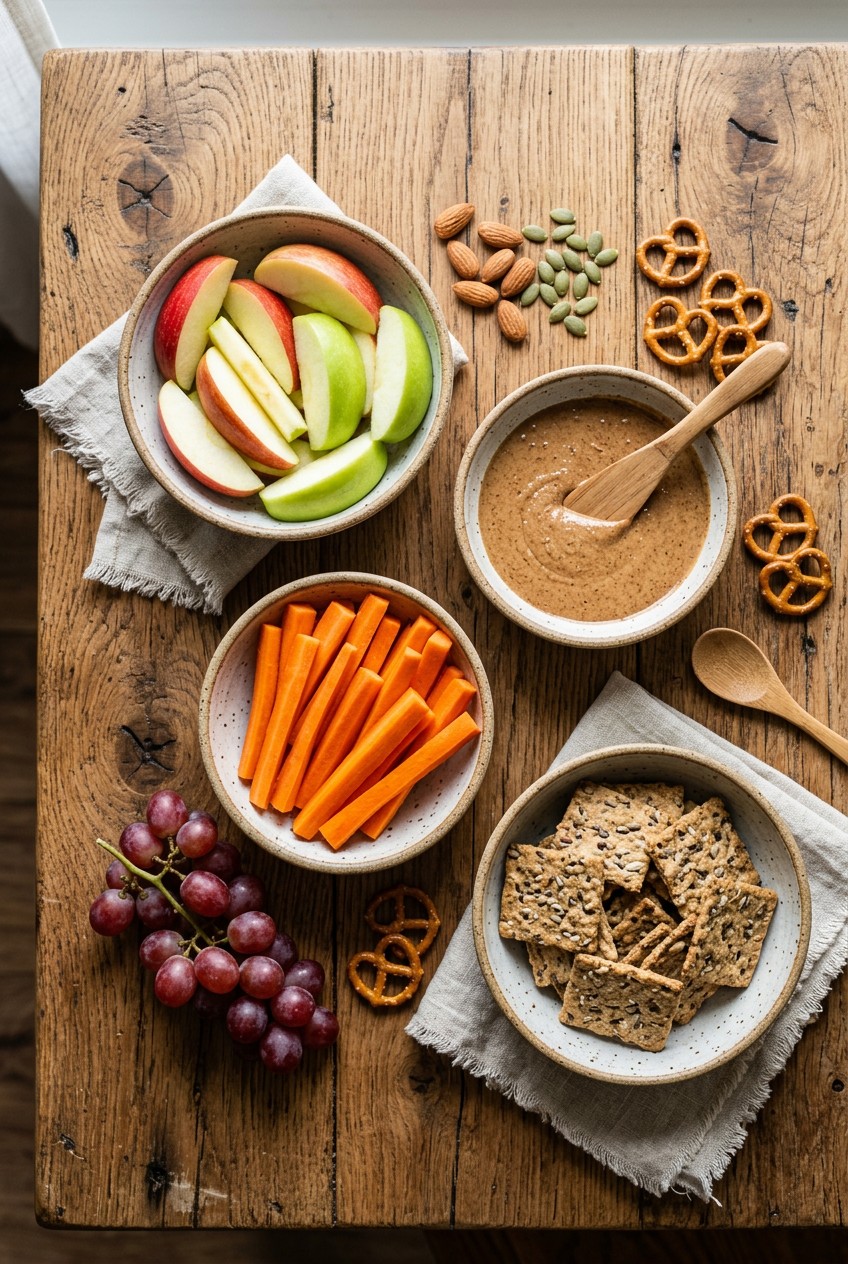
You can’t talk about healthy school snacks without getting back to basics. Fresh fruits and vegetables are the absolute foundation. But let’s be honest about the reality of packing raw veggies. I used to throw wet baby carrots directly into a plastic baggie. By noon, they were covered in this gross, slimy condensation. The smell when you opened the bag was distinctly swampy. My kids wouldn’t touch them. I learned you have to dry your produce completely before packing it. Now, I buy a 16 oz bag of organic baby carrots for $1.99 at Sprouts. I lay them on a paper towel to absorb the moisture before putting them in a hard-sided container. It keeps that crucial crisp snap intact. I also avoid snacks high in empty calories. Those bright orange cheese puffs might be cheap, but they leave your fingers coated in greasy dust and offer zero fiber. Instead, I slice up crisp Fuji apples. I soak the slices in a bowl of cold water with exactly 1/2 teaspoon of salt for five minutes. Rinse them off, and they won’t turn that sad, bruised brown color by lunchtime. It’s a tiny extra step that completely changes the visual appeal. You might also like: 20 Lovely Kids Healthy Snack Ideas You Haven’t Thought Of

Veratify Healthy Mixed Snack Box (66 Count) Snacks Gift
Veratify Healthy Mixed Snack Box (66 Count) Snacks Gift Basket Granola has been one of the most consistently praised picks in this category. 72 reviewers averaged 4.5/5.
4. Ride the Plant-Forward Wave with Legume-Based Snacks

Plant-based eating isn’t just a fad anymore. Even the school cafeterias are catching on. Chartwells K12 reported that 60 to 70 percent of Gen Alpha students regularly eat plant-based meals. I’m totally here for it. But finding plant-based snacks that don’t taste like dirt is a serious challenge. I tried baking my own chickpeas once. I left them in the oven too long, and they turned into literal rocks. I nearly chipped a tooth testing one. Now, I let the pros handle it. I buy Biena Roasted Chickpeas. A 5 oz bag costs $3.99 at Whole Foods. They deliver a deeply satisfying, salty crunch with 6g of protein and 6g of fiber per serving. They don’t get soggy in a lunchbox either. If you want even more protein, check out The Only Bean Crunchy Dry Roasted Edamame Beans. I order the individual packs online, but I’ve seen them at local health stores too. A single serving provides an impressive 11 grams of protein and 4 grams of fiber. The texture is light and airy, almost like a puffed cheese snack, but without the artificial neon powder. It’s a huge win for busy weeknights when you’re scrambling to pack a balanced bag. You might also like: 15 Clever Aesthetic Healthy Lunch Ideas to Inspire Your Next Project
5. Navigate Nut-Free School Zones with Seed-Based Alternatives

Almost every elementary school has strict nut-free policies now. I found this out the hard way when a teacher sent home my kid’s peanut butter sandwich with a sternly worded sticky note. I was mortified. I had to pivot quickly. Sunflower seed butter is the ultimate lifesaver here. I buy the organic SunButter for $6.49 at Trader Joe’s. It has a slightly earthy, deeply roasted aroma that mimics peanut butter beautifully. The texture is a bit runnier, so I make sure to spread it thin on whole wheat bread so it won’t leak out the sides and make a sticky mess on little fingers. For packaged options, I’m obsessed with the Happy Wolf Bar. They cost about $2.50 each at my local co-op. They use sunflower seed butter as the primary ingredient. They aren’t dry or crumbly at all. They are incredibly soft and chewy, almost like a dense brownie, but totally safe for the classroom. If your kids miss the crunch of a traditional trail mix, grab a bag of GoRaw Sprouted Trail Mix Clusters. They use pumpkin and sunflower seeds instead of almonds or cashews. The sharp crunch and slightly salty finish hit the exact same craving without breaking any school rules. You might also like: 20 Lovely Healthy High Protein Low Calorie Dinner Ideas Worth Trying This Year
6. DIY Snacks for Cost Savings and Ingredient Control

Making your own snacks saves a ridiculous amount of money. Store-bought granola bars can run anywhere from 22 to 48 cents per bar. If you make them at home, you’re looking at maybe 9 cents a serving. But I won’t lie to you. The first time I tried making DIY energy bites, my kitchen looked like a war zone. I used way too much honey. My hands were coated in a thick, sticky paste that took three washes to get off. The oats were scattered across the floor, crunching under my slippers. I eventually perfected the ratio. You need exactly 1 cup of rolled oats, 1/2 cup of SunButter, and just 2 tablespoons of honey. Mix it in a bowl, chill the dough for 20 minutes, and then roll them into 1-inch balls. The chilling step is crucial. If you skip it, the dough just smears everywhere. These bites have a dense, satisfying chew and a rich, nutty flavor. Plus, you control every single ingredient. You aren’t paying for fancy wrappers or cheap filler oils. I make a double batch on Sunday nights. It takes exactly ten minutes of active work and handles snacks for the entire week.

KIND Breakfast Bars, Peanut Butter, Healthy Snacks
A dependable everyday pick — KIND Breakfast Bars pulls in 16 ratings at 4.5 stars. Not flashy, just solid.
7. Master Portion Control with Mindful Packaging Choices

Buying in bulk is great for the budget, but it’s terrible for portion control. I used to send my oldest to school with a giant zip-top bag of pretzels. He’d mindlessly eat the entire thing by recess and complain of a stomach ache. The sheer volume of dry, salty carbs was just too much. Single-serve packaging is convenient, but you have to choose the right brands. Registered Dietitian Megan Ware suggests using one pouch of Smash Foods Snack Bites for younger children, or two for active teens. I grab the multi-pack at Costco for $14.99. They have a satisfying, dense texture that forces you to chew slowly. Another favorite is Lesser Evil organic popcorn. I buy the 0.46 oz individual bags. A 10-pack costs about $6.99 at Whole Foods. The bags are pumped full of air, so the popcorn won’t get crushed into dusty crumbs in the bottom of a backpack. The popcorn is popped in coconut oil, giving it a rich, buttery smell without any actual dairy. The pre-portioned bags mean I don’t have to stand at the counter measuring out cups of popcorn while half of it spills onto the floor.
8. Embrace Fibermaxxing for Optimal Gut Health

Fibermaxxing is a massive trend right now, and for good reason. Most kids are severely lacking in fiber, which leads to sluggish digestion and major mood swings. But you can’t just dump a bowl of bran cereal in front of an eight-year-old and expect a smile. I tried sneaking raw kale into a green smoothie once. My daughter took one sip, gagged at the gritty texture, and refused to drink smoothies for a month. You have to be stealthy. I gradually introduce fiber-rich foods like berries and beans. I buy the 16 oz bags of frozen mixed berries at Trader Joe’s for $3.49. I thaw a 1/2 cup portion overnight in the fridge. By morning, they release this beautiful, sweet, syrupy juice. I mix that directly into plain yogurt. It naturally sweetens the yogurt and adds a massive fiber boost. If you’re buying packaged products, look for ingredients like inulin or psyllium husk. You want to aim for 3 to 5 grams of fiber per serving. Just remember to pack a reusable water bottle. If you increase their fiber without increasing their water intake, you’re going to cause a serious stomach ache. Trust me on that one.
9. Pistachios: The Complete Protein Powerhouse

If your school doesn’t have a nut ban, pistachios are an absolute goldmine. They aren’t just tasty; they are one of the few nuts that provide complete protein, meaning they contain all nine essential amino acids. A quarter-cup of shelled pistachios offers 6 to 7 grams of protein. But here’s my hot take. Do not buy the pre-shelled ones for kids. I used to buy the expensive bags of naked pistachios. My kids would inhale a handful in three seconds flat. There was no mindful eating happening. Now, I buy the in-shell Wonderful Pistachios. A 16 oz bag costs $5.99 at Walmart. The physical act of cracking open the hard, salty shells forces them to slow down. It turns snacking into an activity. They get to hear that satisfying little crack and dig out the bright green nut inside. It completely changes the pacing of their snack time. Yes, it leaves a pile of empty shells on the kitchen counter that I inevitably have to sweep up. But the trade-off for better digestion and actual satiety is worth the minor mess. Just pack an extra empty baggie in their lunchbox so they have a place to put the discarded shells.
Simple Mills Almond Flour Snack Bars, Spiced Carrot Cake
Honestly, Simple Mills Almond Flour Snack Bars surprised me — sturdier than it looks in the photos, and over 532 buyers gave it 4.5 stars.
10. Explore Seaweed Options for Healthy School Snacks

I know what you’re thinking. Seaweed? Really? I was incredibly skeptical too. The first time I opened a pack, the strong, briny smell hit me. It honestly smelled a bit like fish food. I handed a sheet to my son, fully expecting him to spit it out. To my absolute shock, he devoured it. The paper-thin texture melts instantly on your tongue, leaving behind this intense, salty, umami flavor. Seaweed snacks are fantastic because they have incredibly low calorie density but are packed with natural minerals like iodine. I buy the Gimme Organic roasted seaweed snacks. You can get a massive 20-pack at Costco for around $15.00. The individual plastic trays protect the delicate sheets from getting crushed into green dust. My only warning is to make sure your kids check their teeth in a mirror after eating them. Those little green flakes love to stick right to the front teeth. It’s a hilarious look, but maybe not great for school picture day. If your family is tired of the same old crackers and fruit, this is a brilliant way to introduce a completely different flavor profile into their routine.
11. Opt for Savory Crunch from Legumes, Not Just Chips

We all crave a salty, savory crunch in the afternoon. For years, I just bought the giant variety packs of potato chips. They were easy, but they left my kids with greasy fingers and zero actual energy. The chips are just fried starch and salt. I needed a swap that delivered the crunch without the crash. Enter roasted broad beans. If you haven’t tried these yet, you’re missing out. I buy the Bada Bean Bada Boom snacks. A 4.5 oz bag is $4.49 at Sprouts. I usually get the Sweet Sriracha flavor. They have 4g of fiber and 6g of protein per serving. The crunch is aggressive. It’s much louder and denser than a potato chip. It’s the kind of crunch you can hear from across the room. Saffron Road Crunchy Chickpeas are another fantastic option. They offer 5g of fiber and 6g of protein. The Bombay Spice flavor has this incredible, warm aroma of turmeric and cumin. Swapping out traditional chips for these legumes is the easiest upgrade you can make. You get all the satisfying, salty crunch of junk food, but you’re actually fueling their bodies for soccer practice instead of setting them up for a sugar crash.
Packing snacks doesn’t have to be a daily source of stress. You don’t need to spend hours cutting cheese into perfect star shapes or baking complicated muffins from scratch. You just need a few reliable, protein-packed staples that your kids will actually eat. I’ve completely overhauled my pantry using these exact products, and our weeknights are so much smoother now. No more 4 PM meltdowns or untouched baggies of warm celery. Try swapping out just one of your usual packaged snacks for a crunchy legume or a high-protein yogurt tube this week. I promise you’ll notice a difference in their energy levels. If you found this helpful, save this page or pin it to your favorite meal-prep board so you can reference these exact brands during your next grocery run. You’ve got this. No exaggeration.
Frequently Asked Questions
What are the best healthy school snacks for nut-free zones?
Sunflower seed butter is your best friend. Brands like SunButter and Happy Wolf Bars offer the same creamy texture and protein as peanut butter without violating school allergy policies. Roasted chickpeas and edamame are also excellent nut-free options.
How much protein should a school snack have?
Aim for 3 to 5 grams of protein per snack to keep kids full and focused. Options like hard-boiled eggs (6g), Greek yogurt (15g), or roasted broad beans (6g) provide lasting energy and prevent the afternoon sugar crash.
Are packaged fruit snacks considered healthy?
Most traditional fruit snacks are packed with high-fructose corn syrup and hidden sugars. Always check the label. Opt for brands with zero added sugars, like Stonyfield Organic Pouches or That’s It Fruit Bars, which use real fruit ingredients.
How can I prevent fresh apples from turning brown in a lunchbox?
Soak your freshly sliced apples in a bowl of cold water mixed with a half teaspoon of salt for five minutes. Rinse them thoroughly before packing. This simple trick stops oxidation and keeps them looking crisp and fresh.
