What’s Inside
- The Whole Wheat Pearl Couscous Salad Recipes Base
- The Golden Toasted Couscous Bowl
- The Broth-Infused Mediterranean Medley
- The Chickpea and Couscous Protein Fix
- The Lemon-Dijon Vinaigrette Toss
- The Heavy Herb Mint and Parsley Blend
- The “Warm Toss” Flavor Bomb Trick
- The Moroccan Spiced Sweet and Savory Bowl
- The Toasted Pine Nut Crunch
- The Hearty Rotisserie Chicken Bowl
- The Anti-Soggy Meal Prep Masterpiece
I dumped a glass container of soggy, gray mush into the trash at Whole Foods last Tuesday. I was trying to eat my prepped lunch in their cafe, but my search for couscous salad recipes had led me way off track. The grains were glued together in a flavorless clump that tasted like wet cardboard. I’m embarrassed to admit I teared up a bit over spilled pasta. It’s frustrating when you’re trying to eat clean and your meal prep turns into paste. I’ve spent three years testing how to make healthy grains taste good and hold their texture. Most people mess this up because they treat couscous like rice, boiling it to death in plain water until it falls apart. It’s actually a tiny pasta, and it needs respect. If you’re tired of salads that leave you starving an hour later, I’m sharing the formulas I swear by. Skip the fat-free stuff and those bland boil-in-bag methods. Let’s fix your lunch game for good.
1. The Whole Wheat Pearl Couscous Salad Recipes Base

I used to buy those tiny, refined yellow grains in cardboard boxes. I’d eat a huge bowl and feel starving forty-five minutes later. Honestly, this changed how I view carbs. You need to opt for whole wheat pearl couscous instead. I buy Bob’s Red Mill Whole Wheat Pearl Couscous. It’s usually around $4.99 for a 16oz bag at Sprouts. If I can’t find that, Trader Joe’s Organic Whole Wheat Couscous is a great backup for about $3.49.
This boosts the fiber to around 3 grams per 1/4 cup uncooked. It also gives you 6 grams of protein per serving, plus minerals like selenium and potassium. Refined versions just spike your blood sugar and leave you crashing. The whole wheat version has a chewy, satisfying bite that holds up in cold salads. When I first switched to the pearl variety, I messed up the liquid ratio. Learned that the hard way. For pearl couscous, follow the package instructions closely. It usually needs 1.25 cups of water for every 1 cup of couscous. Simmer it for 8 to 10 minutes, then cover it and let it sit. Don’t skip the resting phase. That’s where the magic happens and the grains plump up.
2. The Golden Toasted Couscous Bowl

If you’re dumping raw couscous into boiling water, you’re missing out on serious flavor. Before cooking, toast your grains. I measure 1 cup of pearl couscous and toast it in 1 tablespoon of quality extra virgin olive oil. I swear by California Olive Ranch. You can grab a 16.9oz bottle at Target for about $12.49. It has a peppery, bright flavor that works for this.
Place your skillet over medium heat and stir constantly. It only takes a few minutes until the grains turn golden brown. The caramel-butter smell that fills your kitchen is incredible. I tried this wrong for months. I used to walk away to answer an email and come back to a smoking pan of burnt beads. You can’t take your eyes off it. This step develops a deep flavor profile that makes the salad taste like it came from a high-end restaurant. Once the grains are toasted, slowly pour in your cooking liquid. Be careful, because the hot oil will sputter and hiss.
3. The Broth-Infused Mediterranean Medley

Stop cooking your grains in plain tap water. It’s a missed opportunity. Use a good vegetable or chicken stock instead. I like Marigold brand vegetable stock, which usually runs about $4.50 a carton. This infuses the couscous with savory flavor, reducing the need for extra salt later. I once spilled an entire carton of chicken broth on my shoes at Target while juggling groceries, but it’s still my favorite liquid base.
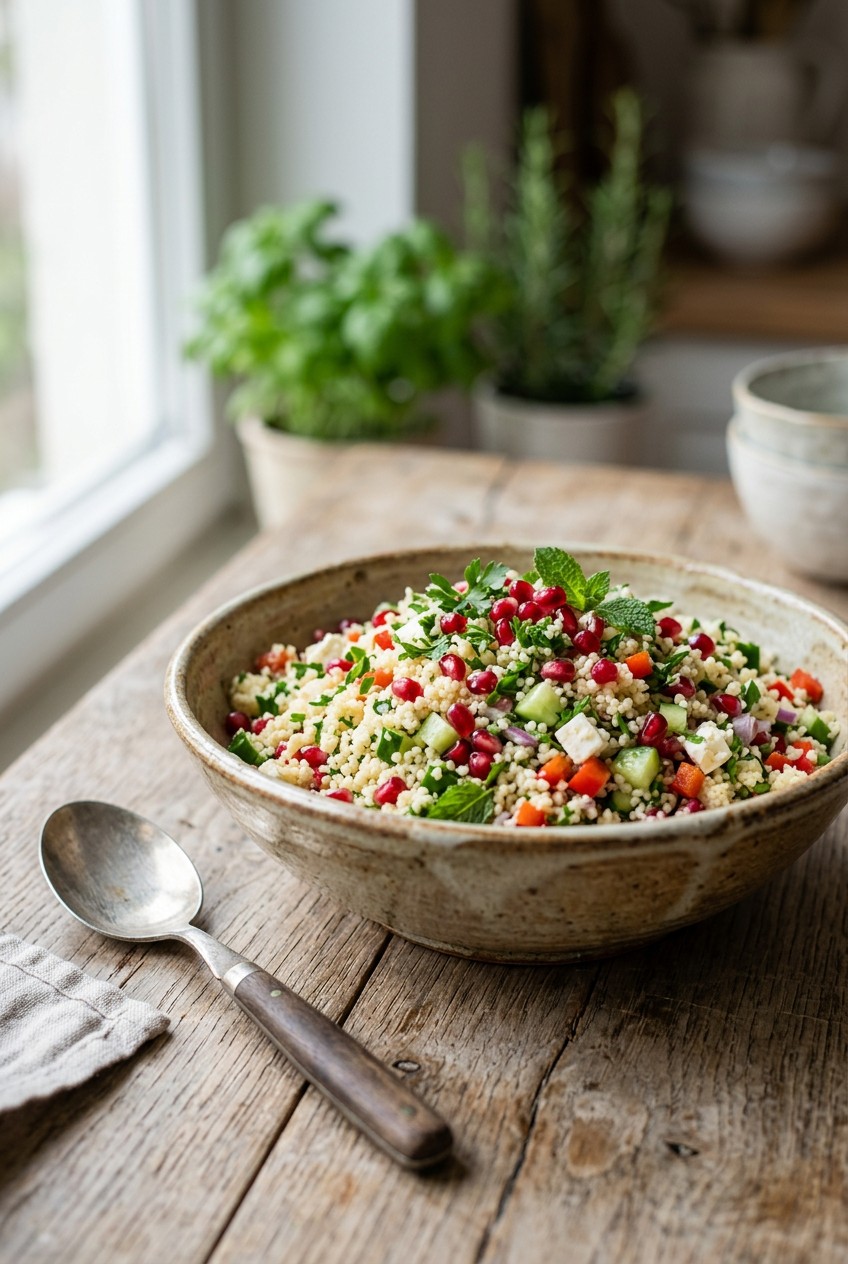
Once your base is cooked, build a Mediterranean foundation. I add 1 cup of halved grape tomatoes and 1 cup of diced English cucumber. Use English cucumbers because they aren’t as bitter and have thin skins. I also throw in 1/2 cup of pitted Kalamata olives. I grab a jar at Kroger for about $5.99. Finally, add 1/3 cup of finely chopped red onion. These provide a fresh, tangy crunch that balances the chewy grains. The salty bite of the olives mixed with the sweet tomatoes is perfect.

Half Baked Harvest Super Simple: More Than 125 Recipes for
Honestly, Half Baked Harvest Super Simple: More Than 125 Recipes for Instant surprised me — sturdier than it looks in the photos.
4. The Chickpea and Couscous Protein Fix

A salad without protein is just a snack that leaves you angry. To make this a real meal, add one 15-ounce can of chickpeas. These are my favorite pantry staple. I buy the Great Value brand at Walmart for $0.88 a can. They taste just like the expensive organic ones once they’re mixed into a dish. You might also like: 15 Charming School Healthy Lunch Ideas You Need to See
Drain and rinse them thoroughly in a colander until the water runs clear. The liquid they come in is thick and can make your salad slimy. Adding chickpeas boosts the plant-based protein and fiber. It makes the salad satisfying and suitable as a main course. The starchy, creamy texture of the chickpeas contrasts with the chewy pearl couscous and crisp cucumbers. I used to skip the beans because I thought it would make the meal too heavy, but that was a mistake. Without them, I’d end up raiding my pantry for chips at three in the afternoon. The chickpeas keep your blood sugar stable and your stomach full. You might also like: 15 Beautiful Healthy Breakfast Ideas You Haven’t Thought Of
5. The Lemon-Dijon Vinaigrette Toss

Skip the fat-free bottled dressings. They taste like cardboard and are packed with weird gums and sweeteners. Craft a zesty lemon-Dijon vinaigrette from scratch. It takes two minutes. In a small glass jar, whisk together 1/4 cup of high-quality extra virgin olive oil and 2 tablespoons of fresh lemon juice. Please use real lemons, not that sad plastic squeeze bottle. You might also like: 20 Clever Healthy Snack Ideas That Make a Real Difference
Add 1 teaspoon of Dijon mustard. I use Grey Poupon, which is $3.99 at any grocery store. The mustard acts as an emulsifier, binding the oil and lemon juice so they won’t separate into a greasy mess. Toss in 1/2 teaspoon of dried oregano, a heavy pinch of flaky sea salt, and freshly ground black pepper. Put the lid on and shake it until it looks creamy and bright yellow. This creates a dressing without inflammatory ingredients. I used to drown my salads in store-bought ranch, and I couldn’t figure out why I felt so sluggish. This dressing is light, sharp, and cuts through the starchiness.
6. The Heavy Herb Mint and Parsley Blend

Don’t skimp on fresh herbs. A lot of people treat parsley like a useless garnish you push to the side. That’s a mistake. In Mediterranean cooking, herbs are leafy greens. You need a mix of 1/2 cup chopped fresh flat-leaf parsley and 1/4 cup chopped fresh mint. You can swap the mint for basil or dill depending on what’s in the fridge.
These herbs add vibrant flavor, an incredible aroma, and a pop of green color. Finely chop them to ensure even distribution. I wash my herbs the second I get home, wrap them in a damp paper towel, and store them in a plastic bag. Otherwise, they turn into brown slime in the crisper drawer within two days. The sharp, peppery bite of the parsley combined with the cooling mint changes the flavor of the dish. It makes the bowl taste fresh and masks any heaviness from the olive oil.

Skinnytaste High Protein: 100 Healthy
Honestly, Skinnytaste High Protein: 100 Healthy surprised me — sturdier than it looks in the photos.
7. The “Warm Toss” Flavor Bomb Trick

Most people mess up assembly. They cook the grains, put them in the fridge to cool, and then pour cold dressing over cold pasta. The dressing just slides right off the grains and pools at the bottom. You need to use the warm toss trick.
For a flavorful result, immediately toss your cooked couscous with the lemon-Dijon dressing while the grains are still steaming hot. The warm couscous is porous and will absorb the flavors much more effectively as it cools. It pulls the oil and lemon juice into the center of the pearl. I tried this wrong for months. I’d eat dry salads and wonder why they didn’t taste like the ones from my favorite deli. Once I started dressing the grains while hot, it fixed everything. You can see the steam rising as you stir, and the smell of the warm garlic and oregano is incredible.
8. The Moroccan Spiced Sweet and Savory Bowl

If you’re bored of standard profiles, infuse your bowl with Moroccan-inspired spices. I incorporate 1 teaspoon of ground cumin, 1/2 teaspoon of ground coriander, and a tiny pinch of cinnamon. I look for organic spices from brands like Simply Organic. Their cumin is around $6.99 a bottle, and the flavor is pungent and earthy.
To balance those deep spices, introduce sweetness with dried fruits. I add 2 tablespoons of finely chopped dried apricots or golden raisins. Trader Joe’s offers amazing value on dried fruits. Their Turkish apricots are only $3.49 a bag. The sweetness provides a bright contrast to the savory spices and adds a nice chewy texture. I was hesitant to put fruit in my pasta at first. I thought it would taste like a weird dessert. But the cinnamon and cumin bridge the gap perfectly. It feels fancy but takes zero effort to throw together on a busy weeknight.
9. The Toasted Pine Nut Crunch

Texture is everything. If everything is soft, you’ll get bored halfway through the bowl. Add healthy fats and a serious crunch with toasted nuts or seeds. I toast 1/2 cup of pine nuts in a dry pan until they are fragrant. I buy the Kirkland Signature pine nuts at Costco. It’s about $11.99 for a bag, which is way cheaper than the tiny plastic tubs at regular stores.
Watch them like a hawk. I was watching TikTok last month and incinerated a ten-dollar batch in forty seconds. They go from pale white to dark brown instantly. If pine nuts aren’t in your budget, slivered almonds or roasted pepitas work well. Add them just before serving to maintain their crispness. If you mix them in during your Sunday meal prep, they’ll be soggy by Tuesday. Keeping them in a separate container in your lunch bag is the best way to guarantee a crunch.

Cathy Yoder’s Air Fryer Cookbook for Two (2026): Easy
A dependable everyday pick — Cathy Yoder’s Air Fryer Cookbook for Two (2026): Easy. Not flashy, just solid.
10. The Hearty Rotisserie Chicken Bowl

Sometimes chickpeas aren’t enough to keep me full after a workout. To make this a hearty main dish, I incorporate 1 cup of shredded rotisserie chicken. I grab a fresh rotisserie chicken from Sprouts for $4.99 on my way home from the gym. It’s cheap, cooked, and the meat is tender.
I shred the breast meat with two forks and toss it directly into the warm grains. The chicken absorbs the lemon dressing beautifully. If you’re vegetarian, grilled halloumi cheese or balsamic roasted tofu are amazing substitutes. Halloumi is a firm, salty cheese that you can sear in a dry pan until it gets a crispy brown crust. It doesn’t melt, so it holds its shape. Adding this protein source creates a balanced and filling meal. I’ve eaten this combination for lunch four days in a row without getting tired of it. It prevents that afternoon energy crash that has me reaching for a sugary coffee at 3 PM.
11. The Anti-Soggy Meal Prep Masterpiece

Couscous salads are ideal for prepping, but you have to assemble them right. A common mistake is adding high-water-content vegetables too early. If you mix diced cucumbers and tomatoes into the grains on Sunday, your salad will be a swampy mess by Wednesday. I made this mistake at my old job. I opened my Tupperware in the breakroom and it looked like watery soup. No exaggeration.
To optimize for eating on-the-go, prepare a large batch of grains, dressing, and hearty ingredients like chickpeas and chicken. Store this base in individual airtight containers for 3 to 4 days. I use the Ello glass meal prep containers from Target, which cost about $14.99 for a set. Keep your watery vegetables and delicate greens, like arugula, in a separate baggie. Add them fresh right before eating. This guarantees that your cucumbers stay crisp, your tomatoes don’t turn to mush, and your greens won’t wilt into slime. It takes an extra ten seconds at your desk, but it saves the entire meal.
I’m glad I finally figured out how to make these recipes work. Once you nail the liquid ratios and start toasting your grains, everything changes. You won’t ever go back to eating sad, flavorless desk lunches again. I recommend starting with the lemon-Dijon and chickpea combination. It’s forgiving and packs perfectly for work or school. Pin this page or save these tips for your next Sunday meal prep session. Your future hungry self will thank you.
Frequently Asked Questions
Is whole wheat couscous better for you than white rice?
Yes, whole wheat pearl couscous is significantly higher in fiber and protein than white rice. It’s packed with essential minerals like selenium, which helps keep your blood sugar stable and prevents that dreaded afternoon energy crash.
How do you keep couscous salad from getting soggy?
The secret is mastering your liquid ratio and adding watery vegetables last. If you’re meal prepping, store your diced cucumbers and tomatoes in a separate container. Toss them into the grains right before you eat so everything stays crisp.
Can I make a couscous salad ahead of time?
Absolutely. These salads are perfect for meal prep. You can store the cooked grains, dressing, and proteins in an airtight container in the fridge for up to four days. Just remember to add delicate greens fresh right before eating.
What’s the correct water to couscous ratio?
For fine Moroccan couscous, you need a one-to-one ratio of boiling liquid to grains. If you’re using pearl couscous, you typically need 1.25 cups of broth or water for every 1 cup of dry grains.
