What’s Inside
- The Pre-Salting Trick for Cabbage Salad Recipes
- Slicing Matters More Than You Think
- Timing Your Dressing Like a Pro
- The Perfect Creamy Base Without the Junk
- Adding Global Flavors to Cabbage Salad Recipes
- Boosting Gut Health with Fermented Additions
- The Secret to Unexpected Crunch
- Choosing the Right Cabbage Variety
- Brightening Everything Up with Fresh Herbs
- The Magic of Sumac and Plant-Based Protein
Last Tuesday at Whole Foods, I caught a whiff of the deli counter’s coleslaw. It smelled like pure mayonnaise and regret. I used to make soggy, sad cabbage salad recipes that sat in a puddle of watery dressing at the bottom of the bowl. It was gross. My kids literally gagged at the dinner table. Now, I make cabbage salad recipes my family actually begs for. We eat them at least three times a week. Let’s fix your salads. I’m going to show you exactly how to get that perfect crunch every single time.
1. The Pre-Salting Trick for Cabbage Salad Recipes

I ruined my brother’s Fourth of July BBQ three years ago. I brought a massive bowl of slaw, and by the time the burgers were ready, my salad was swimming in a gray, watery puddle. The texture was like wet cardboard. Nobody ate it. The secret to avoiding this nightmare is pre-salting. You absolutely must draw out the excess water before you add any dressing. I take 1/2 head of green cabbage, finely shredded, and toss it with 1/4 teaspoon of Morton Table Salt (the basic 26 oz blue cylinder you get for $1.39 at Kroger). Let it sit in a colander in the sink for 30 minutes to an hour. You’ll see the water dripping out. After that, rinse it thoroughly under freezing cold water. If you skip the rinse, you’re going to have a massive salt bomb that ruins your dinner. Then, dry it aggressively. I use my OXO Good Grips Salad Spinner ($29.99 at Target) and give it at least three hard spins. Pat it down with two thick paper towels just to be safe. This simple step forces the cabbage to stay crunchy for days. It stops the plant cells from leaking water into your dressing later on. I’ve seen people try to skip this by adding less dressing, but it never works. The cabbage still sweats. Your cabbage salad recipes won’t turn into soup again. I’m telling you, this is non-negotiable. Don’t skip it. Trust me.
2. Slicing Matters More Than You Think

I used to chop my cabbage with a dull chef’s knife. I’d end up with massive, thick chunks mixed with tiny slivers. It was impossible to chew properly. My jaw hurt after dinner because the pieces were so rigid. If you want uniform flavor, you need a mandoline. Don’t be scared of them. Just use the hand guard. I personally swear by the OXO Good Grips Handheld Mandoline Slicer. I grabbed mine for $18.99 at Target last month when my old one broke. It has three thickness settings. I always use the thinnest setting (setting 1) for red cabbage. It creates delicate, paper-thin ribbons that soak up the dressing beautifully. If you’re feeling fancy, the OXO Good Grips Chef’s Mandoline Slicer 2.0 runs about $100.99 at Williams Sonoma, but the cheap handheld one works perfectly for most people. I tried slicing 1 whole head of Napa cabbage with a knife last week just to see if I still had the skills. I don’t. The pieces were too thick, and the dressing slid right off the waxy surface. The texture was awful. A mandoline makes the cabbage soft enough to eat easily but keeps that satisfying crunch intact. I’ve cut myself on a mandoline before because I was rushing. Always use the plastic guard. It isn’t worth losing a fingertip. No exaggeration. You’re going to notice a huge difference in how your salads feel in your mouth.
3. Timing Your Dressing Like a Pro

Most people get this wrong. I see it all the time at family potlucks. Someone brings a beautiful salad, but they dressed it four hours ago. The acid in the vinegar cooks the raw cabbage. It turns limp, gray, and unappetizing. I made this mistake at my daughter’s birthday party last year. I prepped everything at 10 AM, poured the dressing on, and left it in the fridge. By 2 PM, it was mush. Nobody touched it. Now, I keep my dry ingredients in a big glass bowl and my dressing in a separate mason jar. I don’t combine them until 20 minutes before serving. That is the sweet spot. It gives the cabbage just enough time to absorb the flavors without losing its snap. When I use a vinaigrette made with 3 tablespoons of California Olive Ranch 100% California EVOO (the 16.9 fl oz bottle is $15.49 at Sprouts) and 1 tablespoon of fresh lemon juice, the acid acts fast. If you dress it too early, you won’t get that loud crunch. You want your neighbors to hear you chewing. Set a timer on your phone if you need to. Just wait to dress it. I’ve tested this with different vinegars, and the result is always the same. Acid breaks down the cellular walls of the cabbage. It makes all the difference. You might also like: 20 Lovely Kids Healthy Snack Ideas You Haven’t Thought Of

Air Fryer Cookbook: 600 Effortless Air Fryer Recipes for
A dependable everyday pick — Air Fryer Cookbook: 600 Effortless Air Fryer Recipes for Beginners and. Not flashy, just solid.
4. The Perfect Creamy Base Without the Junk

Skip the fat-free stuff at the grocery store. It tastes like wet cardboard mixed with chemicals. I bought a bottle of generic fat-free coleslaw dressing once when I was in a rush. It was so sweet I spit it out into a napkin. You need to make your own dressing. It takes two minutes and tastes infinitely better. My favorite base uses 1/2 cup of Hellmann’s Light Mayo ($5.98 for the 30 oz jar at Walmart) and 1/2 cup of Kite Hill dairy-free plain yogurt ($5.49 for 16 oz at Whole Foods). The yogurt cuts the heaviness of the mayo but keeps it creamy. Then I whisk in 1.5 tablespoons of Bragg Apple Cider Vinegar ($6.29 for 16 oz at Trader Joe’s), 2 teaspoons of Grey Poupon Dijon mustard, and 1 teaspoon of McCormick celery seeds. The celery seeds are crucial. They add an earthy, bitter pop that balances the tang of the vinegar. I used to dump a quarter cup of white sugar into my dressings because that’s what my grandma did. Don’t do that. It’s unnecessary. The natural tanginess of the apple cider vinegar and the mustard provides all the flavor you need. I’ve served this to people who claim they hate mayonnaise, and they always ask for the recipe. The yogurt hides it perfectly. It coats the cabbage without weighing it down or making it overly sweet. You might also like: 15 Beautiful Healthy Breakfast Ideas You Haven’t Thought Of
5. Adding Global Flavors to Cabbage Salad Recipes

Plain old mayo and vinegar gets boring fast. I hit a wall last winter where I couldn’t even look at a standard coleslaw without groaning. I started messing around with different flavor profiles to keep my cabbage salad recipes interesting. The best thing I ever did was buy a jar of Mother-in-Law’s Gochujang ($8.99 for 10 oz at Whole Foods). I whisked 1 tablespoon of the spicy fermented paste into 3 tablespoons of sesame oil and 2 tablespoons of rice vinegar. It created a sticky, bright red dressing that tasted spicy, sweet, and tangy. I tossed it with 4 cups of shredded Napa cabbage. The smell of the toasted sesame oil mixed with the chili paste was intoxicating. Another favorite is making a creamy tahini drizzle. I use 2 tablespoons of Soom Tahini ($9.49 for 11 oz at Sprouts), 1 tablespoon of warm water, and the juice of half a lemon. It gives the salad a nutty, rich finish. Don’t be afraid to raid the international aisle. Cabbage is a blank canvas. It absorbs whatever bold flavors you throw at it. I’ve also tried using miso paste, but it tends to be too salty unless you balance it with a splash of maple syrup. Just make sure you mix the heavy pastes with a little warm water first so they don’t clump up into giant, unappetizing globs in the bottom of your bowl. You might also like: 15 Beautiful Wonyoungism Healthy Breakfast Ideas That Make a Real Difference
6. Boosting Gut Health with Fermented Additions

I used to think adding cabbage to cabbage was redundant. I was wrong. Mixing fresh, raw cabbage with fermented cabbage is a revelation. Plus, it’s amazing for your digestion. I struggled with bloating last year after eating too many heavy winter meals. My doctor suggested adding more probiotics. I started finely chopping 2 tablespoons of Cleveland Kitchen Classic Kimchi ($6.49 for the 16 oz pouch at Target) and tossing it right into my fresh slaw. The spicy, sour bite of the kimchi contrasts so well with the crisp, mild green cabbage. If you aren’t into spicy food, try sauerkraut instead. I love Bubbies Sauerkraut ($7.99 for a 25 oz jar at Kroger). I take 2 tablespoons, drain the brine completely, and mix it in. If you don’t drain it, your salad gets horribly soggy. The smell is pungent when you open the jar. My husband usually complains about the sour odor. But once it’s mixed with olive oil and crunchy veggies, the smell fades and leaves behind a wonderful, complex tang. I’ve even caught my kids sneaking bites of the kimchi slaw straight from the fridge. They love the sour crunch. It adds a depth of flavor you can’t get from regular vinegar. Your gut will thank you, and your taste buds won’t be bored.

The Healthy Family Cookbook: 100 Fast and Easy Recipes for
The Healthy Family Cookbook: 100 Fast and Easy Recipes for the Whole F punches above its price — 967 buyers rated it 4.5 stars. I would buy it again.
7. The Secret to Unexpected Crunch

Carrots are fine, but they’re incredibly boring. I want my salads to have a loud, satisfying crunch that wakes up my mouth. I started adding 1/2 cup of finely diced jicama to my bowls. Jicama tastes like a savory apple and has a crispness that holds up for days in the fridge. I buy a whole jicama root for about $1.50 at Kroger, peel the skin off, and chop it into matchsticks. I also throw in 1/4 cup of toasted Diamond of California Walnuts ($7.48 for the 16 oz bag at Walmart). The trick is you absolutely must toast them first. I used raw walnuts once and they tasted like dusty cardboard. They ruined the dish. Now, I put them in a dry skillet over medium heat for 5 minutes until they smell rich and nutty. Let them cool completely before adding them to the cabbage, or the residual heat will wilt the leaves. I’ve experimented with sunflower seeds, but they just don’t provide the same dense, satisfying crunch as a toasted walnut. The combination of the sturdy cabbage, the watery snap of the jicama, and the rich crunch of the walnuts is incredible. It makes you want to keep eating just to experience the different textures. It’s a massive upgrade from plain shredded carrots. Took me years to figure out.
8. Choosing the Right Cabbage Variety

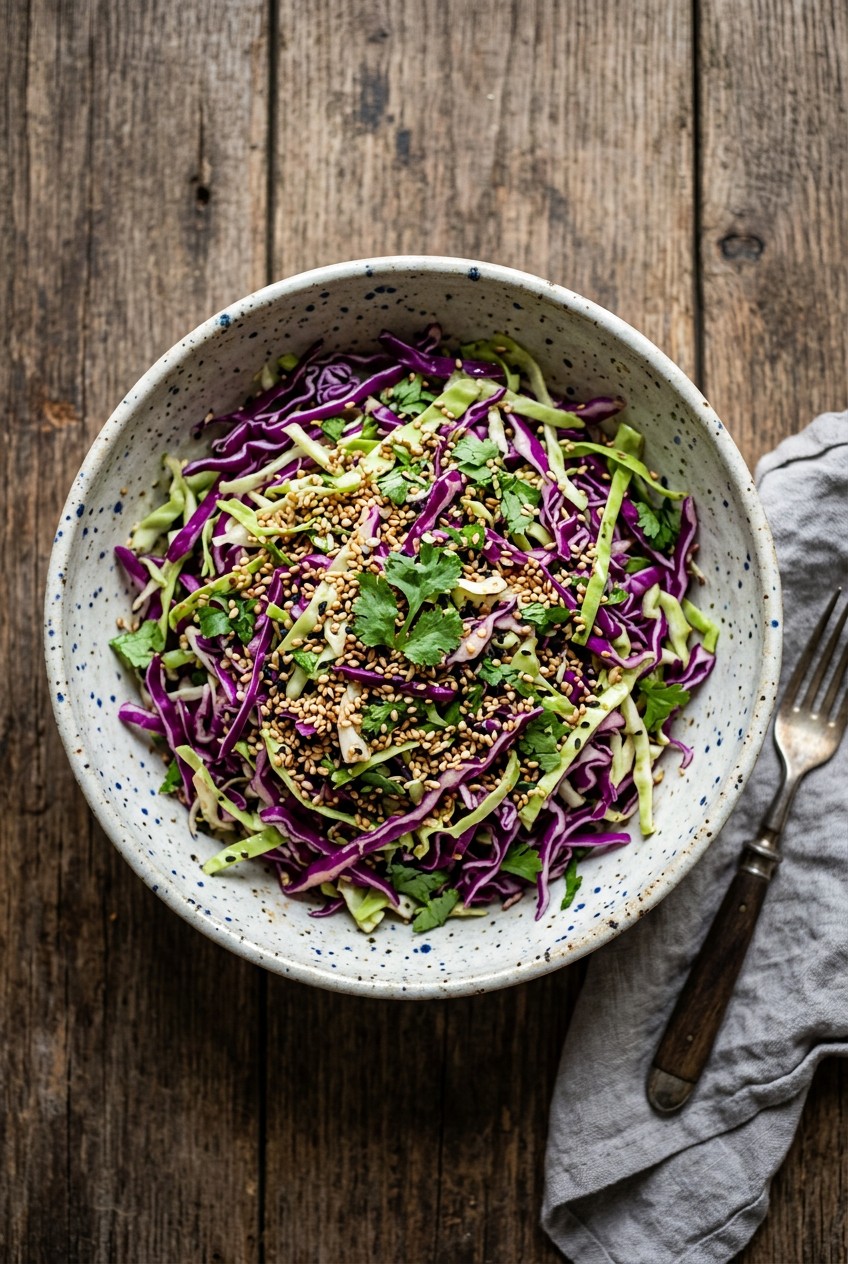
Not all cabbages are created equal. I learned this the hard way when I tried to make a delicate Asian-inspired salad using a rock-hard head of winter green cabbage. It was like chewing on rubber bands. My jaw was exhausted after ten minutes. For light, delicate dressings, you need Napa or Savoy cabbage. They have crinkly, soft leaves that break down easily and hold onto light vinaigrettes. I usually grab a head of Savoy cabbage at Sprouts for around $2.99. It has a gorgeous pale green and yellow color. But for a heavy, creamy mayo dressing, you need the sturdy stuff. Standard green cabbage or red cabbage is best. I love buying Trader Joe’s organic red cabbage (usually $2.29 per pound). It has an intense, peppery bite and turns the whole bowl a vibrant purple color. Just a warning about red cabbage. It bleeds everywhere. I ruined a beautiful white cutting board last month because I left the red cabbage scraps sitting on it for an hour. Wash your hands and your boards immediately. I’ve made the mistake of using red cabbage in a warm slaw before. It turned the entire pan a horrifying shade of blue. Mixing 2 cups of shredded red cabbage with 2 cups of shredded Napa cabbage gives you the best of both worlds. You get the loud crunch from the red and the soft texture from the Napa.
9. Brightening Everything Up with Fresh Herbs

A bowl of shredded cabbage and heavy dressing is dense. It needs something fresh to lift it up. Dried herbs won’t work. I tried using dried dill in a slaw once because I was too lazy to go to the store. It tasted dusty and disappeared into the mayo. You must use fresh herbs. I always chop up 2 tablespoons of fresh Simple Truth Organic Cilantro ($1.99 for a bunch at Kroger) and toss it in right before serving. The smell of freshly chopped cilantro makes my mouth water. If you’re one of those people who thinks cilantro tastes like soap, use fresh mint or dill instead. Fresh dill pairs perfectly with a creamy mustard dressing. The key is adding the herbs at the last second. If you mix the cilantro in too early, the acid in the dressing turns the green leaves into slimy, black strings. It looks disgusting. I learned to keep my chopped herbs in a small glass prep bowl covered with a damp paper towel in the fridge. I’ve also started growing my own cilantro on the windowsill just so I always keep a fresh supply ready. When it’s time to eat, I just sprinkle them over the top. It adds a pop of bright green color and a huge burst of flavor that cuts right through the richness of the dressing.

Cathy Yoder’s Air Fryer Cookbook for Two (2026): Easy
Cathy Yoder’s Air Fryer Cookbook for Two (2026): Easy punches above its price. I would buy it again.
10. The Magic of Sumac and Plant-Based Protein

I used to serve slaw strictly as a tiny side dish next to grilled chicken. Then I realized I could turn it into a massive, filling main course. I started adding plant-based proteins directly to the bowl. I take 4 oz of Nasoya Smoked Tofu ($3.99 for the 8 oz block at Target), cube it, and pan-fry it until the edges are crispy. The smoky flavor of the tofu bleeds into the cabbage, making it taste almost like bacon. It’s incredible. But the real secret weapon here is sumac. If you aren’t using sumac, you’re missing out on flavor. I sprinkle 1/2 teaspoon of Sadaf Sumac ($5.99 for a 2 oz shaker at Whole Foods) right over the finished salad. Sumac is a dark red Middle Eastern spice that tastes like a smoky, tart lemon. I accidentally spilled a whole tablespoon of it into a bowl once. It was way too sour, so measure it carefully. Just a half teaspoon adds a beautiful red dust to the top of the bowl and cuts right through the richness of the tofu and the dressing. I’ve stopped making traditional meat-heavy side dishes because this tofu and sumac combination is so satisfying on its own. It turns a basic side dish into a complex dinner that keeps me full for hours. You need to try this.
I hope these tips change how you approach your greens. I’m telling you, once you start pre-salting and timing your dressings right, you’ll never go back to soggy, sad bowls. Pin this article so it’s ready for your next grocery run! Let’s make salads fun again.
Frequently Asked Questions
How do you keep cabbage salad from getting soggy?
You absolutely must pre-salt your shredded cabbage. Toss it with a little salt, let it sit for 30 minutes in a colander to drain excess water, then rinse and dry it thoroughly before adding any dressing.
Can I make cabbage salad recipes ahead of time?
You can prep the dry ingredients and the dressing separately, but don’t combine them until 20 minutes before serving. The acid in the dressing will break down the cabbage and make it mushy if it sits too long.
What is the best cabbage for a creamy salad?
For heavy, creamy mayo-based dressings, sturdy green or red cabbage works best. They hold their crunch perfectly. Save delicate Napa or Savoy cabbage for lighter, vinegar-based dressings.
How do I make a healthy coleslaw dressing?
Skip the store-bought bottles. I mix equal parts light mayonnaise and plain dairy-free yogurt, then whisk in apple cider vinegar, Dijon mustard, and celery seeds. It’s creamy, tangy, and has zero added sugar.
