What’s Inside
- Blended Cottage Cheese Pancakes: High Protein Breakfast Recipes Redefined
- Greek Yogurt Bowls Engineered for Sustained Energy
- High-Protein Toast Using Sprouted Whole Grains
- Savory Breakfast Soups Using Bone Broth
- Cottage Cheese Egg Bites for Busy Commutes
- Fortified Overnight Oats with Unflavored Isolate
- Plant-Based Smoothies That Actually Keep You Full
- Microwaveable High Protein Breakfast Recipes for Emergencies
I spent three years eating a plain bowl of instant oatmeal every morning before realizing it was the exact reason I’d crash hard by 10 AM. That failure forced me to figure out high-protein breakfast recipes that actually keep my blood sugar stable. Last Tuesday, I found my old food diary from 2019. It was filled with entries documenting mid-morning sugar cravings and intense brain fog. I’m a nutritionist now, but I still remember standing in my tiny apartment kitchen, starving and frustrated because my “healthy” breakfast left me shaky and weak. You don’t need complicated meal plans to fix this. You just need to hit 30 grams of protein before you start your day. I’ve tested hundreds of morning meals. These are the ones that actually work, don’t taste like wet cardboard, and take less than 30 minutes to make.
1. Blended Cottage Cheese Pancakes: High Protein Breakfast Recipes Redefined

I tried making cottage cheese pancakes wrong for months before figuring it out. I’d just dump the curds straight into the batter. The result was a lumpy, wet mess that burned on the outside and stayed raw in the middle. The texture was awful. I learned that the hard way. Last Tuesday at Whole Foods, I grabbed a 16 oz tub of Good Culture Low-Fat Classic Cottage Cheese for $4.99. This brand has a drier consistency that works perfectly for baking. The trick is to blend it first. I put 1/2 cup of the cottage cheese (which gives you about 14 grams of protein right there) into my blender with 2 whole eggs, 1/2 cup of rolled oats, and a splash of vanilla extract. Blending it completely eliminates the curds. You get a smooth, creamy batter that looks exactly like traditional pancake mix.
Common Mistake: Don’t skip the blending step. If you just stir the ingredients together, the water content in the cottage cheese separates when it hits the hot cast iron pan. You’re left with a soggy disaster.
I cook these on a cast iron skillet over medium-low heat. Because the batter is dense, it needs to cook slower than a box mix. I wait until I see tiny bubbles form on the edges before flipping. This specific recipe yields a stack of three thick pancakes with roughly 28 grams of protein. I top them with 1/4 cup of fresh raspberries instead of syrup. The tartness cuts through the rich, dense texture of the pancake. It’s a heavy, filling meal. I’ve eaten this at 7 AM and not felt a single hunger pang until 1 PM. Skip the fat-free cottage cheese for this. It tastes like wet cardboard and makes the batter too runny. Trust me on this.
2. Greek Yogurt Bowls Engineered for Sustained Energy

Most people get this wrong. They buy a tiny cup of flavored yogurt, sprinkle some granola on top, and wonder why they’re starving an hour later. I used to buy those fruit-on-the-bottom cups until I read the label and realized I was eating 22 grams of sugar before 8 AM. Now, I strictly use Fage Total 0% Milkfat Plain Greek Yogurt. I buy the 35.3 oz tub at Target for $7.49. It has a thick, almost chalky texture on its own, which I actually prefer because it feels substantial.
To build the bowl, I measure exactly 3/4 cup of the Fage yogurt. That delivers a solid 18 grams of protein. To hit the 30-gram threshold, I add 1 tablespoon of Manitoba Harvest Hemp Hearts (usually $10.99 for a 12 oz bag at Costco) and 1 tablespoon of chia seeds. The hemp hearts add a nutty, earthy flavor and another 3 grams of protein. The chia seeds absorb the moisture from the yogurt, creating a thick, pudding-like consistency if you let it sit for ten minutes.
Pro Tip: Don’t add honey or maple syrup. If you need sweetness, mash 1/2 cup of blueberries directly into the plain yogurt. The natural juices break down the stiff texture of the Fage. I tried this last month when I ran out of my usual toppings. The purple juice swirls into the yogurt and provides just enough sugar to cut the tang. If you prefer a smoother texture, Oikos Triple Zero Vanilla is a decent alternative. You can usually find a 10 for $12 deal at Kroger. It provides 15 grams of protein per 5.3 oz cup, but it has a slight artificial sweetener aftertaste.
3. High-Protein Toast Using Sprouted Whole Grains

Standard white bread is useless for morning fuel. I’ve monitored my clients’ blood sugar responses, and regular toast spikes it almost as fast as a candy bar. I swapped to Ezekiel 4:9 Sprouted Whole Grain Bread three years ago. I buy the frozen loaf at Trader Joe’s for $6.49. Because it’s flourless and made from sprouted grains and legumes, one slice gives you 5 grams of protein.
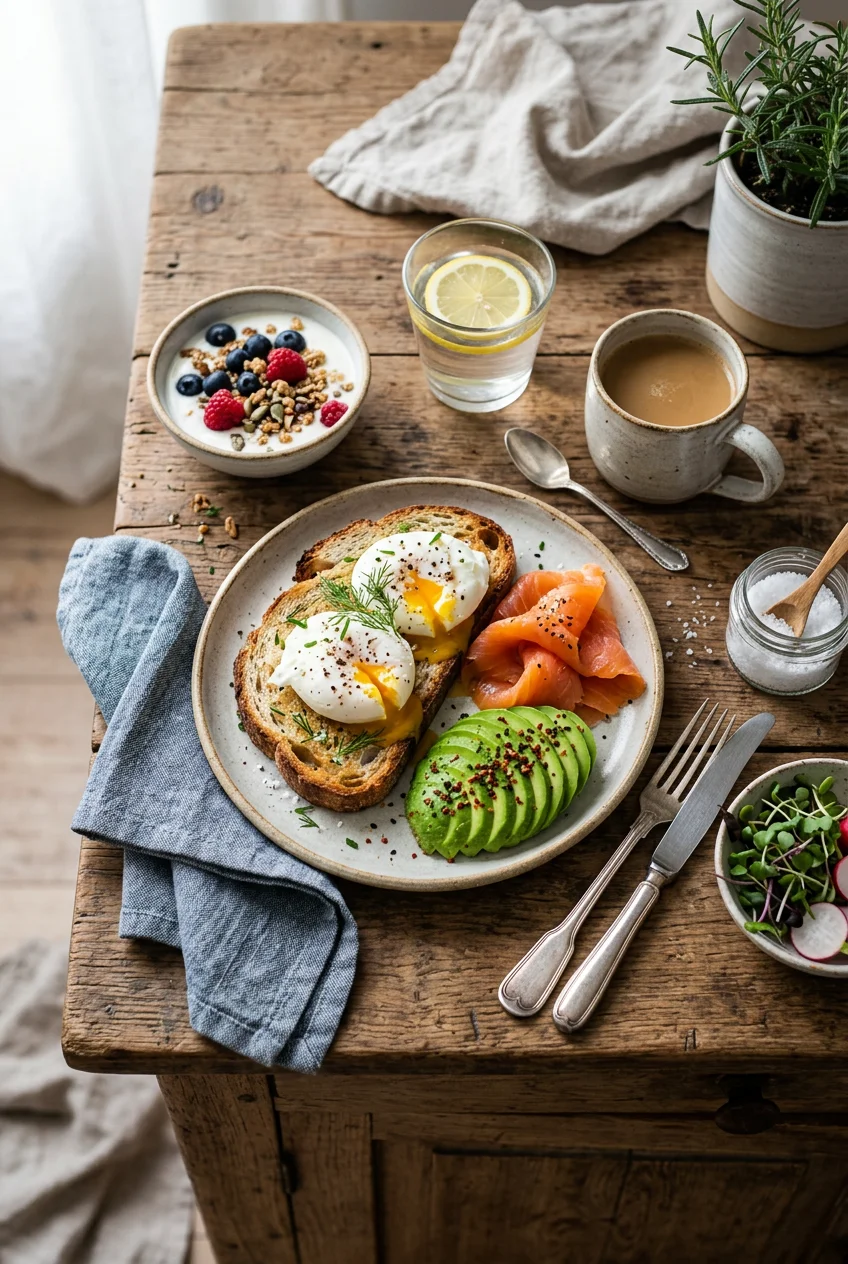
The texture of Ezekiel bread is dense and slightly gritty. If you toast it normally, it stays chewy in the middle. I always double-toast it until the edges are dark brown and crispy. To build a meal that hits over 35 grams of protein, I start with two slices of the double-toasted Ezekiel bread. I spread 1 tablespoon of whipped cream cheese across both slices. Then, I layer 3 ounces of Blue Hill Bay Smoked Salmon ($10.99 at Whole Foods) on top. The smoked salmon alone adds 17 grams of highly bioavailable protein.
Finally, I fry two medium eggs in a non-stick pan and place them over the salmon. When you break the yolk, it coats the dry sprouted bread, completely changing the texture. You might also like: 9 High Protein Vegetarian Meals That Actually Work
Common Mistake: Don’t buy the “protein-fortified” white breads unless you read the ingredient list carefully. Many of them rely heavily on vital wheat gluten, which can cause severe bloating if you’re sensitive to it. I tried P28 High Protein Bread once. While it has 14 grams of protein per slice, the spongy texture and strange yeasty smell were off-putting. I’d rather combine whole food sources like eggs and salmon with a nutrient-dense sprouted grain. You might also like: 15 Inspiring Aesthetic Healthy Snack Ideas to Steal Right Now

Transparent Labs Grass-Fed Whey Protein Isolate
A dependable everyday pick — Transparent Labs Grass-Fed Whey Protein Isolate – Naturally Flavored pulls in 329 ratings at 4.5 stars. Not flashy, just solid.
4. Savory Breakfast Soups Using Bone Broth

Eating soup for breakfast sounds weird. I fought this 2026 trend for a long time. I thought breakfast needed to be eggs or oats. Last winter, I was exhausted from cooking elaborate morning meals. I heated up a mug of plain chicken broth, drank it, and was ravenous twenty minutes later. Plain broth is a snack, not a meal. You have to build it out. You might also like: 9 Carrot Salad Recipes Worth Trying
Now, I use Kettle & Fire Chicken Bone Broth as a base. I pick up the 16.2 oz cartons at Sprouts for $7.99. Bone broth naturally contains about 10 grams of protein per cup due to the collagen content. I pour one cup into a small saucepan and bring it to a simmer. Then, I add 150 grams (about 5 ounces) of leftover shredded chicken breast from the night before. This instantly adds another 45 grams of protein to the pot.
Pro Tip: Add a handful of fresh spinach and 1/4 cup of cooked quinoa to the simmering broth. The spinach wilts in thirty seconds, and the quinoa absorbs the salty, savory chicken flavor.
This entire meal takes under five minutes to heat up on the stove. It’s incredibly hydrating and easy to digest. When I eat this, my stomach feels settled, and I have zero cravings for sweet pastries. The savory, salty profile sets a completely different tone for the day. It’s a massive shift from the standard American breakfast. If you’re tired of chewing through dry chicken breast, letting it soak in simmering bone broth makes it tender and palatable again.
5. Cottage Cheese Egg Bites for Busy Commutes

I hate waking up early to chop vegetables. If I don’t prep my food on Sunday, I end up eating a stale granola bar in my car. I started making these egg bites after buying a silicone muffin tin at Target for $12.99. Don’t use a metal muffin tin for these. I tried it once, sprayed it heavily with oil, and spent forty-five minutes scrubbing baked egg off the metal. No exaggeration.
The secret to these egg bites is the cottage cheese ratio. I crack 6 Vital Farms Pasture-Raised Eggs ($6.99 at Kroger) into a large glass bowl. I whisk in 1 cup of 4% milkfat cottage cheese. You need the full-fat version here. The fat content prevents the eggs from turning rubbery in the oven. I fold in 1/2 cup of diced red bell peppers and 1/4 cup of sharp cheddar cheese.
I divide this mixture evenly into the silicone molds and bake at 350 degrees for 25 minutes. The cottage cheese curds melt into the eggs, creating a dense, custardy texture that resembles the expensive sous-vide bites from coffee shops. Two of these bites provide roughly 18 grams of protein. I usually eat three to hit my morning target.
Common Mistake: Letting them cool in the mold. You have to pop them out of the silicone tray immediately while they’re hot. If they sit in the tray, the steam gets trapped, and the bottoms turn wet and slimy. I store them in a glass container in the fridge for up to four days. In the morning, I just microwave three bites for 45 seconds.
6. Fortified Overnight Oats with Unflavored Isolate

Flavored protein powders ruin oatmeal. I’ve tried mixing vanilla and chocolate powders into my morning oats, and the result always tastes like artificial sweetener and chemicals. The chalky aftertaste would linger in my mouth for hours. I finally stopped forcing myself to eat it and switched my strategy.
I now strictly use Myprotein Impact Whey Isolate in the unflavored version. I order the 2.2 lb bag online, but I’ve seen it at Walmart for around $39.99. Because it’s an isolate, it dissolves completely without leaving a gritty texture, and it truly has zero flavor.
My exact ratio is 40 grams of old-fashioned rolled oats (Quaker Oats, $5.49 at Target), 1 scoop of the unflavored whey isolate (which adds 23 grams of protein), 1 tablespoon of chia seeds, and 1 cup of unsweetened almond milk. I mix the dry ingredients thoroughly in a mason jar first. If you pour the milk in before mixing the powder and oats, the whey clumps into sticky, hard balls at the bottom of the jar.
Pro Tip: Add 1/4 teaspoon of cinnamon and a pinch of sea salt. The salt enhances the natural oat flavor, making up for the lack of sweetener in the protein powder. I leave the jar in the fridge overnight. By morning, the chia seeds and oats have absorbed the liquid. The mixture is thick, cold, and incredibly filling. I top it with 1/2 cup of sliced strawberries right before eating. This jar delivers over 30 grams of protein and keeps my energy stable until lunch.

NAKED Whey 2LB 100% Grass Fed Whey Protein Powder
A dependable everyday pick — NAKED Whey 2LB 100% Grass Fed Whey Protein Powder – Only 1 Ingredient pulls in 98 ratings at 4.5 stars. Not flashy, just solid.
7. Plant-Based Smoothies That Actually Keep You Full

Most smoothies are just fruit slushies disguised as health food. I used to blend bananas, strawberries, and apple juice, thinking I was doing my body a favor. I’d crash hard by 9:30 AM. Fruit alone digests too quickly. You have to anchor a smoothie with fat and protein to delay gastric emptying.
For a plant-based option, I rely heavily on seeds. I buy Bob’s Red Mill Chia Seeds ($8.49) and Bob’s Red Mill Ground Flaxseed ($6.99) at Costco. Chia seeds are a complete protein, meaning they contain all nine essential amino acids. I put 2 tablespoons of chia seeds and 2 tablespoons of ground flaxseed into my blender. That combination alone provides about 8 grams of protein and a massive dose of fiber.
To push the protein content higher without using dairy, I add 1 cup of unsweetened soy milk (Silk Organic, $4.49 at Whole Foods). Soy milk naturally contains 7 grams of protein per cup, unlike almond milk, which has almost none. I toss in 1/2 cup of frozen spinach, 1/2 of a frozen banana for texture, and 2 tablespoons of creamy peanut butter (Smucker’s Natural, $5.99 at Kroger).
Common Mistake: Using whole flaxseeds instead of ground. Your body can’t break down the hard outer shell of a whole flaxseed. They pass right through your digestive tract, and you won’t absorb any of the nutrients or protein. The texture of this smoothie is thick and nutty. The peanut butter and seeds completely mask the taste of the raw spinach.
10. Microwaveable High Protein Breakfast Recipes for Emergencies

I’d love to say I cook from scratch every single day. I don’t. Sometimes my alarm doesn’t go off, the dog gets sick, and I have exactly three minutes to feed myself before a client call. I used to rely on processed protein bars for these moments. I’d eat a dense, chewy chocolate bar and feel bloated and unsatisfied for the rest of the morning.
I finally started keeping microwaveable protein options in my freezer. I specifically look for the 2026 trend of nutrition-first convenience foods. My current staple is the Farm Rich High Protein Blueberry French Toast Sticks. I found a box at Kroger for $6.49. They are fortified with whey protein.
I place five frozen sticks on a microwave-safe plate and heat them for 90 seconds. They don’t get crispy in the microwave (they stay soft and slightly spongy) but they deliver a quick 12 grams of protein. To hit my 30-gram target, I quickly microwave a Jimmy Dean Delights Turkey Sausage Patty ($8.49 for a box of 8 at Target) for 60 seconds. That adds another 13 grams of protein.
It’s not a culinary masterpiece. The French toast sticks are slightly sweeter than I prefer, and the turkey sausage has a distinct black pepper bite. But it works. It keeps me full, prevents the mid-morning blood sugar crash, and stops me from ordering a 600-calorie pastry from the drive-thru. Having a backup plan in your freezer is mandatory if you want to stay consistent.
Finding the right morning routine takes trial and error. I spent years eating the wrong foods, wondering why my energy plummeted by noon. You don’t have to overhaul your entire diet overnight. Start by picking just one of these meals. I highly recommend trying the blended cottage cheese pancakes first. The texture is incredible, and hitting that 30-gram protein mark will completely change how you feel throughout the morning. If you found this helpful, save this page or pin it to your recipe boards so you have these ideas ready the next time you’re staring blankly into your fridge at 6 AM.
Frequently Asked Questions
Why is 30 grams the target for high protein breakfast recipes?
Hitting 30 grams of protein in the morning maximizes muscle protein synthesis and stabilizes your blood sugar for hours. Most people only eat 10 grams at breakfast, which leads to mid-morning crashes and intense sugar cravings.
Can I prep these high protein breakfast recipes in advance?
Yes. The cottage cheese egg bites and unflavored protein overnight oats are perfect for meal prep. You can store the egg bites in a glass container for up to four days and microwave them for 45 seconds when you’re ready to eat.
What if I don’t like the taste of protein powder?
Switch to an unflavored whey isolate. Flavored powders often taste like artificial sweeteners. An unflavored isolate dissolves completely into oatmeal or smoothies without altering the taste, allowing you to boost protein without the chalky aftertaste.
Are plant-based high protein breakfast recipes actually filling?
They are if you use the right ingredients. Relying solely on fruit won’t keep you full. You must anchor plant-based smoothies with complete proteins like chia seeds, ground flaxseed, and soy milk to delay digestion and prevent hunger.
