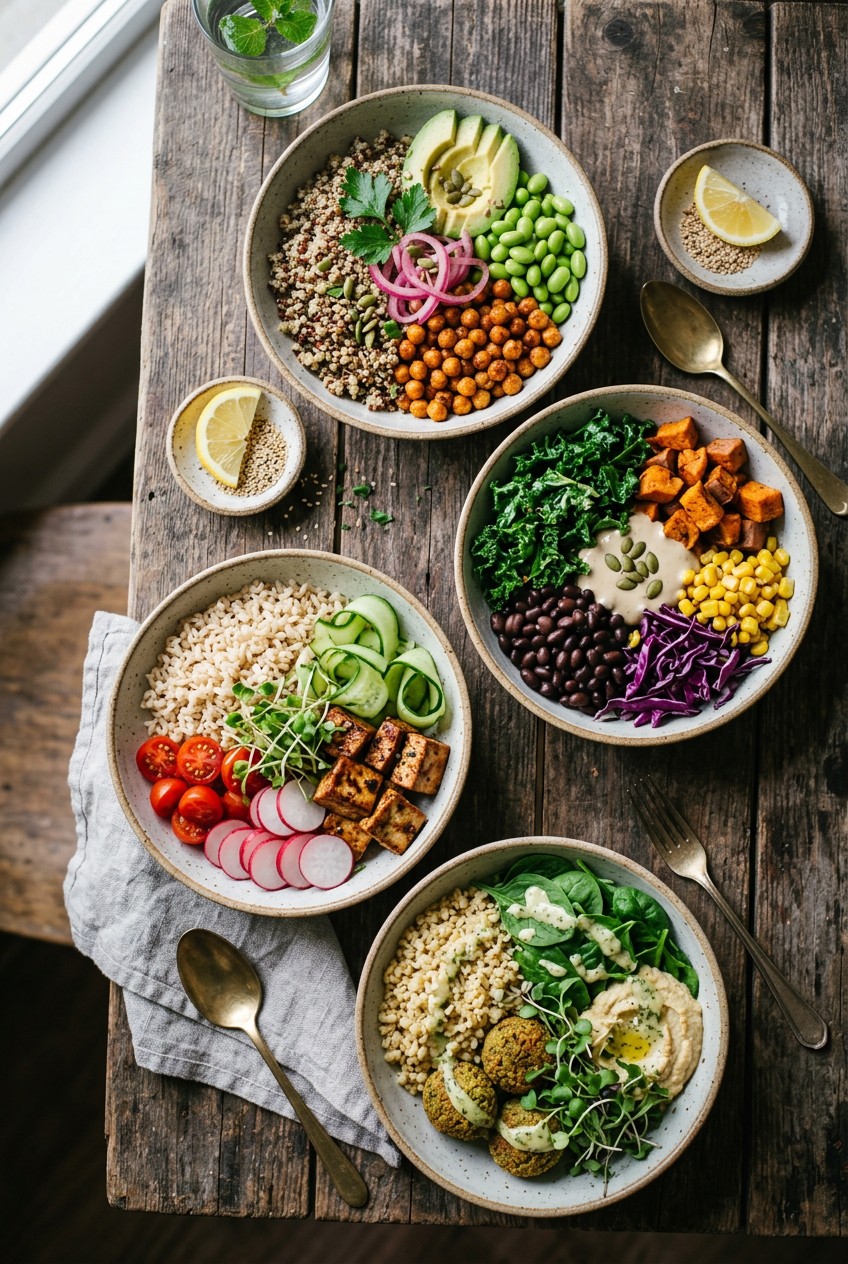
What’s Inside
- The Seitan Stir-Fry That Actually Tastes Like Meat
- Lentil and Quinoa Bowls for Budget-Friendly Bulk
- Roasted Edamame Crunch Wraps
- The Cottage Cheese Power Bowl You Won’t Hate
- Hemp Seed Supercharged Oatmeal
- Sneaky Protein Veggies in a Baked Potato
- The Post-Workout Plant Protein Smoothie
- Crispy Marinated Tofu and Tempeh Tacos
- Batch-Cooked Chickpea Salads for Easy Meal Prep
I remember sitting on my cold kitchen floor back in 2019, staring at a slimy, unpressed block of raw tofu. I took a bite, and it tasted exactly like a wet kitchen sponge. I was trying to figure out how to make high protein vegetarian meals that didn’t make me want to gag. I thought eating clean meant suffering through bland, mushy bowls of sadness. I was so wrong. Creating high protein vegetarian meals is possible without sacrificing flavor or texture, but you need to know which ingredients to buy and how to treat them in the hot cast iron pan.
Most people fail at plant-based eating because they rely on expensive, processed fake meats loaded with sodium. Or worse, they just eat a plate of plain vegetables and wonder why they’re starving an hour later. I’ve spent the last five years testing hundreds of recipes, ruining plenty of expensive groceries, and finally figuring out the formulas that work. I’m going to share the brands I buy, the precise measurements I use, and the biggest mistakes you need to avoid. Let’s get into the actual meals that keep me full, hit my macro goals, and taste incredible. Trust me on this.
1. The Seitan Stir-Fry That Actually Tastes Like Meat

If you aren’t familiar with seitan, you’re missing out on the king of plant-based macros. Seitan is often called “wheat meat” because it has a dense, chewy texture that mimics chicken or beef perfectly. A 100-gram serving can provide an impressive 75 grams of protein. That makes it the highest-protein plant food available. I personally swear by Upton’s Naturals Traditional Seitan. You can grab an 8 oz box for $5.49 at Whole Foods. A single 4 oz (about 113g) serving of this specific brand delivers around 35.8 grams of protein. That’s massive for a clean eating diet.
Here’s the problem most people run into. They throw raw seitan into a cold pan and wonder why it turns out rubbery. You can’t do that. You need to get a 10-inch cast iron skillet smoking hot. Add 1 tablespoon of avocado oil. Toss in 4 oz of cubed Upton’s Naturals seitan and let it sit undisturbed for three minutes until you hear a loud sizzle and see a dark brown crust form. Then, toss in 1 cup of fresh broccoli florets and 1/2 cup of sliced bell peppers.
I need to warn you about a huge mistake I made early on. I used to drown my seitan in cheap, high-sodium soy sauce. While premade seitan is convenient, many products are already high in sodium. If you’re managing your sodium intake, you must check labels. Aim for products with 10% Daily Value or less of sodium per serving. Instead of extra salt, I marinate my seitan in 1 tablespoon of coconut aminos, 1 teaspoon of freshly grated ginger, and a pinch of red pepper flakes. The texture is satisfying, and it cures my cravings for heavy takeout.
2. Lentil and Quinoa Bowls for Budget-Friendly Bulk

I’m a fan of lentils because they’re the ultimate budget-friendly bulk food. One cup of cooked lentils offers about 18 grams of protein. They’re also packed with fiber, iron, and folate. If you buy them dried, they often cost less than $2 to $3 per pound. But honestly, I’m usually too impatient to boil dried lentils for forty minutes. My favorite shortcut is buying Trader Joe’s Steamed Lentils. They cost $3.29 for a 17.6 oz vacuum-sealed package in the produce section. They’re already cooked, tender, and ready to eat.
A common mistake people make with lentils is eating them entirely on their own. While lentils are great, they’re even better when paired with whole grains to create a complete protein profile. I always combine 1 cup of cooked lentils with 1/2 cup of cooked quinoa. That simple addition adds another 4 grams of protein to your bowl. Quinoa is a complete protein, meaning it contains all nine essential amino acids. It has about 8 grams of protein per cooked cup.
I used to hate quinoa because I cooked it wrong for months. I’d boil it in too much water, and it turned into a sad, watery mush. The secret to fluffy quinoa is using a strict 1:2 ratio. Use 1/2 cup of Ancient Harvest Quinoa (which is $4.99 for a 12 oz box at Sprouts) and exactly 1 cup of vegetable broth. Bring it to a boil, drop the heat to the lowest setting, cover it, and simmer for exactly 15 minutes. Remove it from the heat and let it sit for five minutes before fluffing it with a fork. Mix the fluffy grains with the Trader Joe’s lentils, 2 tablespoons of tahini, and a squeeze of fresh lemon juice. The earthy smell and creamy texture are perfect.
3. Roasted Edamame Crunch Wraps

Edamame is a complete protein powerhouse that most people only ever eat as an appetizer at sushi restaurants. One cup of shelled edamame provides approximately 18 grams of complete protein. But if you want a massive protein boost, you need to switch to roasted edamame. Because the water is roasted out, it becomes incredibly dense. Roasted edamame can contain 40 to 46 grams of protein per 100 grams. That’s compared to just 11 grams for fresh or boiled edamame.
I buy Seapoint Farms Dry Roasted Edamame. It costs $2.48 for a 4 oz pouch at Walmart. I love adding this to wraps for a loud, salty crunch. I take a large whole wheat tortilla, spread 2 tablespoons of classic hummus on the bottom, add 1/2 cup of shredded carrots, 1 cup of mixed greens, and 1/4 cup of the roasted edamame. You might also like: 20 Creative Easy Healthy Low Calorie Dinner Ideas Worth Trying This Year
Let me tell you about a terrible mistake I made with these wraps. I once made a dry wrap with just spinach and a massive handful of roasted edamame. I was eating it in my car while driving to the gym. I ended up choking on dry edamame dust because I didn’t add a sauce or enough moisture. It was a terrifying, dry-mouth experience. You must include a wet ingredient. Now, I always drizzle 1 tablespoon of a clean dressing, like Primal Kitchen Vegan Ranch, over the edamame before rolling the wrap. The dressing softens the sharp edges of the roasted beans just enough, while keeping that crunch intact. You might also like: 15 Inspiring Aesthetic Healthy Snack Ideas to Steal Right Now

Transparent Labs Grass-Fed Whey Protein Isolate
If you want something that just works, Transparent Labs Grass-Fed Whey Protein Isolate – Naturally Flavored is a safe bet (13 reviews, 4.5 stars).
4. The Cottage Cheese Power Bowl You Won’t Hate

If you include dairy in your clean eating routine, high-protein cottage cheese is a must. I know cottage cheese gets a bad reputation for its lumpy texture, but the nutritional profile is too good to ignore. Trending right now are brands like MULU, which offers 18 grams of complete protein per half-cup serving. That’s 33% more than leading competitors. A 16 oz carton of MULU 2% low-fat cottage cheese is available at Walmart for approximately $4.26. If you can’t find MULU, Good Culture is my backup choice. It has 14 grams of protein per half-cup and costs about $3.49 for a 16 oz tub at Target. You might also like: 15 Clever Quick Healthy Breakfast Ideas Worth Trying This Year
Skip the fat-free stuff. It tastes like wet cardboard. I tried eating fat-free cottage cheese for a week to save calories, and it was miserable. The texture is chalky, the flavor is sour, and it leaves a weird film on the roof of your mouth. The 2% or 4% milkfat versions are better. They’re creamy, rich, and actually satisfying.
To make a high protein vegetarian meal out of this, I build a sweet and savory power bowl. I scoop 1 full cup of the MULU 2% cottage cheese into a bowl (giving me a massive 36 grams of protein right there). I top it with 1/2 cup of fresh blueberries, 1 tablespoon of raw pumpkin seeds, and a heavy dash of cinnamon. The cold, creamy tang of the cheese mixes beautifully with the sweet pop of the fresh berries. It’s a meal that takes thirty seconds to make and keeps my stomach from rumbling during long afternoon meetings.
5. Hemp Seed Supercharged Oatmeal

Oatmeal is a classic clean eating staple, but on its own, it’s mostly just carbohydrates. You’ll be hungry again in an hour if you don’t add a strong protein source. My favorite trick is boosting my morning oats with hemp seeds. Just 3 tablespoons of hemp seeds provide an easy 10 grams of protein, along with a heavy dose of healthy omega-3 and omega-6 fats. Hemp is a complete protein and is highly digestible, meaning it won’t leave you feeling bloated.
I always buy Manitoba Harvest Hemp Hearts. I get the giant 24 oz bag for $14.99 at Costco because I go through them so fast. I have a funny, albeit frustrating, story about this exact bag. I was rushing to make breakfast one morning and ripped the Costco bag open too aggressively. I sent thousands of tiny, oily seeds flying all over my kitchen counter and floor. Sweeping up hemp seeds is a nightmare. Always use scissors to open the bag.
To make my supercharged oatmeal, I cook 1/2 cup of Bob’s Red Mill Rolled Oats with 1 cup of unsweetened almond milk. Once it’s thick and bubbling on the stove, I stir in 3 tablespoons of the Manitoba Harvest Hemp Hearts, 1 tablespoon of pure maple syrup, and 1/2 cup of diced apples. The hemp seeds melt right into the hot oats, giving the whole bowl a rich, nutty flavor and a subtle, pleasant crunch. It transforms a boring bowl of mush into a hearty, high protein vegetarian meal.
6. Sneaky Protein Veggies in a Baked Potato

A surprising tip for hitting your macros is to recognize the protein content in everyday vegetables. Most people think vegetables are just water and fiber, but that isn’t true. For example, one cup of cooked spinach contains over 5 grams of protein. A large 7 oz baked russet potato offers almost 9 grams of protein. When you start combining these ingredients, you can increase your protein intake without relying solely on tofu or beans.
My go-to comfort meal is a loaded protein potato. I bake a large russet potato until the skin is crispy and the inside is fluffy. Then, I sauté 2 cups of fresh spinach in a pan until it wilts down to about a half cup. I stuff the baked potato with the cooked spinach and then add my secret weapon: nutritional yeast. If you aren’t using nutritional yeast, you’re missing out on a massive flavor and macro boost.
I use Bragg Nutritional Yeast, which costs $6.49 for a 4.5 oz shaker at Kroger. Just 2 tablespoons of this yellow powder adds an additional 8 grams of protein and a deep, savory, cheesy flavor without any actual dairy. A quick warning: don’t pour nutritional yeast onto a hot potato while inhaling. The powder is very fine, and I’ve choked on the cheesy dust more times than I’d like to admit. Learned that the hard way. Mix the 2 tablespoons of yeast with 1 tablespoon of warm water first to create a thick, cheesy paste, then drizzle it over the hot potato and spinach. The smell is intoxicating, like a warm bowl of cheddar soup.

Optimum Nutrition Gold Standard 100% Whey Protein Powder
If you want something that just works, Optimum Nutrition Gold Standard 100% Whey Protein Powder is a safe bet (108 reviews, 4.5 stars).
7. The Post-Workout Plant Protein Smoothie

Sometimes you don’t have time to cook a full meal, especially right after a tough workout. For a convenient protein boost, you absolutely need a high-quality plant-based protein powder. The market is flooded with terrible products, so you have to be picky. Trending options right now include Transparent Labs Organic Plant-Based Protein Isolate. It combines pea and rice protein to deliver a complete amino acid profile, and it’s third-party tested. It costs about $49.99 for a 15.6 oz tub. Another strong contender is Vega Performance Protein + Recovery, which provides 30 grams of protein per serving and 5 grams of BCAAs. You can find Vega for $39.99 for a 29.5 oz tub at Target. These typically break down to about $2.00 to $2.50 per serving.
I’ve made some truly disgusting smoothies in my life. The worst mistake I ever made was blending a scoop of cheap, unflavored pea protein with just plain tap water. It tasted like I was drinking wet chalk mixed with dirt. The gritty, chalky feeling in the back of my throat was unbearable. You must blend plant protein properly to make it enjoyable.
My daily smoothie recipe is 1 scoop of Vega French Vanilla protein powder, 1 cup of Silk Unsweetened Almond Milk, 1/2 of a frozen banana, and 1 tablespoon of almond butter. The frozen banana is mandatory. It changes the texture from a watery protein shake into a thick, creamy milkshake. The vanilla bean flavor completely masks the earthy taste of the pea protein. It’s a fast, delicious high protein vegetarian meal you can drink on the go.
8. Crispy Marinated Tofu and Tempeh Tacos

Tofu and tempeh are excellent complete protein sources. They offer between 12 and 20 grams of protein per 3.5 oz (100g) serving. But they require proper handling. Let me share an embarrassing story. Last Tuesday at Whole Foods, I was rushing through the aisles and grabbed a block of Silken tofu instead of Extra Firm. I didn’t realize my mistake until I got home, opened the package, and watched the tofu disintegrate into a watery puddle on my cutting board. You can’t fry silken tofu. You must buy Extra Firm.
I highly recommend Nasoya Extra Firm Tofu. It’s $2.99 for a 14 oz block at Trader Joe’s. If you prefer tempeh, Lightlife Original Tempeh is fantastic and costs $3.69 for an 8 oz package at Sprouts. The single biggest mistake people make with tofu is not pressing it. Tofu is packed in water. If you don’t press that water out, the tofu won’t absorb any marinades, and it won’t get crispy in the pan.
I wrap my 14 oz block of Nasoya Extra Firm tofu in a clean kitchen towel, place a heavy cast iron pan on top, and let it sit for 20 minutes. Once pressed, I cut it into small cubes. I marinate the cubes in 2 tablespoons of soy sauce, 1 tablespoon of maple syrup, and 1 teaspoon of smoked paprika for at least 30 minutes. Then, I bake the cubes at 400 degrees for 25 minutes. The edges get crispy, and the inside stays tender. I load these smoky, crispy cubes into warm corn tortillas with fresh salsa and avocado. The smell of the smoked paprika roasting in the oven is incredible.
9. Batch-Cooked Chickpea Salads for Easy Meal Prep

An expert tip from registered dietitians is to plan your meals by selecting your main protein source first, then adding vegetables, whole grains, and healthy fats. Instead of thinking, “I’ll make a salad,” you should think, “I’ll make a chickpea bowl with a side of greens.” A trending approach for clean eating is efficient batch meal prep. If you cook a large batch of protein at the beginning of the week, you won’t be tempted to order takeout on a busy Wednesday night.
I rely heavily on chickpeas. I buy Goya Canned Chickpeas, which cost just $1.29 for a 15.5 oz can at Walmart. I prepare 3 cups of cooked chickpeas (which provides approximately 45 grams of protein) to use throughout the week. But you have to prep them correctly. A huge mistake I used to make was dumping canned chickpeas directly onto my salad without rinsing them. The thick, starchy liquid in the can (called aquafaba) leaves a metallic, tinny taste on the beans that ruins the whole meal.
Always pour your canned chickpeas into a colander and rinse them under cold water for a full minute until the water runs clear and the bubbles disappear. Once rinsed, I toss the 3 cups of chickpeas with 1 tablespoon of olive oil, 1 teaspoon of garlic powder, and a heavy pinch of sea salt. I roast them at 425 degrees for 20 minutes until they’re golden brown. I keep these roasted chickpeas in a glass container in the fridge. Every day, I toss a handful into my salads or wraps. The satisfying pop of a perfectly roasted chickpea between your teeth is the best texture. It makes sticking to high protein vegetarian meals easy and delicious.
I honestly hope these recipes and tips save you from the bland, mushy vegetarian meals I used to suffer through. Clean eating doesn’t have to be boring, and you definitely don’t need meat to hit your protein goals. I’d love it if you saved or pinned this article so you have this exact grocery list ready for your next shopping trip. You’ve got this!
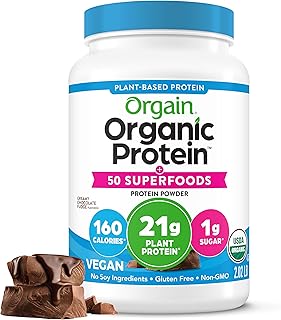
Orgain Organic Vegan Protein + 50 Superfoods Powder
Honestly, Orgain Organic Vegan Protein + 50 Superfoods Powder surprised me — sturdier than it looks in the photos, and over 95 buyers gave it 4.5 stars.
Frequently Asked Questions
What is the highest protein vegetarian food?
Seitan, often called wheat meat, is the highest protein plant food available. A 100-gram serving provides roughly 75 grams of protein. It has a dense, chewy texture that works perfectly in stir-fries and tacos.
Do I need to eat complete proteins at every meal?
No, you don’t need to consume all essential amino acids at every single meal. Your body stores amino acids throughout the day. Focus on eating a varied diet of beans, grains, and seeds over a 24-hour period.
How can I make tofu taste better?
You must press the water out of extra firm tofu before cooking. Wrap it in a towel and place a heavy pan on top for 20 minutes. This allows the tofu to absorb marinades and get crispy when baked or pan-fried.
Are high protein vegetarian meals expensive?
They don’t have to be! Staples like dried lentils, canned chickpeas, and whole grains like quinoa are incredibly budget-friendly. A pound of dried lentils often costs under $3 and provides massive amounts of bulk and protein.
1 thought on “9 High Protein Vegetarian Meals That Actually Work”