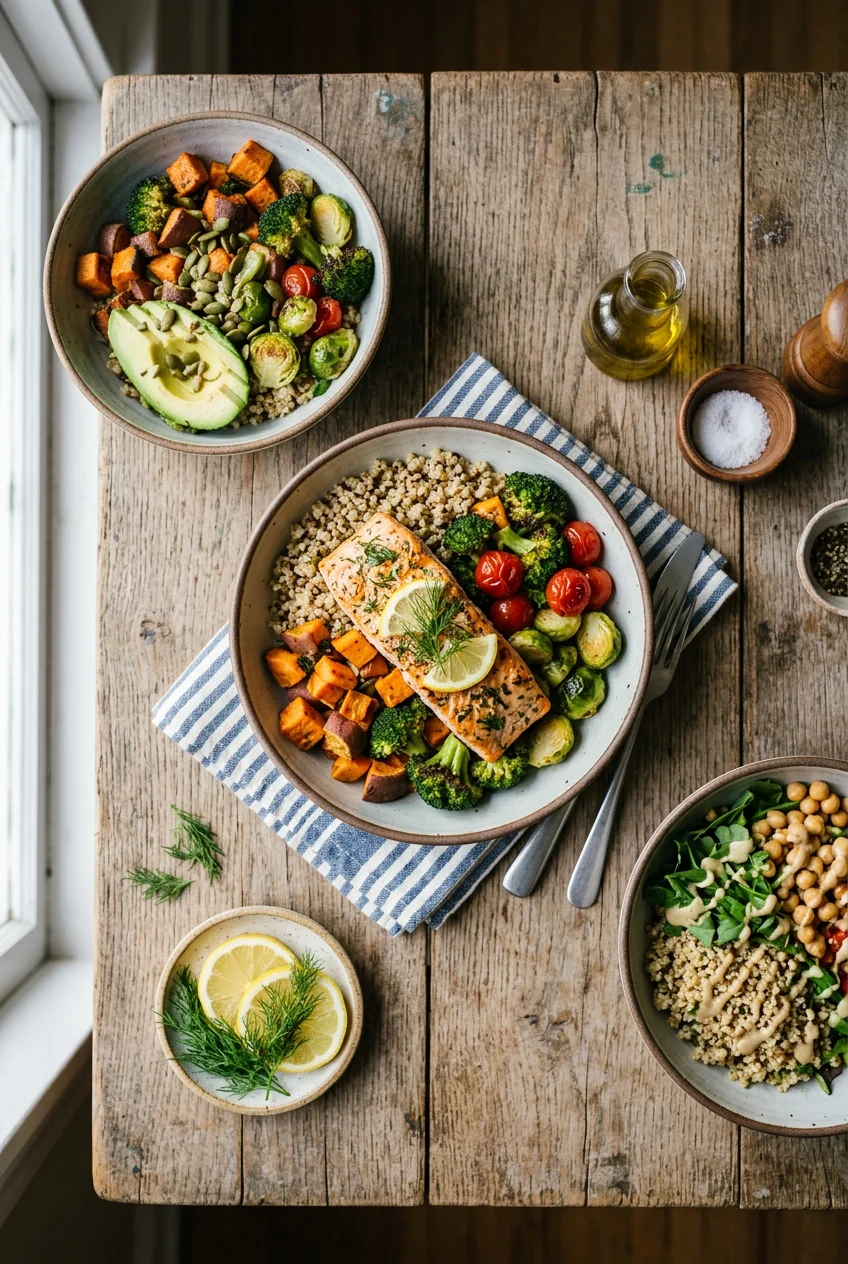
What’s Inside
- Idea 1: Miso-Glazed Sockeye Salmon
- Idea 2: Tempeh and Broccoli Stir-Fry with Avocado Oil
- Idea 3: Black Bean and Quinoa Stuffed Peppers
- Idea 4: Fibermaxxing Lentil Soup with Garlic and Onions
- Idea 5: Lemon Herb Chicken Breast
- Idea 6: Turmeric and Ginger Tofu Bowls
- Idea 7: High-Oleic Safflower Oil Roasted Kale and Chickpeas
- Idea 8: Wild-Caught Fish Tacos with Cabbage Slaw
- Idea 9: Extra Virgin Olive Oil Drizzled Oat and Berry Salad
- Idea 10: Quick Zucchini Noodles with Ground Turkey
- Idea 11: Smashed White Bean and Spinach Toast
Last Tuesday at Whole Foods, I stood in the prepared foods aisle staring at a $14.99 container of soggy grilled chicken. Finding healthy, light dinners for busy weeknights usually ends in sad grocery store compromises or ordering $30 takeout that leaves you bloated. The chicken looked like a wet sponge. I was tired, but I put it back. I spent three years eating dry salads at 7 PM before I realized light doesn’t mean raw and cold. You need fiber, protein, and real flavor. Let’s fix your weeknight rotation. I’m sharing the exact meals I make when I only get twenty minutes and zero patience. Skip the fat-free stuff. It tastes like wet cardboard. You’re going to use real ingredients, specific temperatures, and proper fats. I’ve tested these formulas so you don’t have to. It’s time to stop treating dinner like an afterthought. Your evening meal dictates your sleep quality and your morning energy levels.
Idea 1: Miso-Glazed Sockeye Salmon

Let’s start with a baseline standard for dinners healthy enough to support your metabolism. I buy the Kirkland Signature Wild Sockeye Salmon from Costco. It runs about $12.99 per pound, which sits comfortably in the standard $10.50 to $33.50 range for wild-caught fillets. I portion it into 4-ounce servings. I whisk 1 tablespoon of Cold Mountain Miso Paste (usually $6.49 at Sprouts) with a teaspoon of water and brush it over the fish. Miso is a fermented food. It provides probiotic benefits that survive light roasting. I roast the salmon at 400 degrees Fahrenheit alongside a 1/2 cup serving of fresh asparagus. The asparagus acts as a prebiotic. It feeds the good bacteria in your gut. I used to boil asparagus until it turned to mush. That was a mistake. Roasting it for twelve minutes keeps it crisp and retains the fiber. The skin crisps up perfectly against the hot, heavy cast iron pan. You don’t need complicated marinades when the ingredients are high quality. This meal hits the anti-inflammatory marks without leaving you hungry an hour later. You get the omega-3s from the fish and the digestive support from the miso and asparagus. It’s functional food.
Idea 2: Tempeh and Broccoli Stir-Fry with Avocado Oil

Most people avoid tempeh because it looks like a science experiment. It’s actually a fermented soybean cake that provides a highly bioavailable source of plant protein and prebiotic fiber. I pick up the Lightlife Original Tempeh at Target for $3.29 an 8-ounce package. The standard baseline is 0.8 grams of protein per kilogram of body weight spread throughout your day. I crumble four ounces of tempeh into a carbon steel wok with 1 cup of chopped broccoli florets. Broccoli is a cruciferous vegetable known for its anti-inflammatory properties. Here is where most home cooks ruin their food. They use extra virgin olive oil for high-heat stir-frying. I did this for years and set off my smoke alarm nightly. I learned that the hard way. You need a stable fat. I use 1 tablespoon of Chosen Foods Avocado Oil ($11.99 for 500ml at Kroger). It handles the high heat without oxidizing into harmful compounds. The wok sizzles aggressively when the broccoli hits the hot, shimmering oil. That sound means you’re locking in the texture and preventing mush. The tempeh absorbs the heat and gets a crispy, nutty exterior. The broccoli stays bright green. It’s a dense, filling dinner that digests easily.
Idea 3: Black Bean and Quinoa Stuffed Peppers

Clinical nutritionists predict 2026 will be the year of the bean. Beans deliver a massive dose of fiber and protein for pennies. I make stuffed bell peppers using a 1/2 cup serving (about 50 grams) of a black bean and quinoa mixture. Data shows that incorporating this specific amount of legumes daily correlates with a six percent lower all-cause mortality risk. That’s a statistical advantage you shouldn’t ignore. I buy the 365 Everyday Value Organic Black Beans from Whole Foods for $1.39 a can. I rinse them thoroughly to remove excess sodium and the starchy liquid that causes bloating. I mix the beans with cooked Ancient Harvest Quinoa ($4.99 for a 12-ounce box) and stuff the mixture into halved red bell peppers. I bake them at 375 degrees for twenty-five minutes. The red bell peppers blister and char slightly on the edges, adding a smoky depth to the mild quinoa and earthy beans. The peppers soften, but the quinoa maintains a slight crunch. I used to add heavy cheese to this. It defeated the purpose of a light meal. Now I rely on the dense texture of the beans to provide satisfaction. The complex carbohydrates digest slowly. You won’t wake up at 2 AM craving sugar. You might also like: 20 Creative Easy Healthy Low Calorie Dinner Ideas Worth Trying This Year

Taste of Home Light & Easy Weeknight Cooking: 307 Healthy
Taste of Home Light & Easy Weeknight Cooking: 307 Healthy Recipes for punches above its price. I would buy it again.
Idea 4: Fibermaxxing Lentil Soup with Garlic and Onions

Digestive wellness currently revolves around a concept called fibermaxxing. The clinical goal is 25 to 35 grams of dietary fiber daily. Most adults barely hit 15 grams. I bridge that gap with a highly structured lentil soup. I use a base of sliced garlic and yellow onions. They are potent prebiotics that fertilize your intestinal microbiome. I sauté them in a heavy Dutch oven before adding 1 cup of dry Palouse Brand Brown Lentils ($5.99 for a 3-pound burlap sack on Amazon). Lentils cook in twenty minutes. You don’t need to soak them overnight. I simmer them in Pacific Foods Low Sodium Vegetable Broth ($3.79 at Sprouts). The steam rising from the Dutch oven smells like roasted garlic and wet earth. It’s a grounding, savory aroma that fills the kitchen. The texture becomes thick and earthy. A single bowl provides nearly 15 grams of fiber. I learned the hard way that ramping up fiber too quickly causes severe abdominal cramping. If you currently eat a low-fiber diet, eat half a portion of this soup and drink an extra 16 ounces of water. Your digestive tract needs time to adapt to the mechanical load. It’s an adjustment, but it’s entirely necessary. You might also like: 12 Healthy Snacks For Work for Every Budget
Idea 5: Lemon Herb Chicken Breast

Finding light dinner ideas healthy enough to support your gut flora doesn’t mean abandoning animal protein. I buy Bell & Evans Air-Chilled Chicken Breasts at Whole Foods. They cost about $8.99 a pound. Air-chilled chicken doesn’t release a pool of retained water into your pan when you cook it. I pound a 4-ounce chicken breast flat, season it with salt and dried oregano, and sear it in a skillet. The key to this meal isn’t the chicken. It’s the side dish. I serve the chicken with 1 tablespoon of Cleveland Kitchen Classic Kimchi ($6.49 a jar at Target). Kimchi is fermented cabbage packed with live probiotic cultures. The sharp, acidic bite of the kimchi cuts through the savory profile of the chicken. The cold crunch of the fermented cabbage contrasts sharply with the warm, savory chicken. It forces you to chew deliberately and slow down. I used to heat the kimchi in the pan with the chicken. Don’t do this. Heat destroys the live bacteria. You must eat it cold or at room temperature to get the biological benefits. This combination gives you pure, bioavailable protein alongside raw probiotics. It takes twelve minutes to prepare and leaves you feeling completely energized. You might also like: 10 Lettuce Salad Recipes You Need to See
Idea 6: Turmeric and Ginger Tofu Bowls

Chronic inflammation dictates how your joints feel and how your body stores fat. I actively manage this by incorporating anti-inflammatory powerhouses into my evening meals. Tofu is a neutral delivery system for these compounds. I use Nasoya Extra Firm Tofu ($2.99 at Walmart). You must press the water out first. I used to skip this step and ended up with soggy, tasteless cubes. I wrap the tofu block in a paper towel and put a heavy cast iron pan on it for ten minutes. Once drained, I cut it into cubes and toss it with 1 teaspoon of ground turmeric and 1 teaspoon of freshly grated ginger. The turmeric stains the tofu a brilliant, saturated yellow. The visual appeal matters when you’re transitioning away from heavy, beige comfort foods. I roast the tofu cubes at 400 degrees until the edges turn dark yellow and crisp. I serve this over a small handful of mixed greens. The ginger provides a sharp, peppery heat that lingers on the palate. The tofu provides the necessary 0.8 grams of protein per kilogram daily requirement without the heavy, lethargic feeling that sometimes follows a large steak. It’s methodical, clean, and highly effective.

Veratify Healthy Mixed Snack Box (66 Count) Snacks Gift
Veratify Healthy Mixed Snack Box (66 Count) Snacks Gift Basket Granola has been one of the most consistently praised picks in this category. 72 reviewers averaged 4.5/5.
Idea 7: High-Oleic Safflower Oil Roasted Kale and Chickpeas

The most common error in healthy cooking is burning delicate oils. I see clients pouring expensive cold-pressed oils into blazing hot pans. For high-heat roasting, I strictly use high-oleic safflower oil. I buy the Spectrum Naturals brand for $9.99 at Kroger. It remains stable at temperatures up to 450 degrees. I use 1 tablespoon of this oil to coat 1 cup of chopped Lacinato kale and a drained can of Goya Chickpeas ($1.29 at Walmart). The kale acts as a cruciferous vegetable base, while the chickpeas add complex carbohydrates and protein. I spread them on a baking sheet and roast them at 425 degrees for fifteen minutes. The baking sheet will look crowded, but the kale shrinks dramatically in the oven. The safflower oil prevents the leaves from turning to ash. The kale leaves turn brittle and shatter when you bite them. The chickpeas dry out and become crunchy. This textural contrast is vital. If a light dinner is entirely soft, your brain doesn’t register it as a complete meal. You’ll end up hunting for potato chips at 9 PM. The safflower oil ensures the ingredients roast cleanly without a bitter, burnt aftertaste. It’s a precise cooking method.
Idea 8: Wild-Caught Fish Tacos with Cabbage Slaw

Digestion begins in the brain, not the stomach. If you eat while staring at your phone, your parasympathetic nervous system doesn’t fully activate. I practice mindful eating with tactile meals like fish tacos. I use frozen Trident Seafoods Alaskan Pollock fillets ($7.99 for a 2-pound bag at Costco). They thaw quickly in cold water. I pan-sear two 3-ounce fillets and place them in Siete Almond Flour Tortillas ($8.49 for eight at Sprouts). I top them with a raw green cabbage slaw dressed in lime juice. The cold lime juice brightens the dense, flaky fish. The tactile experience of eating with your hands naturally slows your consumption rate. The tortillas are pliable and slightly nutty. The cabbage provides a loud, audible crunch. I leave my phone in another room. I sit at the table, savor each bite, and chew slowly. This forces me to recognize my body’s fullness cues. When I used to eat dinner on the couch watching television, I’d consume twice as much food and still feel empty. Mindful eating is an expert-recommended approach that works. The fish tacos are light, but eating them with intention makes them completely satisfying.
Idea 9: Extra Virgin Olive Oil Drizzled Oat and Berry Salad

Oats are usually categorized as breakfast food. Savory oats make an excellent, fiber-heavy evening meal. I use Bob’s Red Mill Steel Cut Oats ($4.69 at Whole Foods). Steel cut oats have a dense, chewy texture compared to rolled oats. The steel cut oats offer a firm resistance when you bite them. It’s a completely different sensory experience than the gelatinous instant packets. I boil a 1/2 cup serving in water. Once cooked, I fold in a handful of fresh blueberries and a pinch of sea salt. Berries are potent anti-inflammatory agents. Here is the crucial finishing step. I drizzle 1 tablespoon of California Olive Ranch Extra Virgin Olive Oil ($14.99 at Target) over the warm bowl. You must reserve delicate oils like extra virgin olive oil for drizzling after cooking. If you heat EVOO past its smoke point, you destroy its polyphenols and alter its flavor profile. The raw oil pools slightly in the warm oats. It adds a grassy, peppery richness that binds the sweet berries and the earthy grains together. It sounds strange until you try it. The fat from the oil slows the digestion of the carbohydrates, keeping your blood sugar stable through the night.

Floura Raspberry Rose Fruit-Forward Fiber Bars– High Fiber
Floura Raspberry Rose Fruit-Forward Fiber Bars– High Fiber has been one of the most consistently praised picks in this category. 14 reviewers averaged 4.5/5.
Idea 10: Quick Zucchini Noodles with Ground Turkey

Pasta puts me to sleep. If I eat a bowl of wheat noodles at 7 PM, I wake up groggy. I use zucchini noodles to bypass the heavy carbohydrate load while still satisfying the mechanical action of eating spaghetti. I buy Cece’s Veggie Co. Zucchini Spirals for $4.99 at Sprouts because I refuse to clean a spiralizer. I pair this with a highly nutrient-dense protein. I use Jennie-O 93% Lean Ground Turkey ($5.49 a pound at Walmart). I brown 4 ounces of the turkey in a pan with salt and black pepper. I add the zucchini noodles at the very last minute. Don’t cook zucchini noodles for more than sixty seconds. I ruined countless dinners by simmering them in sauce until they turned into a watery, gray mush. I toss the mixture with 2 tablespoons of Rao’s Homemade Marinara Sauce ($7.99 at Target). The marinara sauce clings to the textured surface of the zucchini spirals. The ground turkey adds a necessary savory weight to the dish. The turkey provides clean, accessible protein. The zucchini offers hydration and bulk without the inflammatory response some people get from heavy wheat dishes. It’s efficient and structurally sound.
Idea 11: Smashed White Bean and Spinach Toast

Sometimes cooking a full meal is impossible. When I only get five minutes, I rely on toast. I use Dave’s Killer Bread 21 Whole Grains and Seeds ($6.29 at Kroger). I toast two slices until they are dark brown and rigid. I take a 1/2 cup of Eden Organic Cannellini Beans ($2.79 at Whole Foods). These white beans are soft and buttery. I mash them with a fork directly onto the rigid toast. This leans into the year of the bean trend perfectly, delivering immediate fiber and plant protein. I top the mashed beans with a handful of raw baby spinach. The spinach adds volume and essential micronutrients. I finish it with a squeeze of lemon juice and coarse black pepper. The coarse black pepper bites through the creamy, mild beans. The rigid toast crunches loudly, providing the structural integrity this meal requires. I used to make avocado toast for dinner, but avocado lacks the protein required to repair muscle tissue overnight. The white beans solve that deficit. The toast holds its structure under the weight of the beans. It’s a pragmatic, fast, and entirely clean meal.
I’ve eaten every variation of a sad, restrictive dinner. You don’t have to do that. You can eat actual food that digests well and supports your metabolism. My current weekly rotation heavily features the miso salmon and the white bean toast. Stop overcomplicating your evenings with elaborate recipes that leave your kitchen a disaster. Pick three of these meals. Buy the exact ingredients. Execute them this week. These meals are tools. Use them to build a sustainable evening routine that doesn’t rely on willpower or expensive meal delivery kits. Pin this article to your digital recipe board so you aren’t staring blankly into your refrigerator on Thursday night. You’re fully capable of fixing your dinner routine. Let’s get it done.
Frequently Asked Questions
What makes these light dinner ideas healthy for digestion?
These meals focus on fibermaxxing by pairing prebiotic vegetables like asparagus and garlic with probiotic fermented foods like miso and kimchi. This combination actively supports your intestinal microbiome and prevents the sluggish feeling associated with heavy, low-fiber dinners.
Can I prep these light dinner ideas healthy in advance?
You can chop vegetables and cook grains like quinoa or lentils ahead of time. However, I highly recommend searing proteins like salmon or ground turkey right before eating. Reheated meat often dries out and loses its intended texture.
Why do you specify high-oleic safflower oil for cooking?
High-oleic safflower oil remains stable at 450 degrees Fahrenheit. Using delicate oils like extra virgin olive oil for high-heat roasting creates free radicals and a bitter taste. Always reserve cold-pressed olive oils for drizzling over finished meals.
How does mindful eating improve these evening meals?
Eating without digital distractions forces you to chew slowly and recognize your body’s fullness cues. This expert-recommended approach activates your parasympathetic nervous system, ensuring you produce enough stomach acid to properly break down and absorb the nutrients.
