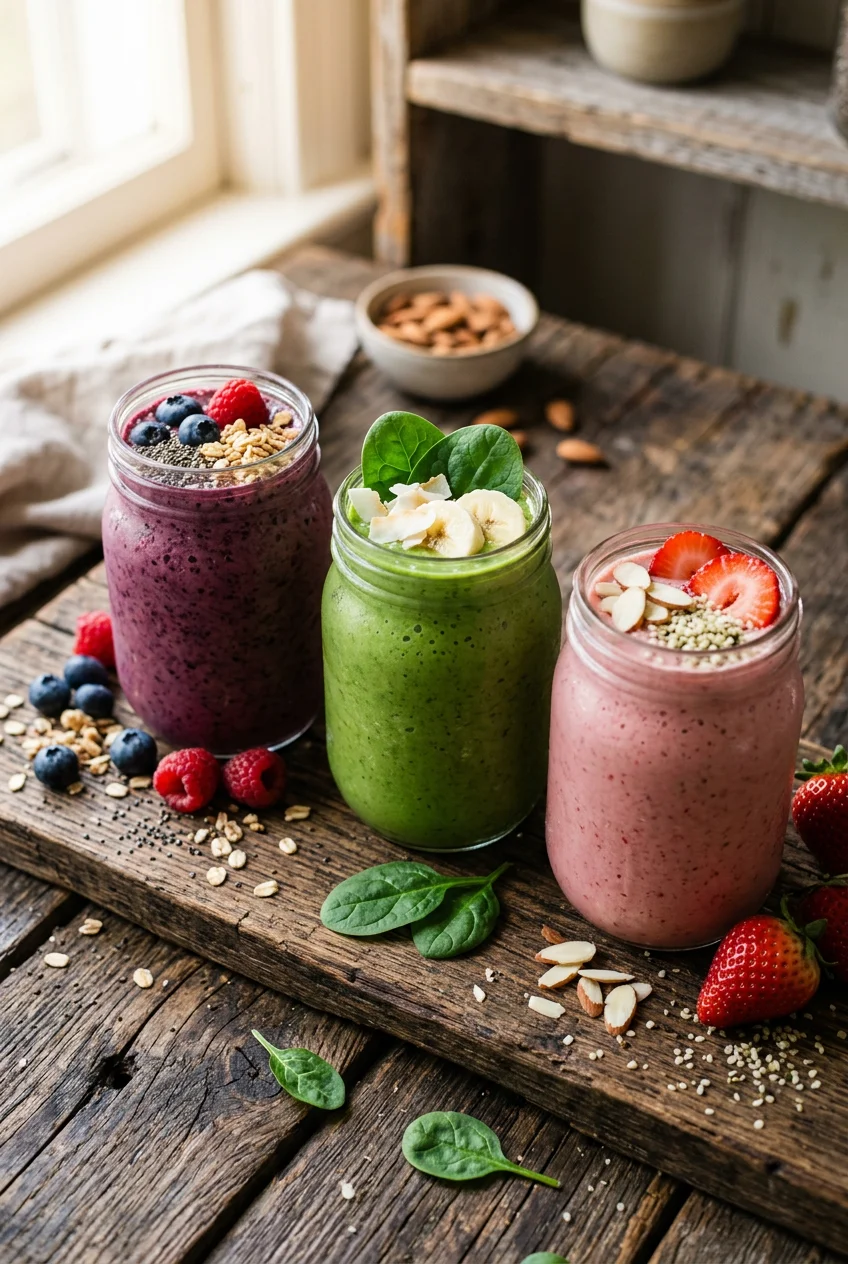
What’s Inside
- Choose Your Protein Powder Wisely Based on Goals
- Master the Liquid-to-Frozen Ratio for Perfect Consistency
- Prioritize Whole Food Protein Boosters Beyond Powder
- Don’t Skimp on Healthy Fats for Satiety
- Sneak in Veggies Without Sacrificing Taste
- Be Mindful of Hidden Sugars in Your Ingredients
- Blend Liquids First to Prevent Clumps
- Consider Collagen Peptides for a Gut-Friendly Base
- Don’t Overdo Protein — The 30-Gram Ceiling
- Embrace the 3-Ingredient Drink Trend
- The Wiggle Test and Cinnamon Trick
Last Tuesday at 7:00 AM, I was in my kitchen scrubbing a thick, chalky paste of vanilla powder off my cabinets. I’d forgotten to lock the blender lid while testing new recipes for my kids. Not my finest moment as a nutritionist. Getting the right protein balance is surprisingly technical. Most people just toss ice, milk, and whatever powder they bought on sale into a pitcher. I did that for years. It usually tastes like wet cardboard or sickly sweet melted ice cream. Let’s fix that. Here’s how I build these drinks now, using formulas that actually work. I’ve spent four years analyzing labels and blender mechanics to figure out why some drinks taste like a premium milkshake while others belong in the trash. You don’t need to be a chef, but you do need to understand how these ingredients interact. Skip the fat-free yogurts and the heavily sweetened powders. We’re going to build drinks that keep you full, digest easily, and don’t leave a gritty film in your mouth. Trust me.
1. Choose Your Protein Powder Wisely Based on Goals

The foundation of any good drink starts with the right powder. If you’re building muscle and handle dairy, a fast-absorbing whey is your best bet. I use Optimum Nutrition Gold Standard 100% Whey. It costs around $33.99 for a 24-ounce tub at Target, which gives you about 22 servings. It packs 24 grams of protein per scoop and dissolves without leaving chunks at the bottom. If you’re dairy-free, the texture gets tricky. Plant proteins often taste like dirt. Orgain Organic Plant Based Protein Powder is a reliable choice that combines pea and brown rice for a complete amino acid profile. I buy the 16.32-ounce container for $19.99 at Costco. It provides 21 grams per serving. I tried cheaper pea protein isolates for months before realizing they were making my drinks taste bitter. The rice and pea blend in the Orgain smooths out that harsh flavor. Watch the price per ounce when you shop, as costs vary wildly.
2. Master the Liquid-to-Frozen Ratio for Perfect Consistency

Nothing ruins a morning faster than a watery slush that separates into two layers after ten minutes. You need a strict 1:1 ratio of liquid to frozen ingredients. Nutrition expert Virginia Kamenitzer from Smoothie King notes that balancing these elements keeps the calories in check while maintaining a good texture. For my base, I use exactly 1 cup of Silk Unsweetened Almond Milk, which costs $3.49 for 64 ounces at Kroger, paired with 1 cup of frozen berries or a frozen banana. When I started, I’d just eyeball the liquid. Half the time the blades would spin in a pocket of air because it was too thick, and I’d be shaking the pitcher while the motor screamed. Other times, I’d add too much milk and end up with flavored water. Measure your stuff the first few times. Once you nail this 1:1 ratio, the texture stays thick and creamy even if you don’t drink it right away.
3. Prioritize Whole Food Protein Boosters Beyond Powder

Relying only on powders is a mistake. You need whole food sources for fiber and texture. A 1/2 cup serving of plain Greek yogurt provides 12 to 15 grams of protein plus probiotics that powders lack. If you don’t like yogurt, cottage cheese is a brilliant hack. I use Good Culture Cottage Cheese. A 5.3-ounce cup costs $1.49 at Whole Foods. When you blend 1/2 cup, the curds vanish, leaving 14 grams of protein and a creamy texture that mimics heavy cream. I was skeptical of blending cheese, but the mild flavor disappears completely behind berries or cocoa. Even 1/4 cup of cooked quinoa adds over 2 grams of complete protein and a nutty flavor while thickening the liquid. Whole foods make the drink feel like a meal rather than a supplement. You might also like: 12 Salad Recipes Worth Trying

NAKED Whey 2LB 100% Grass Fed Whey Protein Powder
If you want something that just works, NAKED Whey 2LB 100% Grass Fed Whey Protein Powder – Only 1 Ingredient is a safe bet (98 reviews, 4.5 stars).
4. Don’t Skimp on Healthy Fats for Satiety

I spent my early twenties making fat-free fruit blends, and I’d be starving 45 minutes later. Healthy fats are non-negotiable; they keep you full and help you absorb vitamins A and K. I always add 1 to 2 tablespoons of natural nut butter. Justin’s Classic Peanut Butter is my go-to. It costs $5.99 for a 16-ounce jar at Sprouts and contains only peanuts and palm oil, without the extra sugar. If I don’t want peanut flavor, I use a quarter of a frozen avocado. It adds zero flavor but creates a velvety texture. A tablespoon of chia or flax seeds also works, providing omega-3s and fiber. Just know that chia seeds will turn your drink into a thick gel if it sits in the fridge for more than an hour. Fat slows digestion, preventing the blood sugar spike you’d get from pure fruit. You might also like: 20 Creative Easy Healthy Low Calorie Dinner Ideas Worth Trying This Year
5. Sneak in Veggies Without Sacrificing Taste

You can boost your nutrient intake with vegetables, but you have to be smart so you don’t end up with swamp water. A handful, roughly 1 cup, of fresh spinach is the easiest starting point. The mild flavor is masked by fruit, though it will turn a berry blend an ugly brown. If you want to keep the color bright, frozen diced cauliflower or zucchini are great. They add creaminess without altering the taste. I buy bags of frozen riced cauliflower from Trader Joe’s for $2.99 per 12-ounce bag. I dump a half cup into the blender. I tried raw cauliflower once, and the sulfur smell was so bad I tossed the whole batch. Always use frozen, pre-steamed cauliflower or zucchini. The freezing breaks down the cell walls, making it blend easier, and the steaming kills the bitter enzymes. You might also like: 15 Creative Work Healthy Lunch Ideas You Can Try Today
6. Be Mindful of Hidden Sugars in Your Ingredients

It’s easy to turn a healthy breakfast into a sugar bomb that rivals a milkshake. Many flavored powders, sweetened milks, and vanilla yogurts are packed with cane sugar. I learned this when I calculated the macros on my favorite blend and realized I was consuming 45 grams of sugar before 8:00 AM. You must opt for unsweetened bases. I strictly use unsweetened plant milks and plain Greek yogurt. For protein, I often switch to Naked Whey Protein Powder. The unflavored version costs about $94.99 for a 5-pound tub at Walmart. It contains exactly one ingredient: whey protein concentrate. By removing the artificial sweeteners, you control the sweetness. I sweeten with ripe fruit or a tiny pinch of monk fruit extract. When you cut the fake vanilla, you can actually taste the strawberries and peanut butter.

Transparent Labs Grass-Fed Whey Protein Isolate
A dependable everyday pick — Transparent Labs Grass-Fed Whey Protein Isolate – Naturally Flavored pulls in 329 ratings at 4.5 stars. Not flashy, just solid.
7. Blend Liquids First to Prevent Clumps

This is a mechanical rule, but ignoring it will ruin your drink. Don’t dump protein powder into an empty pitcher. If you do, the powder gets trapped under the blades. When you start the machine, the liquid sits on top while the powder forms a concrete-like seal at the bottom. You’ll be chipping dried whey off the plastic later. Always pour your liquid in first. I pour my 1 cup of milk or water over the blades. Then I add the powder, followed by soft stuff like spinach or yogurt, and finally the heavy frozen fruit on top. The weight of the fruit pushes everything into the vortex. This order ensures a smooth blend and stops the powder from clumping into chalky pockets that explode in your mouth.
8. Consider Collagen Peptides for a Gut-Friendly Base

If you have dairy sensitivities or want benefits beyond muscle repair, unflavored collagen peptides are a must. I use Vital Proteins Collagen Peptides. An 11-ounce tub costs around $19.97 at Target. Two scoops provide 20 grams of protein and support hair, skin, nails, and joints. Unlike whey, which thickens liquid significantly and adds a milky flavor, collagen dissolves clear. It doesn’t alter the flavor or texture at all. I switched to this for a few months when my stomach couldn’t handle whey concentrate anymore. It’s gentle on the digestive system. The only drawback is that collagen isn’t a complete protein, so I don’t use it as my only source after a heavy lifting session. But for a daily morning boost, it’s incredibly versatile.
9. Don’t Overdo Protein — The 30-Gram Ceiling

More isn’t always better. Your body can only process so much protein at once. Nutrition consultant Carissa Galloway, RDN, notes that the body effectively uses 25 to 30 grams of protein at a time for muscle synthesis. I used to dump two massive scoops of whey into my cup, totaling almost 50 grams, thinking I was optimizing. Instead, I just felt bloated and lethargic. Excess protein doesn’t magically build more muscle. It just adds unnecessary calories and can strain your kidneys if you aren’t drinking enough water. Aim for 20 to 30 grams per drink, especially for a snack. If your powder has 24 grams, you don’t need to add yogurt and chia seeds unless you’re building a meal replacement. Keep the math simple and respect your digestive limits.

Ascent 100% Whey Protein Powder
Honestly, Ascent 100% Whey Protein Powder – Post Workout Whey Protein Isolate surprised me — sturdier than it looks in the photos, and over 32 buyers gave it 4.5 stars.
10. Embrace the 3-Ingredient Drink Trend

Decision fatigue is real in the morning. A big trend is the 3-ingredient drink, focusing on high-quality basics. You don’t need fourteen superfood powders to be healthy. For a protein-rich example, I combine 1 scoop of Myprotein Impact Whey Isolate, which costs around $1.75 per serving, with 1 cup of frozen mixed berries and 1 cup of unsweetened almond milk. That’s it. This simplifies prep, cuts grocery costs, and reduces the risk of over-calorifying. To make this work, I use milk ice cubes. Instead of bananas for thickness, I pour almond milk into an ice cube tray and freeze it. Adding 1/2 cup of these cubes creates a thick, milkshake-like texture while keeping the sugar content low. It changes the mouthfeel without extra junk.
11. The Wiggle Test and Cinnamon Trick

Getting the consistency right requires a bit of intuition. I use the wiggle test. Once blending, look at the surface. If the contents wiggle too much and splash, it’s too thin. Add more frozen fruit or milk ice cubes. If it doesn’t wiggle and the blades whine, it’s too thick; add a splash of liquid. A perfect blend folds in on itself. To boost flavor without sugar, I add 1/2 teaspoon of Ceylon cinnamon. I buy Morton & Bassett Ceylon Cinnamon for $7.99 for a 1.9-ounce jar at Whole Foods. Ceylon cinnamon naturally enhances sweetness and helps with blood sugar. Timing matters, too. Expert Dr. Wayne Westcott suggests consuming your drink within 30 minutes of strength training. I prep my dry ingredients in the pitcher before I leave for the gym so it’s ready when I get home. No exaggeration.
Getting your protein balance right takes trial and error, but once you find the brands and ratios that work for your digestion, it becomes second nature. I won’t ever go back to blindly scooping cheap powder into a glass of water. Take the time to measure your liquids, freeze your greens, and read the labels on your protein tubs. If you found these formulas helpful, please save or pin this article so you can reference the exact measurements the next time you’re standing in front of your blender wondering why your drink looks like grey sludge.
Frequently Asked Questions
What is the best liquid to frozen ratio for a protein smoothie?
For a perfect, thick consistency that isn’t watery, use a strict 1:1 ratio. Combine exactly 1 cup of your preferred liquid, like unsweetened almond milk, with 1 cup of frozen fruit or frozen vegetables.
How much protein should be in a smoothie?
Aim for 20 to 30 grams of protein per serving. Nutrition experts note that the body can only effectively process about 30 grams at one time for muscle synthesis. Excess protein can cause bloating.
Can I add vegetables to my smoothie recipes protein?
Yes. Adding 1 cup of fresh spinach or frozen riced cauliflower boosts nutrients without changing the flavor. Always use frozen, pre-steamed cauliflower or zucchini to avoid a bitter taste and maintain a creamy texture.
How do I stop protein powder from clumping in the blender?
Always pour your liquid into the blender pitcher first, then add the protein powder, followed by soft ingredients, and put the heavy frozen items on top. This prevents the powder from sticking to the blades.
