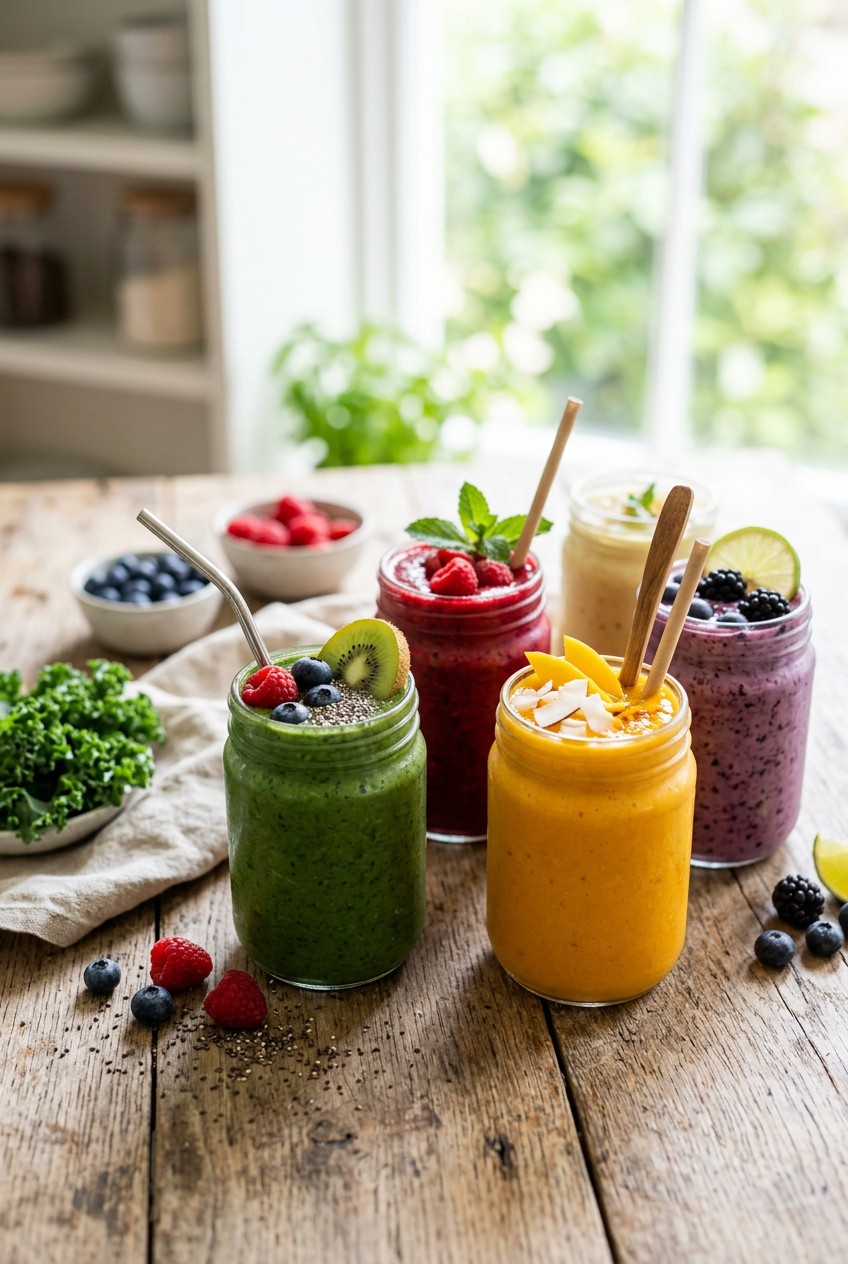
What’s Inside
I still remember the exact moment last Tuesday at Whole Foods when my supposedly healthy breakfast exploded. I was trying to drink one of my new smoothie recipes out of a cheap plastic tumbler in the parking lot while rushing to an appointment. The flimsy lid popped off under the pressure of the overfilled cup. Thick, lukewarm green sludge splattered all over my white steering wheel, my dashboard, and my favorite vintage denim jacket. It smelled exactly like swamp water mixed with raw, bitter kale. That disaster happened because I didn’t understand the basic rules of building a smoothie. I just threw warm tap water, a giant handful of unwashed greens, and two whole apples into a cheap blender. It’s a miracle the machine survived. I tried this wrong for months before figuring it out. Most people get this wrong when they start making breakfast drinks. They dump two cups of ice into the pitcher, which melts after ten minutes and turns everything into a watery mess. Or they rely entirely on sweet fruit, causing a massive sugar crash and intense cravings two hours later. Skip the fat-free stuff. It tastes like wet cardboard and leaves you starving. You need real ingredients with proper measurements. Over the past few years as a nutritionist, I’ve tested hundreds of combinations to find the exact ratios that keep you full for over three hours. The secret is a balanced blend of protein, fiber, and healthy fats. This combination slows digestion, stabilizes your blood sugar, and manages those hunger hormones. If you’re tired of drinking chalky, separated liquids that taste like punishment, you’re in the right place. I’m going to walk you through my favorite formulas. These aren’t just vague ideas. I’ll give you the exact measurements, the specific brands I buy, the exact prices I pay, and the blending tricks that fixed my morning routine. Let’s fix your breakfast habits right now.
1. The Classic Chocolate Protein Powerhouse

I used to think making a chocolate shake meant dumping dry cocoa powder into cold water and hoping for the best. Last month at Costco, I bought a massive bag of cheap generic whey protein, and it clumped so badly it felt like chewing wet sand. You can’t just use any cheap powder if you want a creamy texture. Now, I exclusively use Optimum Nutrition Gold Standard Whey Protein in the Extreme Milk Chocolate flavor. It costs $54.99 for a 2-pound tub, and it’s worth every penny because it dissolves without any gritty residue. To make this, pour 8 ounces of dairy milk or soy milk into your blender. Limit your liquid to 8 ounces to avoid a watery smoothie. While water is hydrating, it offers zero nutrients, and almond milk is generally too low in protein for this recipe. Next, add 1 scoop of the Optimum Nutrition powder, 1 tablespoon of creamy peanut butter (I buy Jif Natural, $3.48 for a 16 oz jar at Walmart), and 1/2 cup of frozen banana slices. A huge mistake is using whole frozen bananas. I broke a cheap blender blade doing exactly that two years ago. Always freeze your overripe bananas in thin slices to prevent waste and add sweetness without destroying your appliance. Blend this for a full 60 seconds. The texture is thick, almost like melting soft-serve ice cream. It smells like a fresh peanut butter cup and keeps me full for over three hours. You’re getting around 30 grams of protein here, which stabilizes your blood sugar.
2. The Creamy Hidden Cauliflower Blend

Adding vegetables to your breakfast sounds terrifying, I know. I vividly remember gagging on a broccoli concoction I made back in college. It tasted like cold soup. But using mild-flavored vegetables is a great way to add nutrients without altering the sweet taste significantly. I swear by frozen cauliflower for this. Last Sunday at Target, I grabbed a bag of Good & Gather Frozen Riced Cauliflower ($2.59 for 12 oz). For a surprising creamy texture and added fiber without the green color, add 1/2 cup of frozen raw cauliflower to your blender. You won’t taste it if you mask it correctly. I pair it with KOS Organic Superfood Chocolate Protein. This plant-based powder costs $44.99 for a 1.3-pound tub and is highly rated because it masks the earthy dirt taste often found in vegan powders. Add 8 ounces of Malk Organic Almond Milk, which runs about $6.49 per 28-ounce carton. It’s expensive but has zero weird gums or fillers. Toss in 1 tablespoon of raw cacao powder and 1/2 cup of frozen dark sweet cherries. When you blend this, the frozen cauliflower acts like ice, thickening the drink without watering down the rich chocolate cherry flavor. The smell is pure dark chocolate, and the texture is velvety smooth. I’ve served this to my pickiest friends, and they never guess there’s a half cup of vegetables hiding inside. It’s the ultimate fiber hack for gut health.
3. The 2026 Trending Ube Purple Dream

If you aren’t familiar with ube yet, you’re missing out on the best flavor trend of the decade. Ube is a purple yam from the Philippines, and it’s a hot drinks trend for 2026. I first tried it at a tiny cafe in Los Angeles, but I ruined my first homemade attempt by buying ube extract loaded with artificial purple food coloring. It stained my hands for two days. Now, I only buy Suncore Foods Pure Purple Sweet Potato Ube Powder ($19.99 for a 5 oz pouch on Amazon). For a naturally sweet twist, whisk 1 level teaspoon of this 100% pure ube powder into your blender. The color is a vibrant violet that looks gorgeous in a glass jar. Combine the powder with 8 ounces of Ripple Unsweetened Original Pea Milk ($5.99 for 48 oz at Sprouts). Ripple is fantastic because it provides 8 grams of protein per cup, unlike most watery nut milks. Add 1/2 cup of frozen mango chunks, 1/4 cup of plain Greek yogurt (Fage Total 2% is my go-to at $6.49 for 32 oz), and 1 tablespoon of unsweetened shredded coconut. The Greek yogurt adds a tangy creaminess that balances the sweet, nutty, vanilla-like flavor of the ube. Honestly, this changed how I view morning meals because it feels like eating dessert. The thick, frosty texture is incredible, and the tropical coconut smell wakes me up. Skip the ice completely. The frozen mango does all the heavy lifting for the temperature and consistency. You might also like: 20 Clever Healthy Snack Ideas That Make a Real Difference

Taste of Home Light & Easy Weeknight Cooking: 307 Healthy
If you want something that just works, Taste of Home Light & Easy Weeknight Cooking: 307 Healthy Recipes for is a safe bet.
4. The Berry Avocado Satiety Smasher

Healthy fats are essential for nutrient absorption and sustained energy, yet a common mistake is omitting them because people fear fat. I spent years drinking fat-free fruit blends and wondered why my stomach was growling by 9:30 AM. Skip the fat-free stuff. It tastes like wet cardboard. You need real fats to feel satisfied. My favorite source of creamy fat is fresh avocado. Last Friday at Kroger, I bought a bag of small Hass avocados for $4.99. I use 1/4 of an avocado per drink. It sounds weird, but it makes the liquid as thick as a milkshake. Combine that quarter avocado with 1 cup of frozen mixed berries. Nutrition experts recommend using no more than 1 cup of fruit to avoid a sugar overload and the inevitable insulin crash. I buy the 4-pound bag of Kirkland Signature Nature’s Three Berry Blend at Costco for $14.99. Add 8 ounces of unsweetened vanilla almond milk, 1 scoop of Transparent Labs Organic Plant-Based Protein Isolate ($49.99 for 1.1 lbs), and 1 tablespoon of raw chia seeds. Chia seeds are crucial here. They provide about 2 grams of protein per tablespoon and swell up to create a thick, pudding-like consistency. The avocado disappears into the tart berry flavor, leaving behind a luxurious, buttery texture. The dark purple color is beautiful, and the sweet smell of the berries makes it appetizing. You won’t feel hungry for hours after finishing this. You might also like: 20 Inspiring Healthy Dessert Ideas That Make a Real Difference
5. The White Bean Vanilla Thickener

I know what you’re thinking. Beans in a sweet breakfast drink sound disgusting. I thought the same thing until I tried it. Last month, I ran out of frozen bananas and needed a thickener. I opened a can of Simple Truth Organic Cannellini Beans ($1.49 at Kroger), rinsed them aggressively, and tossed them in. The secret is that you must rinse them under cold water for a full minute to remove the starchy, salty canning liquid. If you don’t, your drink will taste like salty minestrone soup. Once rinsed, add 1/4 cup of these cooked white beans to your blender. They add an unbelievable creaminess and a hit of soluble fiber and protein without any strong bean flavor. Combine the beans with 8 ounces of cold oat milk (Oatly Original is $5.49 for 64 oz), 1 scoop of vanilla whey protein, 1/2 cup of frozen peaches, and 1/4 teaspoon of pure cinnamon. The beans dissolve into the oat milk, creating a velvety, rich base that tastes like peach cobbler. The cinnamon adds a warm, spicy aroma that masks any lingering earthy notes. This combination is gentle on the stomach and provides a massive dose of sustained energy. It’s one of my most successful recipes because it utilizes cheap, pantry-staple ingredients while delivering an insanely thick, satisfying texture that keeps you full until lunchtime. You might also like: 15 Clever Kids Healthy Breakfast Ideas for a Fresh New Look
6. The Chia & Spinach Gut Healer

Fiber is crucial for slowing digestion, promoting fullness, and supporting a healthy gut microbiome. But drinking a salad is usually a miserable experience. I once tried to blend raw kale with water, and the sharp little green shards got stuck in my teeth all morning. It was embarrassing during a work meeting. To avoid that texture, you have to optimize your blending technique for smoothness. Start with 1 cup of fresh baby spinach. Spinach is a mild-flavored vegetable that is a great way to add nutrients without altering the sweet taste. Add 8 ounces of your preferred liquid, then blend the spinach and liquid together first for 30 seconds before adding anything else. This pulverizes the leaves. Next, add 2 tablespoons of whole chia seeds (Navitas Organics Chia Seeds are $9.99 for 16 oz at Whole Foods), 1/2 cup of frozen pineapple chunks, and 1 scoop of unflavored collagen peptides (Vital Proteins is $27.99 for 10 oz at Target). The chia seeds are the star here. They absorb the liquid and create a gel-like coating that is soothing for your digestive tract. The frozen pineapple provides a sharp, tangy sweetness that covers the grassy smell of the spinach. When you drink this, it feels refreshing, cold, and thick from the chia gel. It’s my go-to recipe when my stomach feels heavy or bloated after a weekend of eating heavy restaurant meals.

Cathy Yoder’s Air Fryer Cookbook for Two (2026): Easy
Honestly, Cathy Yoder’s Air Fryer Cookbook for Two (2026): Easy surprised me — sturdier than it looks in the photos.
7. The Maca Energy Elixir

Functional smoothies are gaining traction right now, incorporating specific ingredients with targeted health benefits. I used to rely on three cups of black coffee to get through my morning, which left me jittery and anxious. I swapped my second cup of coffee for maca powder, and honestly, this changed how I function at work. Maca is a Peruvian root that provides clean energy and adaptogenic benefits without the caffeine crash. I buy Navitas Organics Maca Powder ($14.99 for 8 oz at Sprouts). It has a distinct, earthy, butterscotch-like smell and flavor. You only need 1 level tablespoon. More than that, and it tastes like dirt. Combine the maca with 8 ounces of Malk Organic Almond Milk, 1 tablespoon of creamy almond butter (Justin’s Classic Almond Butter is $11.99 for a 16 oz jar), 1/2 cup of frozen banana slices, and a tiny pinch of sea salt. The salt is the secret ingredient. It enhances the butterscotch notes of the maca and makes the almond butter taste rich. Blend this for 60 seconds until it’s frothy and warm-toned. The texture is silky and luxurious, and the nutty aroma is comforting on a cold morning. You’re getting healthy fats from the almond butter, potassium from the banana, and a sustained energy lift from the maca root. It eliminates my mid-morning brain fog.
8. The Spirulina Tropical Greens

Beyond common grocery store ingredients, you need to experiment with lesser-known additions to upgrade your nutrition. Spirulina is a blue-green algae that is packed with magnesium, potassium, and plant protein. But I have a warning for you. I once dumped a whole tablespoon of spirulina into a cup, and it turned pitch black and smelled like a dirty fish tank. I had to pour the entire thing down the drain. You must measure this perfectly. Use 1/2 teaspoon of Nutrex Hawaii Pure Hawaiian Spirulina ($29.99 for a 5 oz bottle at Whole Foods). That tiny amount is all you need to turn your drink a vibrant alien green without ruining the flavor. To balance the slightly earthy taste of the algae, combine it with 1/2 cup of frozen mango and 1/2 cup of frozen strawberries. Remember, nutrition experts recommend using no more than 1 cup of fruit total per smoothie to avoid a sugar overload. Add 8 ounces of unsweetened coconut water (Harmless Harvest is $4.99 for 16 oz at Target) and 1 scoop of vanilla plant protein. The coconut water provides incredible hydration and a naturally sweet, nutty flavor that pairs perfectly with the tropical mango. The texture is icy and refreshing, making it the perfect post-workout recovery drink. The smell is pure tropical fruit, masking the algae.
9. The Perfect Texture Masterclass

Even if you have the best ingredients in the world, your drink will taste terrible if you don’t blend it correctly. I struggled with chunky, separated drinks for years. I’d find giant lumps of unmixed protein powder glued to the bottom of my cup. To achieve a smooth and creamy texture, you have to blend for much longer than you might think. A high-speed blender like a Vitamix Explorian ($349.99 at Best Buy) can take 60 to 90 seconds to fully pulverize tough ingredients like frozen fruit and chia seeds. For the best results, you must layer your ingredients in a specific order. Always pour your 8 ounces of liquid in first. This prevents the protein powder from getting stuck to the blades. Next, add your soft ingredients like fresh spinach, yogurt, or peanut butter. Then, dump in your frozen fruits and vegetables. Finally, put your protein powder and dry superfoods on top. If you put the powder in first, the liquid pushes it down into the corners where the blades can’t reach it. I use this layering technique for all my smoothie recipes. Try it tomorrow morning with 8 ounces of soy milk, 1/2 cup of frozen blueberries, 1 tablespoon of flaxseeds, and 1 scoop of vanilla whey. Watch how perfectly a vortex forms in the blender. The sound changes from a loud, icy crunch to a smooth, high-pitched hum when it’s perfectly done. The texture is flawless, with zero grit, zero ice chunks, and a uniform, creamy consistency.
I hope these formulas and strict measurements help you fix your morning routine. I wasted so much money on bad ingredients and terrible recipes before I figured out this science. Remember, the key is balancing your protein, fiber, and healthy fats while controlling your liquid and fruit portions. If you found this breakdown helpful, please save this page or pin it to your favorite Pinterest board so you can easily reference these brand names and measurements the next time you’re standing confused in the grocery store aisle. You’ve totally got this.

Half Baked Harvest Super Simple: More Than 125 Recipes for
Half Baked Harvest Super Simple: More Than 125 Recipes for Instant has been one of the most consistently praised picks in this category.
Frequently Asked Questions
What is the secret to easy smoothie recipes that actually keep you full?
The secret is balancing your macronutrients. You must include at least 20 grams of protein, a solid source of fiber like chia seeds, and healthy fats like avocado or nut butter to stabilize blood sugar and prevent early hunger.
How much liquid should I use in my easy smoothie recipes?
You should strictly limit your liquid to a maximum of 8 ounces (about 1 cup). Using more liquid than this will result in a watery, thin texture rather than a thick, creamy, satisfying consistency.
Should I use ice in my daily smoothies?
No, skip the ice completely. Ice waters down the flavor as it melts and creates a slushy texture. Instead, use frozen fruits like sliced bananas or frozen vegetables like raw riced cauliflower to achieve a thick, cold creaminess.
How much fruit is too much for a healthy smoothie?
Nutrition experts recommend strictly limiting your fruit to a maximum of 1 cup per drink. Relying solely on fruit causes a massive sugar spike and inevitable energy crash. Focus on low-sugar options like mixed berries.
