What’s Inside
- The Foundation: Ditching Iceberg for Biodiverse Microgreens in Salad Bowl Recipes
- The Warm Element: Upgrading Cold Salad Bowl Recipes
- The Mason Jar Method: Engineering the Perfect Meal Prep
- The Fermented Addition: Building a Gut-Health Bowl
- The Plant-Based Protein: Crispy Chickpeas and Firm Tofu
- The Quick-Pickled Element: Acidic Contrast and Color Variety
- The Herb-Heavy Massaged Kale Technique
- The 3-2-1 Vinaigrette: Measuring to Avoid Diet Disasters
I stood in the produce aisle at Whole Foods last Tuesday, staring at a plastic clamshell of wet, decaying spinach. I realized my approach to salad bowl recipes was completely broken. I kept building them like a 1990s diet plate. A pile of sad greens, a dry chicken breast, and a drizzle of fat-free dressing that tastes exactly like wet cardboard. It’s no wonder I hated eating lunch. Good salad bowl recipes require actual architecture. You need contrasting textures, specific acid ratios, and enough healthy fat to actually absorb the fat-soluble vitamins in the vegetables. Trust me on this.
I’ve spent the last three years testing different ingredient combinations, throwing away soggy mason jars, and figuring out how to build a bowl that actually keeps me full past 2 PM. Skip the fat-free stuff immediately. It ruins the mouthfeel and leaves you starving. I tried eating low-fat salads for months before figuring out that the lack of fat was causing my mid-afternoon sugar cravings. You have to build a meal that satisfies your stomach and your palate simultaneously. Here’s exactly how I construct my meals now, using specific formulas and measurements instead of random guessing.
1. The Foundation: Ditching Iceberg for Biodiverse Microgreens in Salad Bowl Recipes

Most people start their salads with a massive handful of iceberg lettuce. I tried eating plain iceberg lettuce at my desk back in 2019. It tasted like crunchy water and left me shaking with hunger an hour later. Iceberg offers minimal nutritional value and dilutes the flavor of your other ingredients. You need to swap it for a base of dark, leafy greens or microgreens. A 2-cup serving of mixed organic greens provides a strong nutritional foundation that actually holds up to heavy toppings.
I buy the 5 oz containers from Earthbound Farm or Organic Girl, which usually run about $3.99 to $4.99 at Target or Sprouts. But if you want to follow the massive 2026 nutrition trend, you need to look at biodiverse microgreens. These tiny plants are harvested just after the cotyledon leaves have developed, meaning they contain highly concentrated nutrients and incredibly sharp, distinct flavors. Radish microgreens taste exactly like a spicy, full-grown radish.
I started using a 50/50 split of baby spinach and broccoli microgreens. The microgreens add a dense, slightly fuzzy texture that grips the dressing perfectly. If you rely solely on mature greens, you often end up with a flat, one-dimensional base. Microgreens create natural loft in the bowl, preventing the heavier ingredients from compacting everything into a dense brick at the bottom of your dish. Just make sure you wash them gently. I ruined a $6 box of sunflower shoots last month by blasting them under the kitchen faucet until they bruised and wilted. Learned that the hard way.
2. The Warm Element: Upgrading Cold Salad Bowl Recipes

Eating a completely cold bowl of raw vegetables in the middle of winter is depressing. Warm salads are trending heavily in 2026, specifically because the temperature contrast provides a massive comfort factor and increases satiety. I learned this by accident when I microwaved a leftover salad at work because I forgot to separate the chicken from the lettuce. The warm, slightly wilted greens mixed with hot protein actually tasted incredible.
Now, I intentionally engineer warm elements into my bowls. I take 1/2 cup of diced sweet potatoes, toss them with one teaspoon of avocado oil, and roast them at 425°F for 25 minutes until the edges turn dark brown and caramelize. I also use 1/3 cup of cooked complex carbohydrates, usually quinoa or farro, to provide sustained energy. I buy the Trader Joe’s frozen organic quinoa for $4.49 a bag because cooking grains from scratch on a Tuesday night isn’t going to happen.
Pro tip: Most people get this wrong by dumping hot sweet potatoes directly onto delicate arugula. The heat immediately steams the greens, turning them into a slimy, unappetizing mess. You have to let your roasted vegetables and warm grains sit on the cutting board for exactly five minutes to release their initial steam. Once they cool slightly, you place them on one side of the bowl rather than mixing them throughout. This preserves the crisp texture of your base greens while still giving you that comforting, warm bite alongside your cold ingredients. You might also like: 20 Lovely Kids Healthy Snack Ideas You Haven’t Thought Of
3. The Mason Jar Method: Engineering the Perfect Meal Prep

I packed a healthy lunch for a road trip to Austin last year and made a catastrophic error. I put the vinaigrette right on top of the baby spinach in a plastic container. By noon, the acid had broken down the cell walls of the leaves, resulting in a black, fermented-smelling sludge. If you want to prep your meals days in advance, you have to master the mason jar layering method. It’s an exact science of moisture control. You might also like: 12 Pea Salad Recipes You Need to See
You need a wide-mouth glass jar. I use the 32 oz Ball Mason Jars, which cost exactly $12.99 for a 12-pack at Walmart. The narrow-mouth jars make it impossible to get the ingredients out without aggressively shaking and mashing the contents. The layering order is non-negotiable. First, pour exactly 2 tablespoons of dressing into the very bottom of the glass. Next, add your hardest, most impermeable vegetables. I use chopped carrots, celery, or whole cherry tomatoes. These act as a physical barricade between the liquid acid and the rest of your food.
After the hard vegetables, you add your proteins and heavy grains. I pack in 4 ounces of grilled chicken or a dense layer of chickpeas. Finally, you pack the delicate greens and dry toppings like nuts or seeds at the very top, as far away from the dressing as physically possible. When you’re ready to eat, you simply unscrew the lid and invert the jar over a bowl. The dressing, which was trapped at the bottom, now pours perfectly over the top of the crisp greens. You might also like: 10 Low Carb High Protein Meals That Actually Work

The Skinnytaste Air Fryer Cookbook: The 75 Best Healthy
The Skinnytaste Air Fryer Cookbook: The 75 Best Healthy Recipes for Yo punches above its price — 126 buyers rated it 4.5 stars. I would buy it again.
4. The Fermented Addition: Building a Gut-Health Bowl

Adding fermented foods to raw vegetable bowls is a major 2026 trend, but I started doing it simply because I needed more acid to balance out heavy avocado and nuts. I bought pasteurized sauerkraut from the dry canned goods aisle for months before realizing the high-heat canning process kills all the beneficial bacteria. You’re just eating salty, dead cabbage at that point. You have to buy raw, unpasteurized fermented foods from the refrigerated section to get the probiotic benefits.
I use brands like Cleveland Kraut or Bubbies, which typically run $5.99 to $7.99 per jar at Kroger or Whole Foods. I measure out exactly one tablespoon of their classic caraway sauerkraut or spicy kimchi and place it in the center of the bowl. The sharp, lactic acid tang cuts right through the richness of any olive oil dressing or egg yolk. It adds a complex, sour note that you simply can’t replicate with standard vinegar.
There is a distinct textural advantage here, too. Raw sauerkraut maintains a thick, fibrous crunch that contrasts perfectly with softer ingredients like roasted sweet potatoes or tofu. Just be careful with portion sizing. I once dumped a half-cup of kimchi into a bowl thinking more probiotics meant better health. The overpowering fermented flavor completely annihilated the taste of the fresh basil and expensive microgreens I had carefully prepped. Stick to one or two tablespoons maximum. It’s a condiment, not a base ingredient.
5. The Plant-Based Protein: Crispy Chickpeas and Firm Tofu

A common mistake is building a bowl with just raw vegetables and a light vinaigrette, then wondering why your hands are shaking with hunger ninety minutes later. Your body needs protein to stabilize blood sugar and trigger satiety signals. When I want a break from standard grilled chicken breast or wild-caught salmon, I rely heavily on plant-based proteins, specifically firm tofu and roasted legumes.
I buy Nasoya organic firm tofu, which is consistently priced around $2.49 to $2.99 per block. I press it for twenty minutes to extract the water, slice it into half-inch cubes, and pan-fry it without oil in a non-stick skillet until the exterior forms a tough, chewy crust. For legumes, I skip the raw canned beans. Instead, I take one cup of canned chickpeas—usually the Goya brand for $1.19 a can at Target—drain them, and rinse them thoroughly.
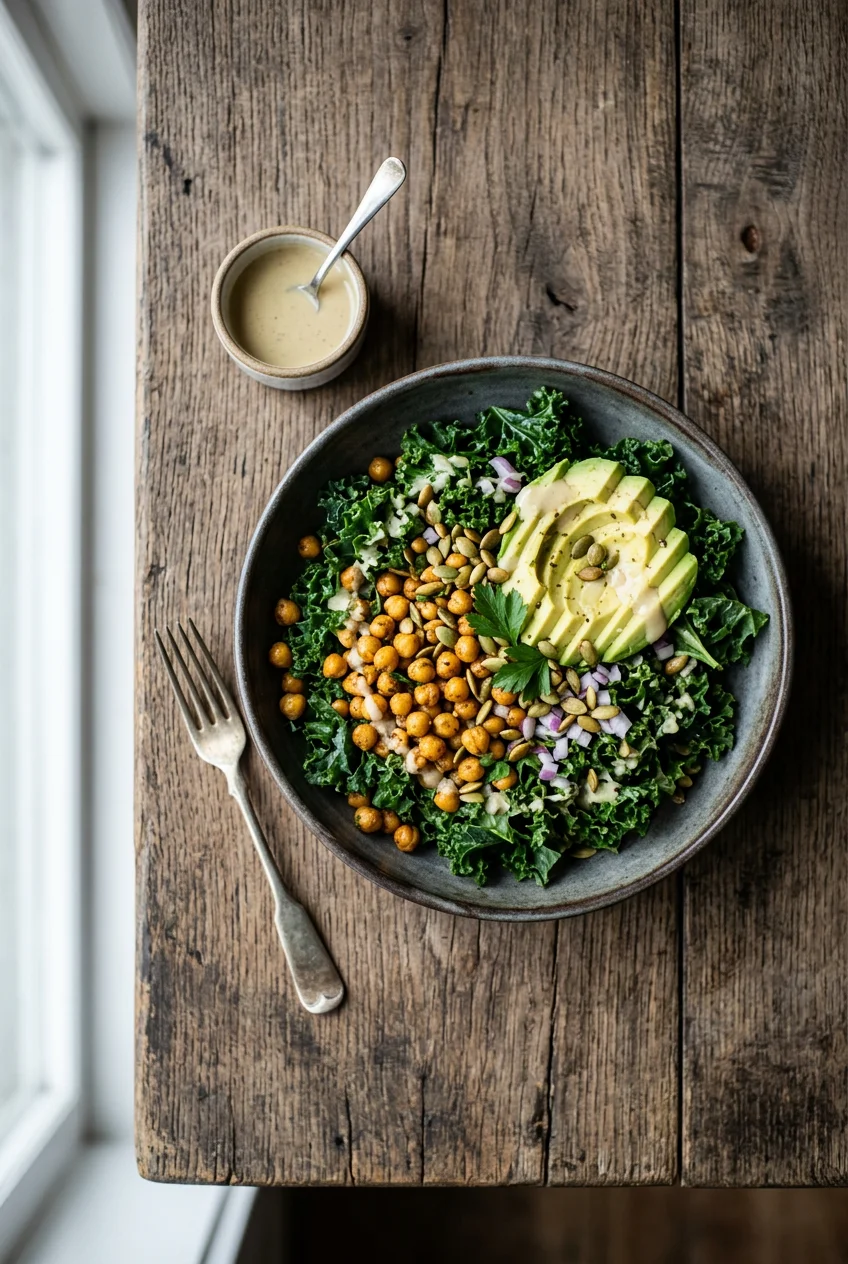
Here is the crucial step I used to skip: you must dry the chickpeas aggressively with a paper towel. If they go into the oven wet, they steam instead of roasting, leaving you with mushy beans. I toss the completely dry chickpeas with exactly one teaspoon of olive oil, a pinch of salt, and smoked paprika, then roast them at 400°F for 30 minutes. They turn into dense, crunchy spheres that act exactly like croutons but deliver a massive hit of fiber and plant-based protein. I use 1/2 cup of these per serving. They absorb the dressing slightly while maintaining their hard exterior shell.
6. The Quick-Pickled Element: Acidic Contrast and Color Variety

Raw red onions ruin my palate for the entire day. The harsh, sulfurous bite lingers in your mouth and overpowers every other ingredient in the bowl. But you still need that sharp, acidic contrast to balance out earthy greens and heavy proteins. The solution is quick-pickling your harsh vegetables. It softens the raw bite, enhances the crunch, and adds a bright, tangy element that makes the whole meal taste like it came from a high-end cafe.
I keep a glass jar of quick-pickled red onions in my fridge at all times. I slice one large red onion paper-thin, pack it into a jar, and pour over a boiling mixture of one cup water, one cup Heinz white vinegar (which I buy in bulk two-gallon jugs for $3.49 at Costco), and a tablespoon of kosher salt. Within thirty minutes, the harsh raw onions transform into sweet, bright pink ribbons. I use exactly 1/4 cup of these pickled onions per serving.
Expert dietitians constantly recommend including a mix of colorful non-starchy vegetables to ensure a wide range of antioxidants. Pickling helps you hit this color variety easily. Beyond onions, I pickle cucumbers, radishes, and even watermelon rinds. The pickled watermelon rind adds a surprising, crunchy texture that mimics a cucumber but holds a slightly sweeter, denser profile. It prevents the bowl from tasting like a monotone pile of raw garden trimmings.

Super Easy Air Fryer Cookbook for Beginners: Quick, Simple
Honestly, Super Easy Air Fryer Cookbook for Beginners: Quick surprised me — sturdier than it looks in the photos.
7. The Herb-Heavy Massaged Kale Technique

I remember chewing a bowl of raw, unmassaged curly kale back in 2018 until my jaw actually ached. Raw kale is incredibly fibrous and difficult to digest. The cellulose structure is rigid, which is why it feels like you’re eating tree leaves. A lesser-known tip for kale and other sturdy greens is the massage technique. You physically break down the tough fibers before you eat them.
I buy Earthbound Farm baby kale for $4.50 at Whole Foods. I place two cups in a large mixing bowl, add exactly one half-teaspoon of olive oil and a pinch of coarse sea salt. Then, I literally massage the leaves with my hands for 60 to 90 seconds. You can feel the exact moment the texture changes. The volume of the greens shrinks by half, the color turns a deep, vibrant emerald green, and the leaves become silky and tender.
Once the kale is massaged, I fold in massive amounts of fresh herbs. Don’t treat herbs like a garnish. Treat them like a core salad green. I finely chop 1/4 cup of fresh cilantro, parsley, or mint and mix it directly into the massaged kale. Beyond just flavor, fresh herbs add a complex sensory experience that increases your sense of satiety without adding extra calories. The sharp menthol notes of fresh mint mixed with the earthy, tenderized kale completely masks the bitterness that usually makes dark greens hard to swallow.
8. The 3-2-1 Vinaigrette: Measuring to Avoid Diet Disasters

Restaurant salads are notorious diet disasters. You order a healthy bowl of greens, but the kitchen drowns it in a half-cup of emulsified soybean oil and refined sugar, turning a 300-calorie meal into a 1,000-calorie bomb. Store-bought dressings aren’t much better. Most commercial brands use cheap seed oils and artificial stabilizers that leave a weird, slick film on the roof of your mouth. You have to make your own dressing using the classic 3-2-1 vinaigrette ratio.
The formula is foolproof: 3 parts oil, 2 parts vinegar, and 1 part flavor agent. I use California Olive Ranch Extra Virgin Olive Oil, which runs about $11.99 for a 16.9 fl oz bottle at Target. It has a peppery, grassy finish that tastes like actual olives, unlike the cheap, clear oils in plastic bottles. I measure exactly 3 tablespoons of the olive oil, 2 tablespoons of Bragg apple cider vinegar, and 1 tablespoon of Maille Dijon mustard into a small glass jar.
The Dijon mustard is critical. It acts as an emulsifier, binding the oil and vinegar together so they don’t immediately separate into a greasy puddle at the bottom of your bowl. I shake the jar violently for ten seconds until the liquid turns cloudy and thick. You must measure your dressing when you pour it. I use exactly 2 tablespoons per serving. If you eyeball it straight from the jar, you’re guaranteed to over-pour, which instantly wilts your microgreens and ruins the crisp texture of your carefully prepped ingredients.
Building these bowls takes a bit of practice, but once you memorize the ratios, it becomes second nature. You won’t ever go back to eating dry lettuce and fat-free ranch. Pin this guide to your meal prep board so you have the exact measurements and layering techniques ready for your next grocery run.
Frequently Asked Questions
How do I keep my salad bowl recipes from getting soggy?
Use the mason jar method for meal prep. Put your dressing at the very bottom, add hard vegetables like carrots next, layer your proteins, and keep the delicate greens at the very top away from all moisture.
What is the 3-2-1 vinaigrette ratio?
It is a foolproof dressing formula: 3 parts healthy oil (like extra virgin olive oil), 2 parts acid (like apple cider vinegar), and 1 part flavor or emulsifier (like Dijon mustard). Shake well to combine.
Why am I still hungry after eating a large salad?
You are likely missing adequate protein, complex carbohydrates, or healthy fats. Ensure you include 3-4 ounces of lean meat or 1/2 cup of plant-based protein, plus a fat source like avocado or nuts for satiety.
How do you make raw kale easier to eat in bowls?
You need to massage it. Place your chopped kale in a bowl with a small amount of olive oil and a pinch of salt, then physically massage the leaves with your hands for 60 seconds until tender.
