What’s Inside
- Choose Waxy Potatoes for Better Texture
- The Salt Water Secret for Potato Salad Recipes
- Start Cold for Even Cooking
- Swap the Mayo for Avocado Oil Options
- Boost Creaminess with Greek Yogurt
- Dress Warm Potatoes for Vinaigrette Potato Salad Recipes
- Cool Completely for Mayo-Based Dressings
- Add a Tangy Kick with Apple Cider Vinegar
- Maximize Flavor with Fresh Herbs
Last Tuesday at Whole Foods, I dropped a plastic tub of deli potato salad right on the floor. It hit the white tile with a loud smack and split wide open. A sad puddle of neon yellow mush and soggy celery chunks stared back at me under the bright fluorescent lights. Honestly, it’s a blessing in disguise. I realized I haven’t made my own healthy potato salad recipes in months. Store-bought stuff tastes like wet cardboard anyway. I’m Sophia, and I’ve spent the last six years as a clean eating nutritionist fixing bad habits. I’m obsessed with finding ways to eat well without spending my whole paycheck. I’ve ruined plenty of side dishes over the years. I’ve served crunchy potatoes at family barbecues. I’ve made dressings that broke into a greasy mess. I’ve learned the hard way so you don’t have to. Today, I’m sharing nine potato salad recipes and specific tips that cost under $5 per serving. These aren’t your grandma’s heavy, mayo-drenched bowls of regret. We’re talking about fresh, vibrant, and actually nutritious options. Let’s get right into the exact methods I use to make these dishes taste incredible.
1. Choose Waxy Potatoes for Better Texture

When you’re standing in the produce aisle, the sheer number of potato options can feel overwhelming. If you want a salad that actually holds its shape, you can’t just grab the cheapest bag of baking potatoes you see. You need to opt for waxy potatoes such as Red Bliss, New potatoes, Fingerling, or Yukon Gold. I usually buy Trader Joe’s Organic Yukon Gold Potatoes. They cost exactly $4.49 for a 3-pound bag. These varieties have a much lower starch content. They won’t turn into a mushy paste during the boiling process.
I learned this the hard way. Back in the summer of 2019, I tried making a huge batch of potato salad using starchy Russets. It’s a total disaster in hindsight. The second I stirred in my dressing, the potatoes completely disintegrated. I ended up serving cold, lumpy mashed potatoes to my friends. It was so embarrassing. Waxy potatoes keep their firm, slightly snappy texture even after they’re cooked and cooled. When you bite into a Yukon Gold, you get a satisfying resistance before it gives way to a creamy center.
It’s the perfect foundation for any dressing you choose. I’ve found that cutting them into uniform 1-inch cubes before boiling helps them cook at the exact same rate. The thin, delicate skin on Yukon Golds also means you don’t even have to peel them. If you aren’t using waxy potatoes, you’re setting yourself up for failure from the very first step. Trust me on this one. Spend the extra dollar and get the right variety.
2. The Salt Water Secret for Potato Salad Recipes

This is a step most people get completely wrong. I used to boil my potatoes in plain, unseasoned tap water. I thought I’d just add salt at the end when I mixed in the dressing. I was so wrong. The potatoes tasted like absolutely nothing. They were bland, watery, and uninspiring. To infuse flavor from the inside out, you must generously salt the potato cooking water. I’m talking about a serious amount of salt.
You need at least 2 tablespoons of kosher salt per 2 pounds of potatoes. Sometimes I even use up to 1 tablespoon per quart of water. I personally swear by Morton Coarse Kosher Salt. You can grab a massive 3-pound box for just $3.29 at Kroger. When you add this much salt to the boiling water, it forces the sodium to penetrate the dense flesh of the potato as it softens. The water should literally taste like the ocean before you drop your potatoes in. If it doesn’t, add more.
I’ve noticed a massive difference in my potato salad recipes since I started doing this. The potatoes come out tasting savory and rich on their own, before a single drop of mayo or vinegar touches them. It’s a small step, but it completely changes the final dish. Don’t worry about the sodium content being too high. Most of the salt stays in the water and gets drained away down the sink. You’re just giving the potatoes a chance to absorb what they need to taste good.
3. Start Cold for Even Cooking

If you take away just one tip from me today, let it be this exact technique. You must place your cut potatoes in cold water before bringing the pot to a boil. I know it’s tempting to boil the water first and then drop the potatoes in to save time. I tried this wrong for months before figuring it out. When you drop cold potatoes into boiling water, the outside cooks instantly while the inside stays hard and raw. By the time the center is tender, the outside is turning into an unappealing, mushy sludge.
Starting with cold water ensures the potatoes cook evenly from the outside in. I use my heavy-duty OXO Good Grips 5-Quart Colander. It’s $14.99 at Target. I rinse my chopped potatoes under cold tap water to remove excess surface starch. Then, I place them in my large stockpot and cover them with about two inches of cold water. Only then do I turn the stove on to high heat. So simple.
You want to cook the potatoes until they’re just fork-tender. This typically takes between 10 to 20 minutes, depending on their size and type. I start checking them at the 10-minute mark by poking a 1-inch cube with a metal fork. If the fork slides in easily but the potato doesn’t crumble, they’re done. Overcooking is a massive mistake that leads to a terrible texture. I’ve ruined entire batches by leaving them on the stove for five minutes too long. Simmering rather than vigorously boiling also helps maintain their structural integrity. You might also like: 20 Inspiring Healthy Dessert Ideas That Make a Real Difference

The Healthy Family Cookbook: 100 Fast and Easy Recipes for
The Healthy Family Cookbook: 100 Fast and Easy Recipes for the Whole F has been one of the most consistently praised picks in this category. 967 reviewers averaged 4.5/5.
4. Swap the Mayo for Avocado Oil Options

Let’s talk about the dressing. Traditional store-bought mayonnaise is often loaded with cheap, inflammatory oils like soybean or canola oil. If you’re trying to eat clean, you need to rethink your mayo game entirely. For a lighter, healthier dressing, I’d highly recommend swapping traditional mayonnaise for avocado oil-based options. I personally buy Primal Kitchen Mayo with Avocado Oil. It runs about $9.99 for a 12 oz jar at Sprouts. Another great option is Chosen Foods Classic Avocado Mayo, which is usually around $8.49 for the same size. You might also like: 20 Lovely Kids Healthy Snack Ideas You Haven’t Thought Of
These brands offer heart-healthy fats and much cleaner ingredient lists. I know they cost a bit more upfront, but the flavor and health benefits are completely worth it. Skip the fat-free stuff. It tastes like wet cardboard and is usually packed with artificial thickeners and hidden sugars to make up for the lack of fat. You need real fat to carry the flavors of your herbs and spices. You might also like: 15 Clever Kids Healthy Breakfast Ideas for a Fresh New Look
I usually use exactly 1/2 cup of avocado oil mayo for a standard batch of potato salad. It provides a rich, luxurious texture without making you feel heavy and sluggish afterward. The avocado oil gives the mayo a slightly grassy, fresh undertone that pairs beautifully with earthy potatoes. The smooth, velvety texture coats the potatoes perfectly. I’ve served this to my pickiest family members, and they honestly can’t tell the difference between this and the cheap stuff. It’s a simple swap that makes a huge nutritional impact.
5. Boost Creaminess with Greek Yogurt

If you want to cut down on the calories without sacrificing that classic, creamy texture, you need to start using Greek yogurt. This is a massive trend for healthier side dishes right now, and for good reason. I incorporate non-fat plain Greek yogurt into almost all of my creamy dressings. My absolute favorite is Fage Total 0% Greek Yogurt. I buy the large 32 oz tub for $6.99 at Costco because I go through it so fast. It’s incredibly thick and rich.
The rule of thumb I follow is to use approximately 3/4 cup of Greek yogurt for every 1.5 pounds of potatoes. This creates a creamy, protein-rich, and lower-fat dressing. You get this wonderful, thick consistency that coats every single potato cube perfectly. I do have a warning, though. Do not use regular, unstrained yogurt. I tried using regular plain yogurt once when I ran out of Greek. It’s a complete disaster.
The dressing was way too runny, and it pooled at the bottom of the bowl in a watery, unappetizing mess. Greek yogurt has the whey strained out, so it’s thick enough to stand in for mayonnaise. The slight tartness of the yogurt also adds a really nice depth of flavor that brightens up the whole dish. Sometimes I’ll do a half-and-half mixture of Greek yogurt and avocado oil mayo to get the best of both worlds. It’s rich, tangy, and incredibly satisfying without weighing you down.
6. Dress Warm Potatoes for Vinaigrette Potato Salad Recipes

Not every potato salad needs to be drenched in a white, creamy sauce. Vinaigrette-based dressings are incredible, especially for summer picnics where you don’t want to worry about mayo spoiling in the hot sun. If your recipe calls for a vinaigrette, you must toss it with the potatoes while they’re still warm. This is a non-negotiable step. Warm potatoes are like little sponges. Their starch cells are expanded, allowing them to absorb the liquid and flavors much more effectively.
I usually make a simple dressing using 3 tablespoons of extra virgin olive oil, 2 tablespoons of apple cider vinegar, and a spoonful of Dijon mustard. I always use Grey Poupon Dijon Mustard. It costs $3.49 for an 8 oz jar at Walmart, and it has the perfect sharp, spicy bite. When you pour this acidic, oily mixture over steaming hot potatoes, the smell is absolutely intoxicating. The heat releases the aroma of the mustard and vinegar, filling your kitchen with a sharp, savory scent.
If you wait until the potatoes are cold to add a vinaigrette, the oil just sits on the surface. You end up with slick, greasy potatoes that lack any real flavor inside. I’ve made this mistake before, and the result was a bland, oily bowl of sadness. Always dress them warm. The potatoes will literally suck up the dressing, resulting in a deeply seasoned, complex flavor profile that tastes amazing even days later.

Air Fryer Cookbook: 600 Effortless Air Fryer Recipes for
Air Fryer Cookbook: 600 Effortless Air Fryer Recipes for Beginners and has been one of the most consistently praised picks in this category.
7. Cool Completely for Mayo-Based Dressings

Conversely, if you’re making a creamy, mayonnaise-based dressing, heat is your absolute worst enemy. You must allow the cooked potatoes to cool completely before adding the dressing. I’m talking about waiting at least 30 minutes, if not longer. I usually spread my boiled potatoes out on a large metal baking sheet and stick them in the fridge to speed up the process. I cover them tightly with Reynolds Wrap Aluminum Foil. I grab that for $4.59 at Target so the potatoes don’t absorb any weird fridge smells.
Applying mayonnaise to warm potatoes is a terrible idea. I mixed mayo into hot potatoes last July when I was rushing to get to a Fourth of July barbecue. The residual heat caused the emulsion in the mayonnaise to break completely. The oil separated from the egg yolks, and my beautiful dressing turned into a greasy, yellow, oily nightmare. It looked disgusting, and the texture was completely ruined. Learned that the hard way.
I had to throw the entire batch in the trash and show up to the party empty-handed. Don’t let this happen to you. Wait until the potatoes are genuinely cold to the touch. When you fold the mayo into cold potatoes, it stays thick, creamy, and perfectly stable. Patience is literally the most important ingredient when you’re working with creamy dressings. If you rush this step, you won’t be able to fix the broken dressing later.
8. Add a Tangy Kick with Apple Cider Vinegar

A great potato salad needs balance. Potatoes are heavy, earthy, and dense. Mayonnaise is rich and fatty. If you don’t add an acidic component, the whole dish will taste flat and heavy. You need something to cut through all that richness. This is where apple cider vinegar comes in. I highly recommend incorporating 2 to 4 tablespoons of apple cider vinegar per 2 to 3 pounds of potatoes into your dressing.
My go-to is the Whole Foods 365 Organic Apple Cider Vinegar. It’s only $4.29 for a 16 oz glass bottle, and it has that cloudy mother at the bottom which I love. This acidic component is absolutely crucial for brightening the overall taste profile. When you mix the vinegar into the mayo or yogurt, you get this sharp, acidic smell that instantly makes your mouth water. It wakes up the entire flavor profile of the dish.
I used to skip the vinegar because I thought the mustard provided enough tang. I was wrong. The salad always felt like it was missing something. Once I started adding a heavy splash of apple cider vinegar, everything clicked. It provides a sharp, fruity bite that balances the creamy fat perfectly. The sharp tang hitting the back of your throat is exactly what makes you want to go back for a second helping. If you don’t have apple cider vinegar, fresh lemon juice works in a pinch, but the apple cider variety gives it that classic, authentic tang.
9. Maximize Flavor with Fresh Herbs

Please, for the love of good food, stop relying solely on dried spices for your side dishes. If you want to make something that tastes like it came from a high-end deli, you need to generously add a vibrant mix of fresh herbs. I always add at least 1/2 cup of finely chopped fresh dill, parsley, and chives to my potato salad. I pick up those little fresh dill packets from Trader Joe’s. They’re $1.99 for a 0.5 oz package, and the quality is always fantastic.
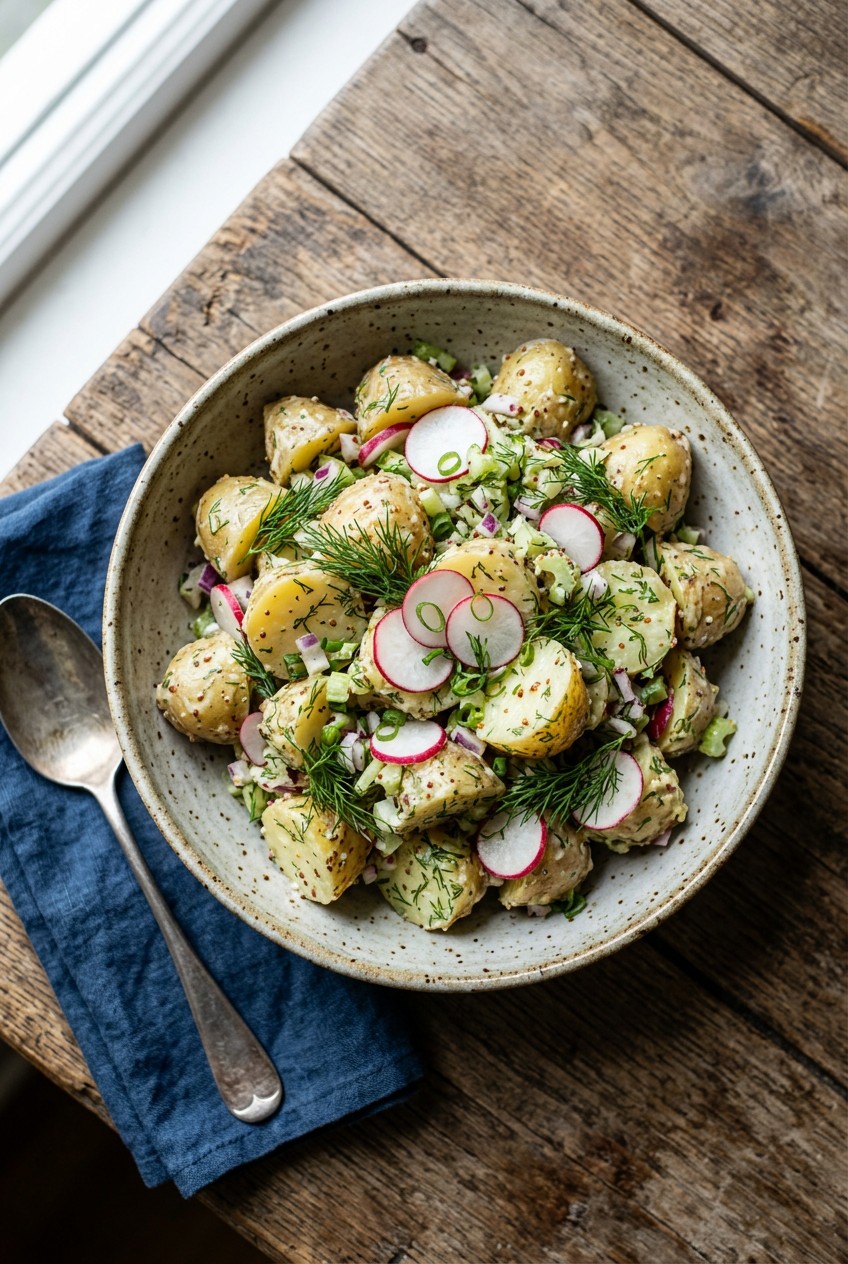
Fresh herbs completely change the visual appeal of the dish. Instead of a boring, monotone yellow bowl, you get these beautiful, bright green speckles throughout. The sensory experience is incredible. When you chop fresh dill on a wooden cutting board, the grassy, slightly sweet aroma fills the room immediately. It not only enhances the flavor but also adds a quick boost of nutrients and antioxidants to your meal. No exaggeration.
I’ve tried using dried dill weed in the past when I was feeling lazy. It’s just not the same. Dried herbs can taste dusty and muted, and they don’t provide that crisp, fresh bite that cuts through the creamy dressing. Wash your herbs thoroughly under cold water, dry them well with a paper towel, and chop them right before you fold them into the cooled potatoes. It’s the final touch that takes a cheap, $5 recipe and makes it taste incredible.
Honestly, making a great potato salad isn’t hard, but it does require paying attention to the little details. From salting the water heavily to knowing exactly when to add your dressing, these small steps make a massive difference. I’ve ruined enough batches in my own kitchen to know what works and what doesn’t. You don’t need to spend a fortune on fancy ingredients to eat clean. By sticking to these simple techniques and affordable ingredients from places like Trader Joe’s, Target, and Costco, you can create incredible side dishes for under $5 a serving. I’m so glad I dropped that expensive deli tub on the floor last week. It reminded me how much better homemade food really is. If you try any of these tips, let me know how they turn out. Save this article, pin it to your favorite recipe board, and keep it handy for your next family gathering or meal prep Sunday. You’re going to love the results.

Ultimate Air Fryer Perfection: 185 Remarkable Recipes That
Ultimate Air Fryer Perfection: 185 Remarkable Recipes That Make the Mo has been one of the most consistently praised picks in this category.
Frequently Asked Questions
What are the best potatoes for potato salad recipes?
Waxy potatoes like Yukon Gold, Red Bliss, New potatoes, and Fingerlings are the best choices. They have a lower starch content, which allows them to hold their shape perfectly after boiling without turning into a mushy paste.
Should I add dressing to hot or cold potatoes?
It depends on the dressing. For vinaigrette-based potato salad recipes, toss the dressing with warm potatoes so they absorb the flavors. For mayonnaise or yogurt-based dressings, let the potatoes cool completely first so the heat doesn’t break the emulsion.
How do I make a healthier potato salad?
Swap traditional cheap mayonnaise for an avocado oil-based mayo, or use non-fat plain Greek yogurt. Greek yogurt adds a creamy texture and extra protein while keeping the fat content low. Fresh herbs and apple cider vinegar also boost flavor without adding calories.
Why do my potatoes get mushy when I boil them?
You might be using starchy Russet potatoes, dropping them into already boiling water, or overcooking them. Always start waxy potatoes in cold, heavily salted water and simmer until just fork-tender, usually between 10 to 20 minutes.
