What’s Inside
- The Mason Jar Classic Layered Salad Recipes Strategy
- The Soggy-Proof Greek Layered Salad Recipes Technique
- The Protein-Packed Cobb Layered Salad Recipes Approach
- The 2026 Trending Plant Power Bowl Layered Salad Recipes Base
- The Gut-Healing Kimchi Crunch Layered Salad Recipes Addition
- The Avocado Walnut Satiety Stack Layered Salad Recipes Fix
- The Mellow Red Onion & Water Chestnut Crisp Layered Salad Recipes Trick
- The Massaged Kale & Ancient Grain Layered Salad Recipes Prep
- The Warm Roasted Sweet Potato Autumn Layered Salad Recipes Twist
- The Ultimate Balsamic Vinaigrette Layered Salad Recipes Finish
Last Tuesday at Whole Foods, I dropped a glass container of what was supposed to be my lunch, and brown, slimy lettuce splattered across aisle four. The smell of old vinegar and oxidized cucumbers was humiliating as an employee brought over a mop. I realized right then my approach to layered salad recipes was completely wrong. Layered salad recipes don’t have to be a mushy disappointment. I’ve spent the last three months testing layering techniques, crying over ruined avocados, and figuring out exactly how to build a container that actually stays crisp for four days. If you’re tired of pulling a sad, waterlogged mess out of the fridge at noon, I’ve got you covered. Let’s fix your lunch routine.
1. The Mason Jar Classic Layered Salad Recipes Strategy

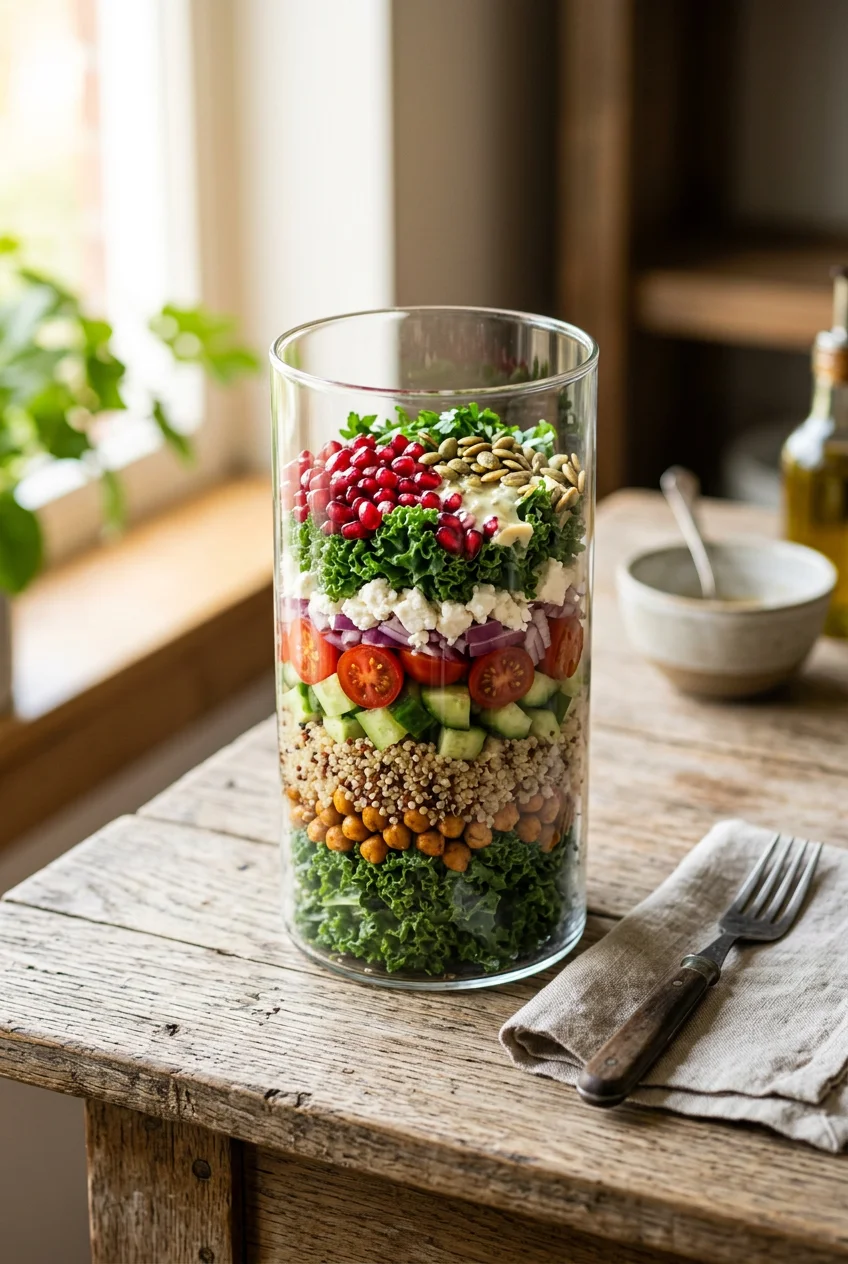
Most people get this completely wrong on their first try. I certainly did. I’d shove a handful of spring mix into a jar, pour dressing over the top, and wonder why I was eating green sludge the next day. Master the layering order, and you’ll never eat a soggy lunch again. To prevent a soggy salad, always place your dressing at the very bottom of your container. I use 2 tablespoons of Primal Kitchen Green Goddess dressing (usually $5.99 for an 8-ounce bottle at Whole Foods). It’s got an avocado oil base and zero added sugar. Pour that right into the bottom of a 32-ounce wide-mouth Ball mason jar ($12.99 for a 12-pack at Target). Next, you need a barrier layer of hard, non-absorbent vegetables. I drop in 1/2 cup of chopped raw carrots and 1/2 cup of diced red bell peppers. They sit in the dressing and actually marinate, getting more flavorful overnight without breaking down. Next, add your grains or proteins. Finally, pack your delicate greens on top, as far away from the liquid as possible. This strategic layering keeps everything crisp until you’re ready to mix and enjoy. When you dump the jar into a bowl, the greens fall out first, creating a bed, and the dressing pours out last, coating everything perfectly. I’ve left a jar layered like this in my fridge for four days, and the spinach at the top was still dry and snappy. Took me years to figure out that simple order.
2. The Soggy-Proof Greek Layered Salad Recipes Technique

Water is the enemy of any meal prep. A common mistake that leads to soggy salads is not properly drying your leafy greens. After washing a head of romaine, I use my OXO Good Grips Salad Spinner ($29.99 at Target). If you don’t have one, you need to pat every single leaf thoroughly dry with paper towels. Excess moisture dilutes your dressing and causes greens to wilt prematurely. But greens aren’t the only culprit. Tomatoes and cucumbers hold a massive amount of water. To prevent excess moisture from making your salad soggy, especially when meal prepping, you have to pre-treat your watery vegetables. I learned a trick from watching Gordon Ramsay: remove the seeds from your cucumbers to drastically reduce their water content. I take one whole English cucumber ($1.49 at Kroger), slice it in half lengthwise, and scrape the seed channel out with a spoon. Then, I slice the firm outer flesh, toss the pieces with a pinch of sea salt, and let them sit in a colander in the sink for 15 to 20 minutes. The salt pulls the water out. You’ll see a puddle form underneath. Pat those cucumber slices thoroughly dry with a paper towel before adding them to your layers. I tried skipping this step last month when I was rushing, and my Greek salad turned into a watery soup by Wednesday. Take the extra 15 minutes. It’s the only way to keep your feta cheese from turning into a soggy, dissolved mess.
3. The Protein-Packed Cobb Layered Salad Recipes Approach

Ensure your salad is a satisfying meal by incorporating at least 4 to 6 ounces of lean protein. A 3.5-ounce serving of cooked chicken breast provides approximately 31 grams of protein, which is exactly what you need to avoid the 3 PM sugar crash. I buy a whole Kirkland Signature rotisserie chicken ($4.99 at Costco) every Sunday. The smell of warm roasted chicken in the car is honestly the best part of my weekend grocery run. I shred the breast meat and use it for multiple convenient servings throughout the week. When you’re building your layers, place the shredded chicken directly above your hard vegetables. Next, you need strategic placement of your hard-boiled eggs. One large egg contains about 6 grams of protein and adds a rich, creamy texture. I boil a dozen eggs on Sunday, peel them, and slice them in half. Layer them after your sturdier vegetables and chicken, but before your delicate greens. If you put the eggs at the very bottom in the dressing, the yolks turn gray and powdery, and the whites get rubbery. I ruined three days of lunches doing exactly that. The dressing acid literally pickles the egg whites. Keep them suspended in the middle of your jar. I use 1/2 cup of cherry tomatoes ($2.99 a pint at Trader Joe’s) as a buffer layer between the chicken and the eggs. The firm skins of the tomatoes protect the soft eggs from getting crushed under the weight of the meat.

The Complete Air Fryer Cookbook For Beginners: 2000 Days of
A dependable everyday pick — The Complete Air Fryer Cookbook For Beginners: 2000 Days of Crispy. Not flashy, just solid.
4. The 2026 Trending Plant Power Bowl Layered Salad Recipes Base

Align with 2026 food trends by adding plant-based powerhouses to your lunch rotation. You don’t need meat every single day to feel full. A 1-cup serving of canned chickpeas offers about 14 grams of protein and significant fiber. I buy the Simple Truth Organic Garbanzo Beans ($1.29 a can at Kroger). You have to rinse them thoroughly in a mesh strainer until the water runs completely clear. If you don’t, they retain a metallic, tinny smell that ruins the whole jar. After rinsing, I pat them dry. Cooked quinoa is another trending ingredient that provides essential amino acids and a hearty texture, making your salad much more substantial. I use Bob’s Red Mill Organic Quinoa ($6.49 for a 13-ounce bag at Sprouts). I cook 1 cup of dry quinoa on Sunday and let it cool completely on a baking sheet. If you put warm quinoa into a glass jar, it creates condensation. That steam turns your crisp romaine into wet tissue paper. I learned that the hard way last winter. Once the quinoa is cold, it goes right above the dressing layer. It absorbs the vinaigrette beautifully, plumping up and taking on all that tangy flavor. The combination of the slightly chewy quinoa and the firm, starchy chickpeas creates a dense, filling base. I top this with 2 cups of chopped red cabbage ($2.49 a head at Whole Foods) for a loud, satisfying crunch that holds up for days.
5. The Gut-Healing Kimchi Crunch Layered Salad Recipes Addition

For a serious probiotic boost and a sharply tangy flavor, you need to include fermented ingredients. A tablespoon or two of kimchi or sauerkraut can completely change your salad and support digestive wellness, which is a massive health trend for 2026. I buy Cleveland Kitchen Classic Kimchi ($5.49 for a 16-ounce pouch at Target). The smell hits you as soon as you open the bag. It’s pungent, sour, and garlicky. I take 2 tablespoons of the kimchi, drain the excess bright red liquid, and chop it into smaller pieces. You have to drain it. I once dumped a wet forkful straight into my jar, and the spicy brine leaked down into my tahini dressing, turning the whole thing into a weird, separated mess. Place the drained kimchi in the middle of your jar, right on top of a dense vegetable like shredded carrots. The acid in the fermented cabbage cuts right through rich, heavy ingredients. It pairs incredibly well with a base of 1/2 cup of cooked edamame ($2.99 for a frozen bag at Trader Joe’s). The soft, buttery texture of the edamame balances the sharp, salty crunch of the fermented cabbage. If you aren’t used to eating fermented foods, start with just 1 tablespoon. The flavor is intense, and it can easily overpower delicate greens like spinach. I stick to sturdy bases like shaved Brussels sprouts when I use kimchi, so the textures can actually compete with each other. You might also like: 20 Beautiful Aesthetic Low Calorie Dinner Ideas That Changed Everything
6. The Avocado Walnut Satiety Stack Layered Salad Recipes Fix

Include sources of healthy fats if you actually want to stay full until dinner. A salad made of just lettuce and cucumbers is a snack, not a meal. I always include 1/4 of a Hass avocado (typically $1.50 each at Whole Foods). The trick with avocado in meal prep is preventing it from turning into a brown, oxidized paste. I chop the avocado into cubes and toss it in 1 teaspoon of fresh lemon juice before adding it to the jar. The citric acid stops the browning process. I place the avocado near the top, right under the greens, so it doesn’t get mashed by heavier ingredients. Next, I add 1 tablespoon of Navitas Organics Chia Seeds ($7.99 a bag at Sprouts) and a small handful of Diamond of California shelled walnuts ($5.48 at Walmart). These not only add flavor and a bitter, woody snap, but they also increase satiety and aid in the absorption of fat-soluble vitamins from your vegetables. Skip the fat-free dressings. They taste like wet cardboard and usually pump up the sugar content to compensate for the lack of mouthfeel. Your body literally can’t absorb the vitamins in your spinach without some fat. The walnuts provide a loud crunch that contrasts perfectly with the creamy avocado. I tried using sliced almonds once, but they got soggy after two days in the fridge. Walnuts are dense enough to maintain their snap, even in a sealed container. You might also like: 8 Healthy Snacks On The Go Worth Trying

Air Fryer Cookbook: 600 Effortless Air Fryer Recipes for
Air Fryer Cookbook: 600 Effortless Air Fryer Recipes for Beginners and punches above its price. I would buy it again.
7. The Mellow Red Onion & Water Chestnut Crisp Layered Salad Recipes Trick

Raw red onions have a harsh, burning bite that can ruin your breath for the rest of the afternoon. If you’re using red onion, you have to thinly slice it and soak the pieces in a bowl of ice-cold water for about 10 to 15 minutes before adding them to your salad. This technique significantly reduces their harsh bite while retaining their desirable crispness. I buy a large red onion ($1.29 at Kroger) and prep the whole thing on Sunday. After the cold water soak, I drain them and pat them completely dry. The sulfur compounds wash away in the water, leaving a sweet, mild onion flavor that won’t overpower your lunch. For a surprising and satisfying texture, I include about 1/2 cup of drained, sliced canned water chestnuts. I buy the La Choy brand ($1.69 a can at Walmart). You have to rinse them well to get rid of the canning liquid. They maintain their crunch exceptionally well in layered salads and offer an interesting textural contrast that you don’t get from standard vegetables. They taste slightly sweet and snap loudly when you bite into them. I place the soaked red onions and the water chestnuts right above my protein layer. I used to skip soaking my onions because I thought it was a waste of time. Then I spent a three-hour afternoon meeting tasting nothing but raw onion fumes. I won’t make that mistake again. You might also like: 11 Easy Healthy Snacks for Every Budget
8. The Massaged Kale & Ancient Grain Layered Salad Recipes Prep

Move beyond traditional lettuce bases by incorporating nutrient-dense ancient grains like farro, millet, or amaranth. A 1/2 cup serving of cooked farro can provide a chewy texture and additional fiber, aligning with 2026 food trends focusing on whole, unprocessed ingredients. I buy Nature’s Earthly Choice Pearled Farro ($3.99 a bag at Target). It boils on the stove in about 20 minutes and has a nutty, complex flavor that completely outshines plain white rice. I let it cool, then layer it directly over my vinaigrette. For the greens, I use raw curly kale ($2.49 a bunch at Trader Joe’s). If your recipe calls for tough greens like kale, you can’t just chop it and throw it in. Raw, untreated kale feels like chewing on dry leaves. You have to gently massage it with 1 teaspoon of Pompeian Extra Virgin Olive Oil ($8.99 a bottle at Walmart) and a pinch of coarse sea salt for 2 to 3 minutes. I literally get my hands in the bowl and squeeze the leaves until they shrink in half and turn a dark, glossy green. This process breaks down their rigid cell walls, making them tender and palatable without the need for cooking. I pack the massaged kale at the very top of my jar. Because it’s so sturdy, it won’t wilt even if it accidentally touches a damp ingredient. It’s the only green I trust for a Friday lunch prep. No exaggeration.
9. The Warm Roasted Sweet Potato Autumn Layered Salad Recipes Twist

While layered salads are typically cold, a growing trend for 2026 is incorporating warm elements. Consider adding a layer of freshly roasted vegetables like sweet potatoes or Brussels sprouts for a hearty, seasonal twist. I prioritize seasonal and locally sourced ingredients for peak flavor and nutritional value. In the fall, I buy the pre-cut cubed butternut squash or sweet potatoes ($2.99 a bag at Trader Joe’s) to save time. I toss 1 cup of the cubes in olive oil, salt, and smoked paprika, then roast them at 400 degrees until the edges turn dark brown and caramelize. The smell of roasting sweet potatoes makes the whole kitchen feel cozy. Here’s the critical step: you must ensure they’re cooled slightly before layering to avoid wilting other ingredients. I once dumped hot sweet potatoes straight out of the oven onto a bed of arugula. The greens instantly turned black, slimy, and bitter. It was completely inedible. Now, I let the roasted vegetables sit on the baking sheet for at least 20 minutes. I layer them right above my grains. When I’m ready to eat, I dump the jar into a bowl and microwave just the sweet potato and grain portion for 30 seconds before mixing the greens back in. The contrast between the warm, soft, sweet potatoes and the cold, crisp greens is incredible. It makes a packed lunch feel like a restaurant meal.

Gordon Ramsay’s Healthy
Honestly, Gordon Ramsay’s Healthy surprised me — sturdier than it looks in the photos.
10. The Ultimate Balsamic Vinaigrette Layered Salad Recipes Finish

When convenience calls, you have to choose your dressings wisely. Making your own vinaigrette is great, but I don’t always have the time or the energy to whisk olive oil and mustard on a Sunday night. Look for brands that use avocado oil or olive oil as a base and are lower in sugar and sodium. Avoid options with highly processed oils like soybean or canola, which can trigger inflammation. I regularly buy Annie’s Organic Balsamic Vinaigrette ($4.49 for an 8-ounce bottle at Sprouts). It has a thick, emulsified texture that clings to vegetables rather than pooling into a watery mess at the bottom of your bowl. The smell of the aged balsamic vinegar is sharp and fruity. I measure exactly 2 tablespoons and pour it into the very bottom of my glass container. You have to measure it. Pouring directly from the bottle is how you end up with 400 calories of dressing drowning your hard work. I used to buy those fat-free raspberry vinaigrettes, thinking I was making a healthy choice. They were packed with corn syrup and tasted like artificial candy. Switching to a high-quality, full-fat dressing changed how I view salads entirely. The fat carries the flavor, coats the greens, and actually makes the raw vegetables taste rich and savory. Layer 1/2 cup of cherry tomatoes directly into the balsamic dressing. The acid breaks down the tomato skins slightly, creating an incredible marinated flavor by day three. Trust me on this.
I’ve ruined enough expensive produce to know that meal prep requires a specific strategy. Save these layered salad recipes to your Pinterest board so you don’t forget the layering order next Sunday. Trust me, the extra ten minutes of drying your greens and soaking your onions pays off when you’re eating a loud, crunchy, fresh lunch on a Thursday afternoon. Don’t settle for wet lettuce. You’ve got the exact blueprint now, so grab your mason jars and get to work.
Frequently Asked Questions
How long do layered salad recipes last in the fridge?
When properly layered with the dressing at the bottom and greens at the top, they stay crisp for four to five days in an airtight glass container. You must dry your vegetables completely to reach the five-day mark.
What is the best container for a layered salad?
I always use 32-ounce wide-mouth glass mason jars. The tall, narrow shape keeps the dressing isolated at the bottom. Plastic containers are often too wide, allowing the liquid to spread and touch the delicate greens prematurely.
Can I put meat in my layered salad recipes?
Absolutely. Add cooked, cooled proteins like shredded chicken breast or steak directly above your hard vegetables. Never put hot meat into the jar, as the condensation will wilt your greens and make the entire meal soggy.
Do I need to make my own dressing?
You don’t have to. Store-bought options work perfectly if you choose brands with olive or avocado oil bases. Just avoid fat-free dressings, which are usually packed with sugar and lack the viscosity needed to stay at the bottom.
