What’s Inside
- The Classic Summer Berry Bowl (My Go-To For Easy Fruit Salad Recipes)
- The Citrus Shield Apple And Pear Crunch
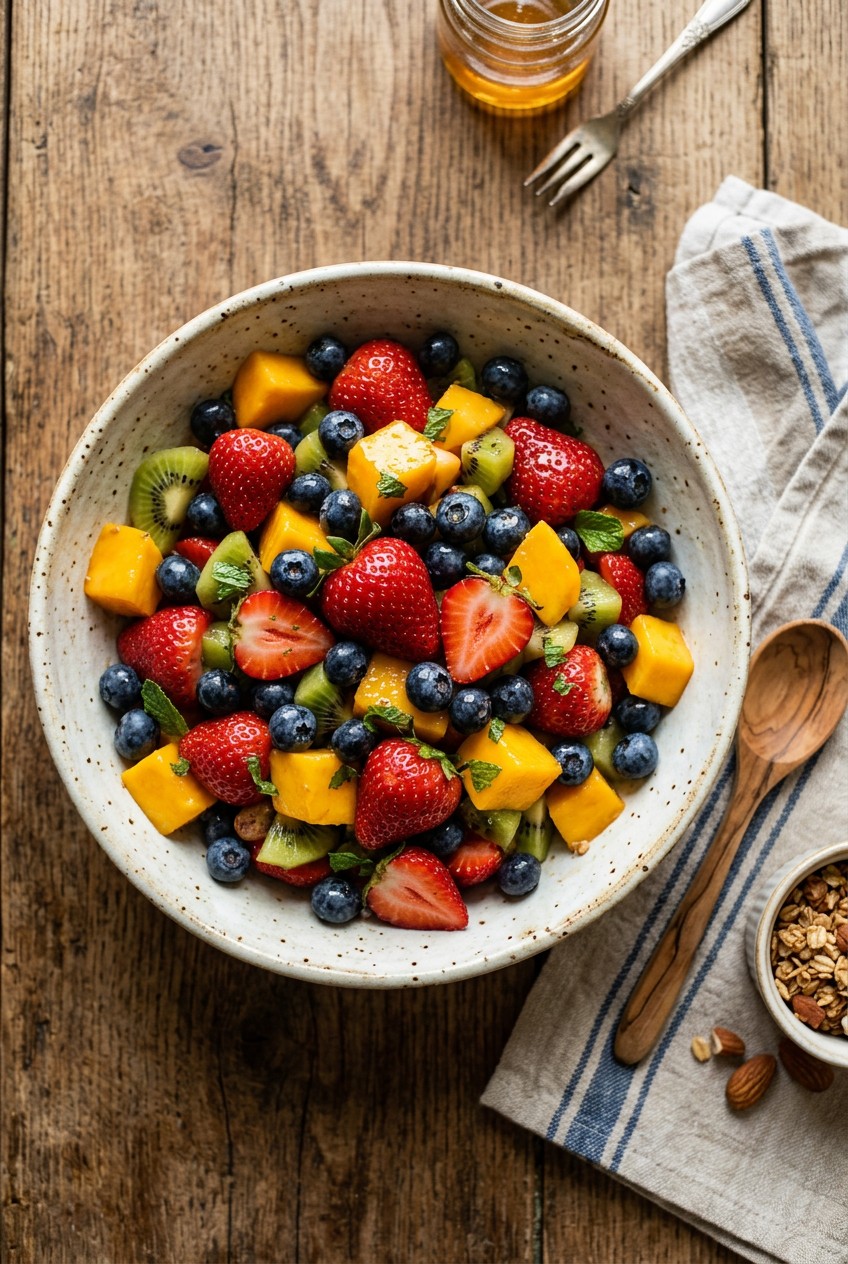
- The Tropical Honey-Lime Refresher
- The Fiber-Packed Gut Health Bowl
- The Herb-Infused Melon Medley
- The Sturdy Grape And Pineapple Prep (For Make-Ahead Needs)
- The Edible Flower Showstopper
- The Greek Yogurt Protein Power Bowl
- The Sweet Syrup Preserved Picnic Salad
Last Tuesday at Whole Foods, I made a massive, expensive mistake. I was starving, running late for a client meeting, and grabbed a pre-cut fruit bowl from the refrigerated deli section for $14.99. I opened the plastic clamshell in my car, took one bite of a pale cantaloupe chunk, and spit it into a napkin. It was a mushy, sour, swampy disaster. Juices had pooled at the bottom, turning the honeydew into a slimy mess. I realized right then that mastering easy fruit salad recipes at home is the only way to go. Most online recipes look gorgeous in photos, but they taste like wet cardboard by noon because people mix the wrong textures together. I’m here to fix that. I’ve spent years testing combinations, ruining perfectly good organic berries, and figuring out how to keep cut fruit crisp for days. You’re going to learn my exact formulas. We aren’t doing boring, soggy cantaloupe filler anymore. I refuse to eat bad fruit. Let’s get into the methods that work, including the exact brands I buy, the precise measurements I use, and the common mistakes you need to avoid.
1. The Classic Summer Berry Bowl (My Go-To For Easy Fruit Salad Recipes)

I’ve learned the hard way that less is usually more. Most people get this wrong by dumping ten different fruits into one giant bowl. I tried that for a neighborhood barbecue last year. I mixed raspberries, blackberries, strawberries, green grapes, red grapes, melon, and kiwi in a massive glass bowl. By the time we sat down two hours later, it looked like a bruised, gray soup. The delicate raspberries had disintegrated. When you use too many varieties, you lose the individual flavors. They bleed together into a generic, sugary mess. Now, I stick to a strict three-to-five fruit limit. My favorite combination relies on what’s in season. Right now, I’m buying 1-pound clamshells of Driscoll’s strawberries for $3.99 at Sprouts. I mix those bright red, juicy berries with firm, plump blueberries and a few slices of fresh, fuzzy summer peaches. The smell of ripe peaches mixed with the tart snap of a blueberry is unbeatable. I wash the berries in a colander and pat them dry with a paper towel before cutting. If you leave water on them, it waters down the natural juices. To make it look professional, I follow a strict uniform cutting rule. I use a sharp chef’s knife to cut the strawberries and peaches into exactly 1-inch cubes. This ensures a consistent texture in every spoonful. It’s a tiny detail, but it makes the salad feel like it came from a high-end restaurant instead of my messy kitchen counter.
2. The Citrus Shield Apple And Pear Crunch

Apples and pears are crunchy and satisfying, but they come with a massive flaw. They turn brown the second you cut them. I brought a beautiful honeycrisp apple and bosc pear salad to an outdoor picnic a few years ago. I didn’t treat the fruit. When I pulled the lid off two hours later under the hot sun, the apples looked like rusty nails. They were oxidized and brown. Nobody touched it. I ended up throwing the batch in the trash. I’m never making that mistake again. No exaggeration. Now, I always use a citrus shield to stop browning in its tracks. You can’t just hope for the best. You have to treat the fruit immediately. I use a trick I learned from a dietitian friend. For every 4 cups of cut apples and pears, I toss them with 2 tablespoons of fresh lemon juice and 1 teaspoon of white sugar. The acid stops the browning process. If I don’t have fresh lemons, a heavy drizzle of Tropicana 100% Orange Juice ($4.29 for a 52 oz bottle at Target) works perfectly. The orange juice adds a tangy zing that soaks into the crisp white flesh. It’s refreshing, loud when you crunch into it, and stays stunning for hours on a buffet table.
3. The Tropical Honey-Lime Refresher

If you’re eating plain, dry fruit salad every day, you’re missing out. A simple dressing changes everything. It changed how I view fruit salads entirely. I used to think dressing belonged on savory lettuce, but then I whipped up a tangy, sweet syrup that made my mango and papaya chunks taste like a tropical vacation. I use exactly 1/2 cup of Nellie & Joe’s Key West Lime Juice ($3.49 for a 16 oz bottle at Kroger) and whisk it in a small glass bowl with 1/8 cup of Local Hive Honey ($7.99 for a 16 oz bottle). I grab my microplane and grate the zest of one lime into the liquid. The sticky honey dissolves into the tart lime juice, creating a glossy, beautiful coating. I pour this over 1-inch cubes of fresh mango, pineapple, and green kiwi. The smell is floral and bright, filling the kitchen with a citrus aroma. But here is the critical part: you can’t overmix. Delicate fruits like kiwi will disintegrate if you stir them too hard with a heavy spoon. I use a large silicone spatula and gently fold the fruit exactly three times. Just enough to coat the pieces in the honey glaze without turning the bowl into a pulpy disaster. You might also like: 20 Gorgeous Healthy Lunch Ideas That Make a Real Difference

Super Easy Air Fryer Cookbook for Beginners: Quick, Simple
Honestly, Super Easy Air Fryer Cookbook for Beginners: Quick surprised me — sturdier than it looks in the photos.
4. The Fiber-Packed Gut Health Bowl

I’m always looking for ways to sneak more fiber into my meals. Fruit has natural fiber, but adding seeds takes it to another level. I swear by adding either Bob’s Red Mill Chia Seeds ($6.49 for a 12 oz bag at Whole Foods) or Trader Joe’s Ground Flaxseed ($2.99 for a 15 oz bag). I measure out exactly 1 tablespoon of seeds for every 4 cups of chopped fruit. The seeds stick to the wet juices and add a satisfying crunch to every bite. However, I’ve got to warn you about a massive mistake I made last winter. I prepped a week’s worth of chia seed fruit salad on a Sunday night. By Tuesday morning, the chia seeds had absorbed all the excess juice and created a thick, slimy, gel-like casing around the berries. The texture was horrifying. I couldn’t even swallow it. If you’re using chia seeds, you must add them at the last minute right before you eat. Sprinkle them on top of your bowl, give it a quick, gentle toss, and enjoy the dry crunch before they have a chance to turn into a gelatinous mess. You might also like: 15 Beautiful Wonyoungism Healthy Breakfast Ideas That Make a Real Difference
5. The Herb-Infused Melon Medley

Putting leafy green herbs into a sweet fruit salad sounds weird. I know. I rejected the idea for years. I thought it was a silly trick fancy restaurants used to justify charging twenty dollars for a bowl of melon. Then, I tried it, and I felt foolish for waiting so long. I bought a 0.5 oz clamshell of fresh mint for $1.99 at Walmart. I took my sharpest knife and finely chopped about 1 tablespoon of leaves, tossing them into a large bowl of cubed, ice-cold watermelon and cantaloupe. The smell hit my nose immediately. The cooling, sharp menthol scent of the mint cutting through the sugary water of the melon is pure magic. It’s refreshing on a hot, sticky summer afternoon. I’ve also experimented with fresh basil, which pairs beautifully with strawberries and peaches. The key is chopping the herbs finely so you don’t end up chewing on a bitter leaf. Just a subtle sprinkle changes the entire profile. It takes a boring melon bowl and makes it taste complex and expensive. Just make sure your melon cubes are uniform. I use a heavy wooden cutting board so I can get a firm grip. The rind can be slippery, and safety is important when you’re making precise 1-inch cuts. You might also like: 15 Inspiring Aesthetic Healthy Snack Ideas to Steal Right Now
6. The Sturdy Grape And Pineapple Prep (For Make-Ahead Needs)

Sometimes you need your fruit salad to sit in the fridge for three days without turning to watery soup. When I’m meal prepping for a busy work week, I rely on sturdy, tough fruits. I buy a 3-pound clamshell of crisp green grapes for $6.99 at Costco, along with Dole Pineapple chunks ($4.98 for a 20 oz can, though I prefer buying fresh pineapples for $2.99 when I have the extra twenty minutes). Grapes and pineapple hold their shape. They won’t bleed colors or turn to mush. But here is my strictest rule: the no-banana rule. Bananas are the enemy of meal prep. I ruined a beautiful bowl by slicing a ripe banana into it on a Sunday. By Monday morning, the slices were brown, slimy slugs that coated the grapes in a weird, stringy film. It’s disgusting, and the smell overpowers everything. If you’re meal prepping, bananas aren’t allowed. If you must eat a banana, slice it onto your individual portion right before the spoon hits your mouth. Never mix it into the main batch.

Taste of Home Light & Easy Weeknight Cooking: 307 Healthy
Taste of Home Light & Easy Weeknight Cooking: 307 Healthy Recipes for punches above its price. I would buy it again.
7. The Edible Flower Showstopper

When I’m hosting a brunch or baby shower, I want the food to look intentional. I’ve started garnishing my fruit bowls with delicate edible flowers, and it gets a reaction from my guests every time. I buy small containers of edible nasturtiums or pansies for $4.99 in the specialty produce section at Sprouts. The vibrant orange, yellow, and purple petals look stunning resting on top of mango and kiwi. It feels luxurious. But the secret to a showstopper presentation isn’t just the flowers. It’s the temperature of the serving bowl. I learned this trick from a friend who runs a catering company. I place my heavy glass serving bowl in the freezer for 30 minutes before I assemble the salad. When I pull it out, the glass is frosted over and cold to the touch. I pile the cold fruit into the frosty bowl, lay the petals on top, and set it on the table. The chilled glass keeps the fruit at an optimal temperature for over an hour. It’s a tiny step that makes a huge difference.
8. The Greek Yogurt Protein Power Bowl

I can’t eat a bowl of plain fruit for breakfast and expect to stay full until noon. The sugar spike hits me, and an hour later, my stomach is growling. I always pair my morning fruit with protein. I’m fully on board with the protein trends right now. I grab a 5.3 oz cup of Fage Total 0% Milkfat Plain Greek Yogurt for $1.49 at Trader Joe’s. It packs 18 grams of dense protein. I scoop a dollop into the center of my fruit bowl. The tart, creamy texture of the yogurt mixes with the juices of the berries to create a rich, natural sauce. Skip the flavored, fat-free stuff. I tried a vanilla fat-free brand once, and it tasted like wet cardboard mixed with artificial chemicals. It’s too runny and ruins the crisp texture. You want the thick, plain Greek yogurt. The contrast between the ice-cold fruit and the velvety yogurt is incredible. I eat this around 7:00 AM before heading to the gym. The protein gives me sustained energy, and the fruit gives me a boost. It turns a light snack into a satisfying meal.
9. The Sweet Syrup Preserved Picnic Salad

If I’m taking a fruit salad to an outdoor summer party, I know it’s going to sit on a hot picnic table for hours. Heat destroys cut fruit, turning it limp and sad. To combat this, I use a natural sweetener preservation trick. I make a light simple syrup on my stove. I boil 1/2 cup of water with 1/2 cup of Domino White Sugar ($3.19 for a 4-pound bag at Target). Once the sugar dissolves into a clear liquid, I pull the pot off the heat, stir in 2 tablespoons of lemon juice, and let it cool in the fridge. I pour this cold, thin syrup over my sturdy fruits. The sugar and acid act as a preservative, locking in the moisture and keeping the fruit firm. You can also use this for leftover fruit that’s starting to look sad. The sugar revitalizes the texture. For storage, I use heavy Ziploc glass containers ($12.99 for a 3-pack). I place the syrupy fruit inside, and before I snap the lid on, I lay a clean paper towel directly on the surface of the fruit. The paper towel absorbs any excess condensation. This method kept a batch of fruit perfectly crisp in my fridge for four days.
Making a truly good fruit salad isn’t about chopping whatever random produce is rotting in your fridge. It’s about knowing which textures work together, controlling moisture, and using the right acid to keep things looking vibrant. I’ve eaten enough brown apples and slimy bananas to last a lifetime, and I’m thrilled I figured out the methods that actually work in real life. Learned that the hard way. Try the honey-lime dressing this week; I’d bet you won’t ever want plain, dry fruit again. Make sure you save these recipes to your phone so you have the measurements and brand names next time you’re standing in the grocery store aisle wondering what to buy. You’re going to love how crisp and refreshing these combinations are.

The Healthy Family Cookbook: 100 Fast and Easy Recipes for
If you want something that just works, The Healthy Family Cookbook: 100 Fast and Easy Recipes for the Whole F is a safe bet (967 reviews, 4.5 stars).
Frequently Asked Questions
How far in advance can I make fruit salad?
You can prep sturdy fruits like grapes and pineapple 3-4 days in advance if stored in airtight glass containers. However, delicate berries and bananas should only be added right before serving so they don’t turn into a mushy, soggy mess.
How do you keep fruit salad from turning brown?
Toss cut apples and pears with a citrus shield. I use 2 tablespoons of lemon juice and 1 teaspoon of sugar for every 4 cups of fruit. The acid stops the browning enzyme, keeping the fruit crisp and bright for hours.
What is the best dressing for a fruit salad?
I’d highly recommend a simple honey-lime syrup. Whisk 1/2 cup of lime juice with 1/8 cup of honey and fresh lime zest. It coats the fruit perfectly and adds a bright, tropical flavor without being overly heavy or sweet.
Why does my fruit salad get mushy?
You’re likely overmixing delicate fruits or adding bananas too early. Always fold the fruit gently with a silicone spatula. Never include bananas in your meal prep containers; they release gases that make everything else slimy and brown.
