What’s Inside
- Master the Orzo Cook for Perfect Texture in Your Orzo Salad Recipes
- Season Your Pasta Water Generously
- Choose High-Quality Orzo for Superior Mouthfeel
- Embrace the Warm Toss for Maximum Flavor Absorption
- Prevent Watery Salads by Pre-Salting Vegetables
- Opt for Block Feta Over Crumbles for Creaminess
- Select a Robust Extra Virgin Olive Oil
- Balance Your Dressing with Acidity and Sweetness
- Incorporate Plant-Based Proteins for High Protein Orzo Salad Recipes
- Chop Vegetables Evenly for a Harmonious Bite
- Don’t Forget Fresh Herbs for Brightness and Flavor
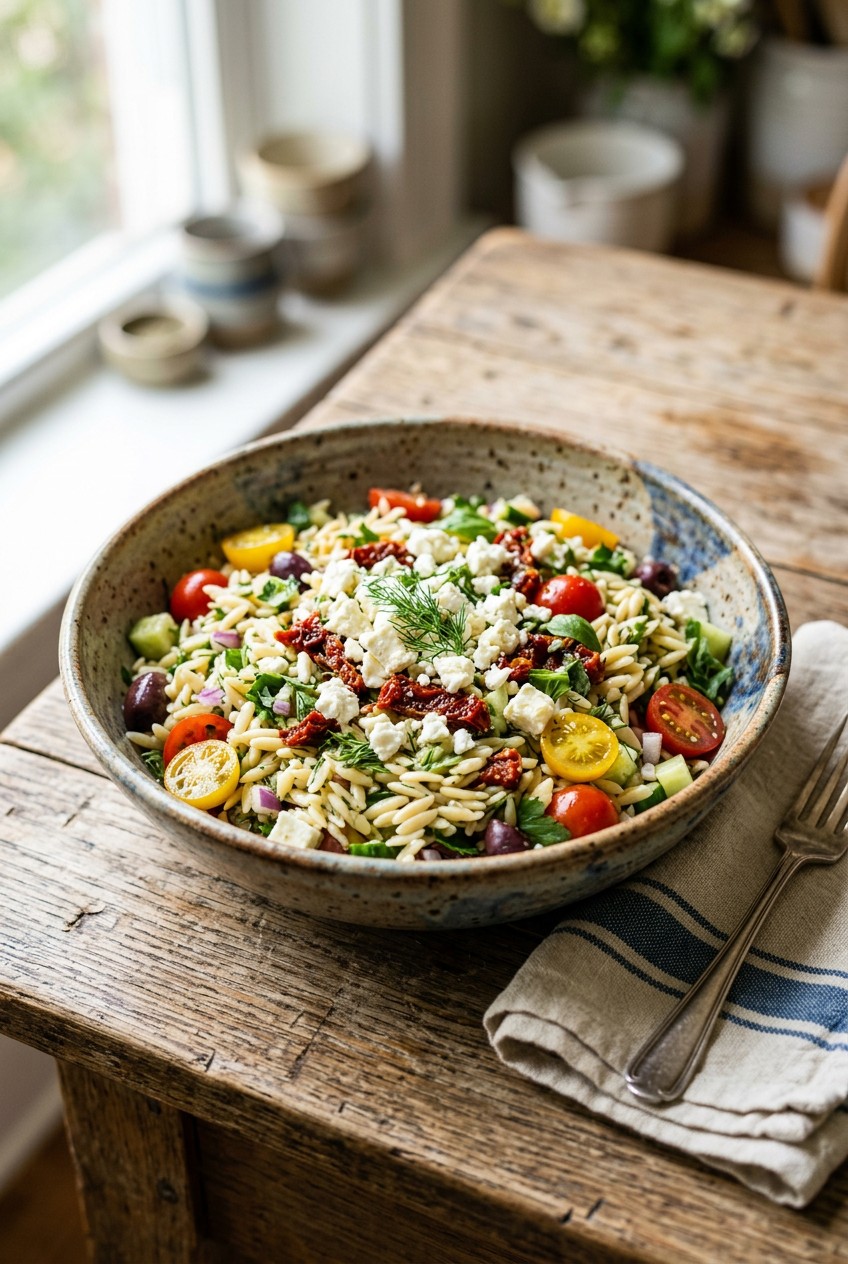
Last Tuesday at Whole Foods, I bought a pre-packaged Mediterranean pasta salad for $8.99 that ruined my lunch. The veggies were sitting in a sad, gray puddle of watery dressing, and the pasta tasted like wet cardboard. That failure is why I’m obsessed with perfecting homemade orzo salads. Most people think making them is just dumping raw ingredients into a plastic bowl and hoping for the best. I did that for months before figuring it out. My early attempts were dry and chalky or turned into a mushy, unappetizing clump that stuck to the spoon. After testing dozens of variations and ruining plenty of expensive produce, I’ve nailed the techniques to make it satisfying, protein-packed, and perfectly textured every time. As a nutritionist, I can’t stand bland diet food. You need sharp acidity, creamy fats, and a satisfying chew. Trust me. Here’s how I build the perfect bowl.
1. Master the Orzo Cook for Perfect Texture in Your Orzo Salad Recipes

Let’s talk about the cooking process, because mushy pasta ruins the dish before you even start chopping. I used to boil the pasta until it looked soft, which was a huge mistake. You want it al dente—cooked through but with a firm, satisfying bite. For brands like Barilla or Colavita (grab them for $1.84 to $2.49 for a 16 oz box at Target), set a timer for exactly one minute less than the package directions. If it says nine minutes, pull it off the heat at eight.
Drain it in a fine mesh strainer, then rinse the orzo under freezing cold water. This stops the cooking instantly and washes away the surface starch that causes sticking. I’ve skipped the cold rinse while rushing on weeknights, and I ended up with a giant, unmixable brick. Some people spread the rinsed pasta on a metal baking sheet to cool. It takes up counter space, but it prevents clumping. Don’t skip this if you’re making a big batch for meal prep.
2. Season Your Pasta Water Generously

Pasta needs seasoning from within, and your boiling water is your only chance to do that. I used to add a tiny, useless pinch of salt, thinking I was being healthy. The result? Bland pasta that needed twice as much heavy dressing. Your boiling water should taste like the ocean.
Use 1 to 2 tablespoons of Morton Kosher Salt (about $3.19 for a 3 lb box at Kroger) per gallon of water. Taste the water with a spoon before adding the pasta. It should be aggressively salty. When the pasta absorbs that water, it builds a foundation of flavor you can’t replicate by sprinkling salt on the finished dish. Last month, I forgot to salt the water while rushing dinner for friends, and the dish tasted flat, no matter how much feta I added later. Get the salt right at the start, and you won’t have to overcompensate with heavy dressings.
3. Choose High-Quality Orzo for Superior Mouthfeel

Orzo looks like rice, but it’s definitely pasta. I used to buy the cheapest generic brand, thinking it didn’t matter. I was wrong. Cheap pasta turns gummy and falls apart when mixed with acidic vinaigrettes. Always pick a pasta made from durum wheat semolina. My favorite is the Italian-made DeLallo brand, which runs about $2.49 for a 1 lb bag at Sprouts.
A premium brand holds up against sharp dressings and crunchy vegetables. If you want a gluten-free or high-protein option, I recommend Banza chickpea orzo. You can find it for $4.00 to $5.00 for a 9 oz package at most stores. The chickpea version has a nuttier flavor and a denser chew I love. Just watch the time closely; chickpea pasta goes from perfect to mushy in thirty seconds. I ruined a box of Banza last summer by walking away to answer a text. Learn from my mistake—stay by the stove.

The Well Plated Cookbook: Fast
If you want something that just works, The Well Plated Cookbook: Fast is a safe bet.
4. Embrace the Warm Toss for Maximum Flavor Absorption

Here’s a trick that changed how I make pasta salads. Add your dressing while the pasta is still slightly warm. I used to chill the pasta completely in the fridge first, which meant the dressing just slid right off the cold noodles and pooled at the bottom of the bowl. You might also like: 20 Clever Healthy Snack Ideas That Make a Real Difference
When you toss warm pasta with vinaigrette, the open starches absorb the liquid directly into the noodle. It gives the dish so much more flavor. After draining and a quick cold rinse to stop the cooking, I toss the orzo with half of my dressing. I let it sit for ten minutes to soak it up before adding the cold, crunchy vegetables. For the base, I use Trader Joe’s Dijon Mustard ($1.99 for a 13 oz jar) to emulsify the oil and vinegar. It creates a creamy coating that clings to the pasta. Try this once, and you won’t go back to dressing cold pasta again. You might also like: 20 Creative Easy Healthy Low Calorie Dinner Ideas Worth Trying This Year
5. Prevent Watery Salads by Pre-Salting Vegetables

There’s nothing worse than a soggy salad. This happens when water-rich vegetables like cucumbers and tomatoes release liquid into the bowl. I used to pack my lunch in glass containers, only to find my salad swimming in a gross puddle the next day. You might also like: 15 Creative Work Healthy Lunch Ideas You Can Try Today
To prevent this, salt your vegetables beforehand. It pulls the moisture out before they touch the pasta. Take 1 chopped English cucumber and 1 pint of halved cherry tomatoes (around $3.49 at Walmart), toss them with 1/4 teaspoon of kosher salt, and let them sit in a colander over the sink for 15 to 30 minutes. You’ll be shocked by how much liquid drains out. Pat them dry with a paper towel before tossing them into the mixing bowl. This keeps the dressing thick and the salad crunchy for up to four days.
6. Opt for Block Feta Over Crumbles for Creaminess

Skip the pre-crumbled stuff. It tastes like chalky cardboard and has zero creamy texture. I bought a tub of pre-crumbled fat-free feta years ago to save calories, and it ruined my meal. When it comes to feta, always buy the block.
Buy a block of feta in brine and crumble it yourself. Quality brands like Athenos Chunk Traditional Feta ($7.99 for an 8 oz block) or Greco Classic Greek Feta ($7.99 for 7 oz at Whole Foods) offer better flavor. Pre-crumbled options are coated in anti-caking agents like cellulose to keep the pieces separated. That coating prevents the cheese from melting into your dressing. When you use a fresh block, the crumbles break down slightly, creating a rich, creamy binder. I use about 4 oz of block feta, crumbling it into rustic chunks over the bowl.

Super Easy Air Fryer Cookbook for Beginners: Quick, Simple
A dependable everyday pick — Super Easy Air Fryer Cookbook for Beginners: Quick. Not flashy, just solid.
7. Select a Robust Extra Virgin Olive Oil

Your dressing is only as good as the oil you pour into it. I used to use cheap vegetable oil because I didn’t want to spend the money. The result was a greasy, heavy mouthfeel with no depth. For a satisfying dressing, you need quality extra virgin olive oil.
I swear by Bono Val di Mazara Sicilian PDO Organic. It has a complex, peppery finish that coats the tongue. You can find it for under $25 for a 750 ml bottle at specialty stores. If you want something budget-friendly, the Aldi Specially Selected P.D.O Castel Del Monte is fantastic. It costs around $8.00 and has a bold flavor that stands up to raw garlic and lemon. Use at least 1/4 cup of extra virgin olive oil for a 1-cup dry orzo recipe to ensure a glossy finish.
8. Balance Your Dressing with Acidity and Sweetness

An imbalanced vinaigrette ruins the dish. Too much vinegar is harsh; too little is oily and bland. I once poured straight red wine vinegar over my pasta without measuring, and it was so sour I couldn’t eat it.
For a classic Mediterranean dressing, aim for a 2:1 or 3:1 ratio of olive oil to acid. I combine 1/4 cup of olive oil with 2 tablespoons of Pompeian Red Wine Vinegar (about $2.98 for a 16 oz bottle at Walmart) or fresh lemon juice. Never use that bottled lemon juice that looks like a plastic lemon. It has an artificial aftertaste. Add 1 teaspoon of raw honey and 1 teaspoon of Dijon mustard. The mustard acts as an emulsifier, holding the oil and vinegar together. Shake it in a jar until it looks thick and creamy.
9. Incorporate Plant-Based Proteins for High Protein Orzo Salad Recipes

If you want this to be a main course rather than a side, add protein. Healthy eating trends favor plant-based options, and they work perfectly here. I used to eat a bowl of plain pasta and veggies, and I’d be starving an hour later.
Now, I add 1 cup of drained, rinsed chickpeas. I grab Bush’s Garbanzo Beans for $1.29 a can at Costco. They add a starchy texture that pairs well with the noodles. If you don’t like chickpeas, brown lentils or crispy baked tofu are great alternatives. Make sure your proteins are drained and patted dry with a paper towel before adding them to the bowl. Wet beans will water down your dressing. This makes the salad filling and keeps my energy stable all afternoon.

Half Baked Harvest Super Simple: More Than 125 Recipes for
Honestly, Half Baked Harvest Super Simple: More Than 125 Recipes for Instant surprised me — sturdier than it looks in the photos.
10. Chop Vegetables Evenly for a Harmonious Bite

This sounds fussy, but how you chop matters. Chop everything evenly so every bite contains all the flavors. I used to rush, hacking up onions and peppers into massive, uneven chunks.
There’s nothing worse than getting a giant mouthful of raw red onion. It ruins your palate for the rest of the meal. Chop veggies into the same bite-size pieces so the flavors are consistent. I aim for a 1/4-inch dice for cucumbers, bell peppers, and red onion. This matches the small, rice-like shape of the orzo. It takes five extra minutes on the cutting board, but the textural difference is huge. Every spoonful should have pasta, a crisp crunch, salty feta, and a burst of tomato.
11. Don’t Forget Fresh Herbs for Brightness and Flavor

Dried herbs belong in slow-cooked stews, not fresh pasta salad. Fresh herbs like parsley, dill, and mint add a brightness that dried ones can’t replicate. I tried dried dill once, and the salad tasted dusty and flat. No exaggeration.
Use at least 1/4 cup of finely chopped fresh herbs. My favorite combo is equal parts parsley and dill, with a tiny pinch of mint. I buy the mint clamshells at Trader Joe’s for $1.99. Wash the herbs and dry them in a salad spinner before chopping. If you chop wet herbs, they turn into a bruised, slimy paste. Toss them in at the very end, right before serving. The volatile oils hit your nose immediately, making the dish smell vibrant. Keep fresh herbs in your crisper drawer.
I hope these steps help you nail your meal prep this week. Making high protein orzo salad recipes isn’t complicated, but these small details change the final result. I’m always tweaking my ratios, but this framework guarantees a delicious bowl every time. Pin this guide so you don’t forget the warm-toss trick next time you’re in the kitchen!
Frequently Asked Questions
Can I make orzo salad recipes ahead of time?
Yes, they are perfect for meal prep. Just make sure to pre-salt your watery vegetables like cucumbers and tomatoes so they don’t water down the dressing as it sits in the fridge.
How do I stop my orzo salad recipes from sticking together?
Always rinse the pasta under cold water immediately after boiling to remove surface starch. Tossing the warm pasta with a little bit of your oil-based dressing also prevents clumping.
Is orzo pasta or rice?
Despite looking exactly like large grains of rice, orzo is a type of short-cut pasta made from durum wheat semolina. You can also find gluten-free versions made from chickpeas.
What is the best protein to add to orzo salad recipes?
For a plant-based option, drained and rinsed chickpeas or crispy baked tofu work perfectly. If you prefer meat, grilled chicken breast or shredded rotisserie chicken are excellent high-protein additions.
