What’s Inside
- Shaved Celery with Pecorino Romano
- The Apple Cider Vinaigrette Base
- Medjool Date and Toasted Almond Crunch
- Gut-Healthy Sauerkraut Celery Slaw
- Chickpea and Lemon Protein Bowl
- Granny Smith Apple and Walnut Mix
- White Miso and Umami Olive Blend
- Canned Tuna and Fresh Herb Celery Salad Recipes
- Shaved Celery Root Winter Salad
- Pomegranate and Feta Holiday Celery Salad Recipes
- Grilled Chicken and Tarragon Prep
I stood in the produce aisle at Whole Foods last Tuesday holding a rubbery, pale green stalk that bent in half without snapping. That sad, limp vegetable is exactly why most people fail at making decent celery salad. You can’t build a crisp, refreshing meal out of old ingredients. I left empty-handed, drove to Sprouts, and bought a fresh bunch of organic celery just to get the firm, bright green stalks I needed. When a raw vegetable is the star of your plate, texture is everything. A soft stalk ruins the bowl before you even start chopping. Trust me.
We usually treat this vegetable like an afterthought. We chop it to hide in soup or bury it under peanut butter. But when prepped correctly, it provides a sharp, peppery crunch that stands up to heavy dressings. I figured this out after months of eating soggy, uninspired side dishes that left me hungry an hour later. If you want to stop dreading your vegetable intake, you need to change how you handle the raw ingredients. Let’s walk through how to prep these meals so they actually taste good and keep you full.
1. Shaved Celery with Pecorino Romano

You must prioritize fresh, organic celery for peak flavor. A bunch of organic celery usually costs between $3.29 and $4.19, and the price is worth it for the crispness alone. Look for stalks that feel heavy. If the bottom looks brown or dried out, leave it. I bought a cheap conventional bunch at Kroger once, and it tasted like bitter water. I learned that the hard way. To get a delicate, string-free texture, use a sharp vegetable peeler to remove the tough outer fibers from the back of each stalk. I skipped this for years and always ended up picking strings out of my teeth.
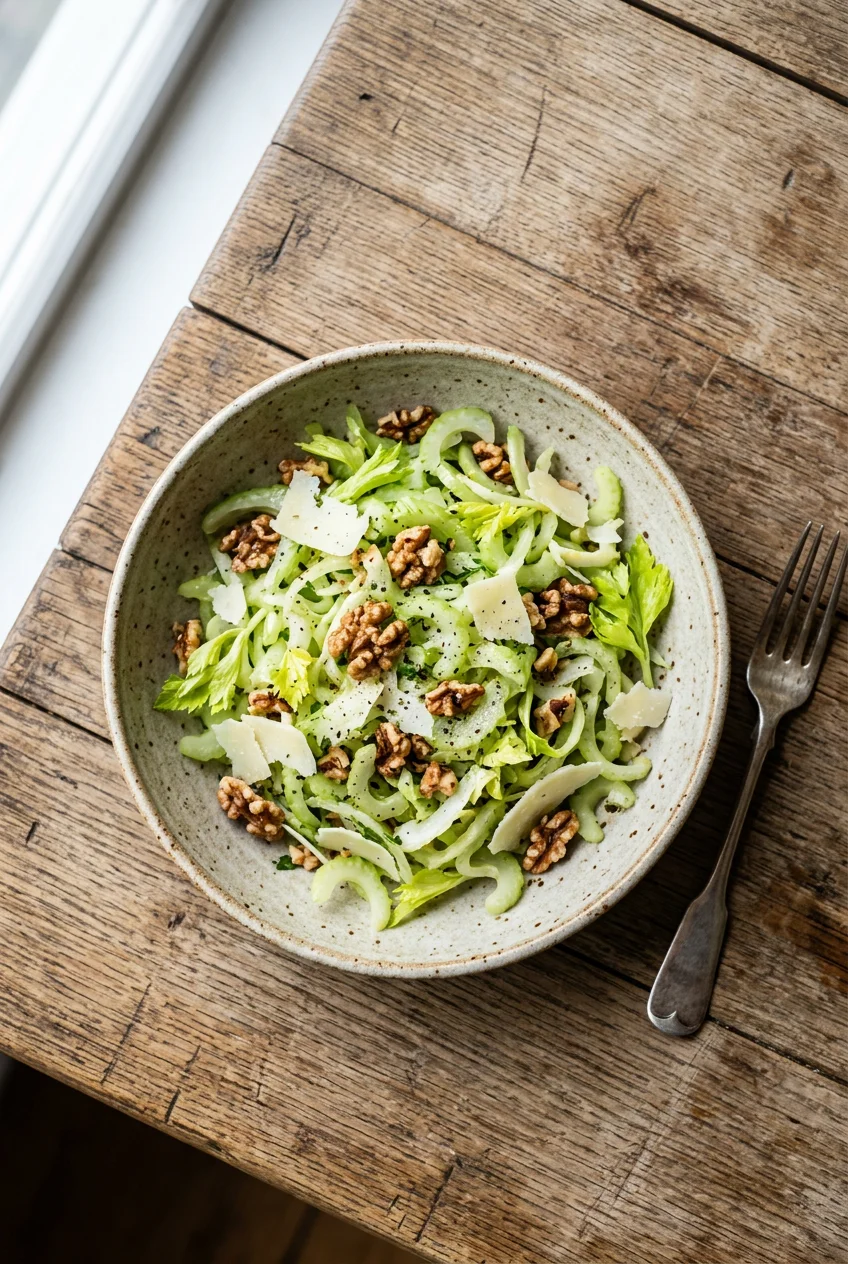
Once you peel the stalks, slice them thin on a slight diagonal. This creates crisp pieces that fold nicely into a bowl. To balance the water, add a shaving of Pecorino Romano. You don’t need much. I buy the Boar’s Head wedge for about $12.99 at the deli counter. Using a vegetable peeler, I drop a few salty ribbons of cheese over the greens. The sharp bite of the sheep’s milk cheese cuts through the earthy, wet crunch of the vegetable. It provides fats without dumping excess calories into your dinner.
2. The Apple Cider Vinaigrette Base

A common mistake is not drying your greens. I ruined a perfectly good dinner last month because I washed the stalks, shook them over the sink, and immediately tossed them in oil. The excess water diluted the dressing, and a murky puddle formed at the bottom. You have to use a salad spinner or spread the pieces on a clean towel until they’re dry. Water and oil won’t mix. Wet vegetables repel vinaigrettes.
Skip the fat-free stuff at the store. It tastes like wet cardboard and usually hides sugars to make up for the lack of fat. Craft your own dressing with quality ingredients instead. I whisk a vinaigrette using 1/3 cup of Bragg Organic Extra Virgin Olive Oil, which runs about $12.49 for a 16-ounce bottle at Target. I combine that with 2 tablespoons of Bragg Organic Apple Cider Vinegar, costing around $4.48. The 5 percent acidity breaks down the tough plant fibers so they’re easier to chew. I add black pepper and whisk until it thickens into a cloudy, yellow emulsion.
3. Medjool Date and Toasted Almond Crunch

A great bowl offers a mix of textures. If everything is just wet and crunchy, your brain gets bored. I fix this by adding fruit for natural sweetness and fiber. I use chewy Medjool dates to contrast the sharp snap of the greens. I buy the 16-ounce tub from Trader Joe’s for $5.99. I take 6 pitted dates and chop them into sticky, pea-sized pieces. They clump together, so separate them with your fingers as you drop them into the bowl. You might also like: 12 Quick Dinner Ideas Healthy for Every Budget
To balance the soft dates, you need a different kind of crunch. Instead of raw nuts, take 2 to 4 minutes to lightly toast 1/2 cup of slivered almonds in a dry skillet over medium heat. I use Diamond of California almonds, which cost about $4.99 for a 6-ounce bag at Walmart. Watch the pan. I burned a batch last week because I turned to check my phone. Remove them the second they turn golden and smell toasted. The heat intensifies their flavor and provides a dry crunch that pairs with the sticky dates. You might also like: 15 Inspiring Aesthetic Healthy Snack Ideas to Steal Right Now

Gordon Ramsay’s Healthy
Gordon Ramsay’s Healthy punches above its price. I would buy it again.
4. Gut-Healthy Sauerkraut Celery Slaw

Many people toss celery leaves in the trash, but they’re packed with flavor and nutrients like calcium. I used to throw away the top three inches of the bunch until I realized I was wasting the best part. Finely chop 2 to 4 tablespoons of the tender, light green inner leaves and add them to your bowl. They have a peppery bite that mimics fresh parsley. The dark outer leaves are too bitter, so stick to the pale ones in the center. You might also like: 15 Gorgeous Easy Healthy Snack Ideas That Changed Everything
To balance that bite, I lean into fermented foods for gut health. I mix in a spoonful of unpasteurized sauerkraut. I buy Cleveland Kraut Classic Caraway for $5.99 at Target. The lactic acid in the fermented cabbage acts as a natural dressing, softening the stalks while adding a sharp, tangy crunch. It introduces microbes to your meal, supporting digestion. The caraway seeds add an earthy, rye-bread flavor that makes the vegetables taste like a deconstructed deli sandwich. Just buy the unpasteurized stuff from the refrigerated section, or you won’t get any probiotic benefits.
5. Chickpea and Lemon Protein Bowl

If you only eat raw vegetables for dinner, you’ll be standing in front of your pantry eating cereal an hour later. Dietitians agree that lean protein is crucial for making a meal satisfying. I learned this the hard way when I tried eating just greens and vinegar for a week. I felt completely depleted. Now, I boost satiety with plant-based protein. I aim for 1/2 cup of rinsed chickpeas per serving.
I buy S&W Organic Garbanzo Beans for $1.49 a can at Sprouts. You have to dump them into a strainer and rinse them under cold water for a full minute. If you don’t rinse off the thick, cloudy canning liquid, your bowl will taste metallic. Once dried, the creamy texture of the chickpeas provides a base that anchors the watery crunch of the greens. I squeeze half a fresh lemon over the beans before mixing them in. The juice soaks into the chickpeas, brightening their flavor and tying them into the dressing.
6. Granny Smith Apple and Walnut Mix

Sometimes you need a flavor profile that feels like autumn, even in summer. I introduce sweetness and fiber by incorporating tart Granny Smith apples. You can’t just chop the apple into clumsy chunks, or the pieces won’t blend. I cut the apple into thin matchsticks, leaving the skin on for color. The sour bite of the apple cuts through the earthy, bitter notes of the raw stalks.
To ground the tartness, I incorporate healthy fats carefully. While fats are essential for nutrient absorption, overdoing high-calorie additions is a common mistake. I used to pour half a bag of walnuts into my bowl, turning a healthy dinner into a 900-calorie bomb. No exaggeration. Now, I use them sparingly. I measure out 1 tablespoon of chopped walnuts per serving. I buy Diamond of California walnuts for $6.48 per 8-ounce bag at Walmart. The buttery texture of the walnuts breaks up the aggressive crunch of the apple matchsticks and the shaved stalks.

Cathy Yoder’s Air Fryer Cookbook for Two (2026): Easy
A dependable everyday pick — Cathy Yoder’s Air Fryer Cookbook for Two (2026): Easy. Not flashy, just solid.
7. White Miso and Umami Olive Blend

Raw vegetables can taste flat if you don’t build a savory base. For a deeper profile, experiment with umami. I used to dump extra salt over my bowl when it tasted boring, which just left me bloated. Now, I build complexity without the salt. I whisk a spoonful of white miso paste into my oil and vinegar base. I use Hikari Organic White Miso, which costs $6.49 for a 17.6-ounce tub at Whole Foods. The fermented soybean paste thickens the liquid and coats the vegetables perfectly.
To amplify that depth, I add 1 tablespoon of finely chopped Kalamata olives and a teaspoon of nutritional yeast. I buy Bragg Nutritional Yeast for $6.99. The yellow flakes dissolve into the dressing, giving it a cheesy, rich undertone without dairy. The chopped olives provide tiny, briny bursts of flavor. When you mix the miso, yeast, and olives, the resulting flavor masks the grassy taste of the raw stalks. It tastes rich and heavy, even though it’s entirely plant-based.
8. Canned Tuna and Fresh Herb Celery Salad Recipes

If you need a fast, high-protein dinner that requires zero cooking, lean animal protein is the best route. I aim for 3 ounces of protein to make the bowl a complete meal. I use canned tuna, specifically Wild Planet Albacore, which I buy at Costco for about $4.99 per can. You have to drain the water completely, or it makes the greens soggy. I press the lid down into the can over the sink until every drop is gone. I made the mistake of bringing this to my office once, and the fish smell lingered for hours. I only eat this at home now.
To brighten the fishy notes, you need a massive amount of fresh aromatics. Don’t underestimate herbs. I incorporate 1/3 cup of chopped fresh mint, parsley, and dill. I buy the bundles from Kroger for $1.99 each. You have to chop them finely so they distribute evenly. The cooling effect of the mint and the grassy bite of the parsley turn these salads from a sad diet meal into something intentional. The herbs cut right through the density of the tuna.
9. Shaved Celery Root Winter Salad

When the weather gets cold, the watery crunch of regular stalks doesn’t always sound appealing. For a unique twist, use thinly shaved celery root as part of your base. Also known as celeriac, it looks like a knobby, ugly rock in the produce section. I find it at Whole Foods for $2.99 per pound. The first time I bought one, I tried peeling it with a standard peeler and nearly cut my thumb. You have to use a chef’s knife to slice away the thick, bumpy skin until you reach the pale, dense flesh inside.
Once peeled, I use a mandoline to shave the root into paper-thin slices. Celery root offers a different texture. It’s less watery, slightly starchy, and has a nutty flavor that tastes like a cross between a turnip and regular celery. It provides a significant boost of fiber and feels much more substantial. I mix the shaved root with a few regular green stalks to get the best of both worlds. The dense root holds up to heavy mustard vinaigrettes without wilting.

Air Fryer Cookbook: 600 Effortless Air Fryer Recipes for
Air Fryer Cookbook: 600 Effortless Air Fryer Recipes for Beginners and has been one of the most consistently praised picks in this category.
10. Pomegranate and Feta Holiday Celery Salad Recipes

If you’re serving guests, a bowl of pale green stalks looks boring. I fix the visual appeal by dropping in vibrant pomegranate arils. I don’t have the patience to seed a whole pomegranate, so I buy POM Wonderful arils in the 4-ounce cup for $4.99 at Target. The red seeds look like jewels against the green background, and they burst with tart juice. I pair the sweet seeds with a crumbled, salty cheese. I use Athenos Feta Cheese, which runs $4.49 for a 4-ounce tub.
To maintain the crispness of the stalks and the pop of the seeds, add your dressing immediately before serving. I ruined a holiday side dish two years ago by dressing it an hour before my guests arrived. By the time we sat down, the salt in the feta and the acid in the vinegar had pulled all the water out of the greens, leaving a limp mess. If you want successful celery salad recipes, keep the wet and dry ingredients separated until the exact moment you hand out the forks.
11. Grilled Chicken and Tarragon Prep

For my Sunday meal prep, I rely on grilled chicken breast. I buy Bell & Evans breasts for $8.99 a pound at Whole Foods. I grill them with salt and pepper, let them cool, and slice them into thin strips. Adding 3 ounces of lean protein turns a light vegetable side into a satisfying dinner that gets me through a busy Wednesday. To give the chicken flavor, I chop 1/3 cup of fresh tarragon. The slight licorice flavor pairs perfectly with cold chicken and crisp greens.
If you’re meal-prepping this for the week, be smart about storage. Store the dressing in a separate container and toss it with the chopped stalks right before you’re ready to eat. I pack the dry, chopped stalks, the chicken, and the tarragon in a glass Pyrex container. I keep the olive oil and lemon juice in a tiny silicone cup. When you mix it fresh at your desk or table, the vegetables stay loud and crunchy. Try prepping this tonight, and pin this page so you don’t forget the dressing ratios next time you’re at the store.
Frequently Asked Questions
How do you cut celery for a salad?
Use a vegetable peeler to remove the tough outer strings, then slice the stalks thinly on a slight diagonal. This prevents a stringy texture and makes the vegetable easier to chew.
Can you eat raw celery leaves?
Yes. The tender inner, light green leaves are packed with calcium and vitamin C. Chop two to four tablespoons of them and mix them into your bowl for a concentrated, peppery flavor.
How long does a celery salad last in the fridge?
If you store the dressing in a separate container, the dry chopped stalks will stay crisp in an airtight glass container for up to four days. Dress the greens right before eating.
What proteins pair well with celery?
Lean proteins like grilled chicken breast, drained canned albacore tuna, or rinsed chickpeas balance the high water content of the vegetable. Add half a cup of beans or three ounces of meat.
