What’s Inside
- The Base for Healthy Lime Jello Salad Recipes
- Replace Empty Calories with Greek Yogurt
- Fortify the Matrix with Grass-Fed Gelatin
- Integrate High-Quality Cottage Cheese for Texture
- Balance the Tartness with Natural Sweeteners
- The Strict Pineapple Rule for Lime Jello Salad Recipes
- Amplify the Base with Fresh Lime Juice and Zest
- Introduce Mechanical Crunch with Celery and Pecans
- Fortify with Functional Fiber Using Apples and Berries
- Master the Suspension and Presentation
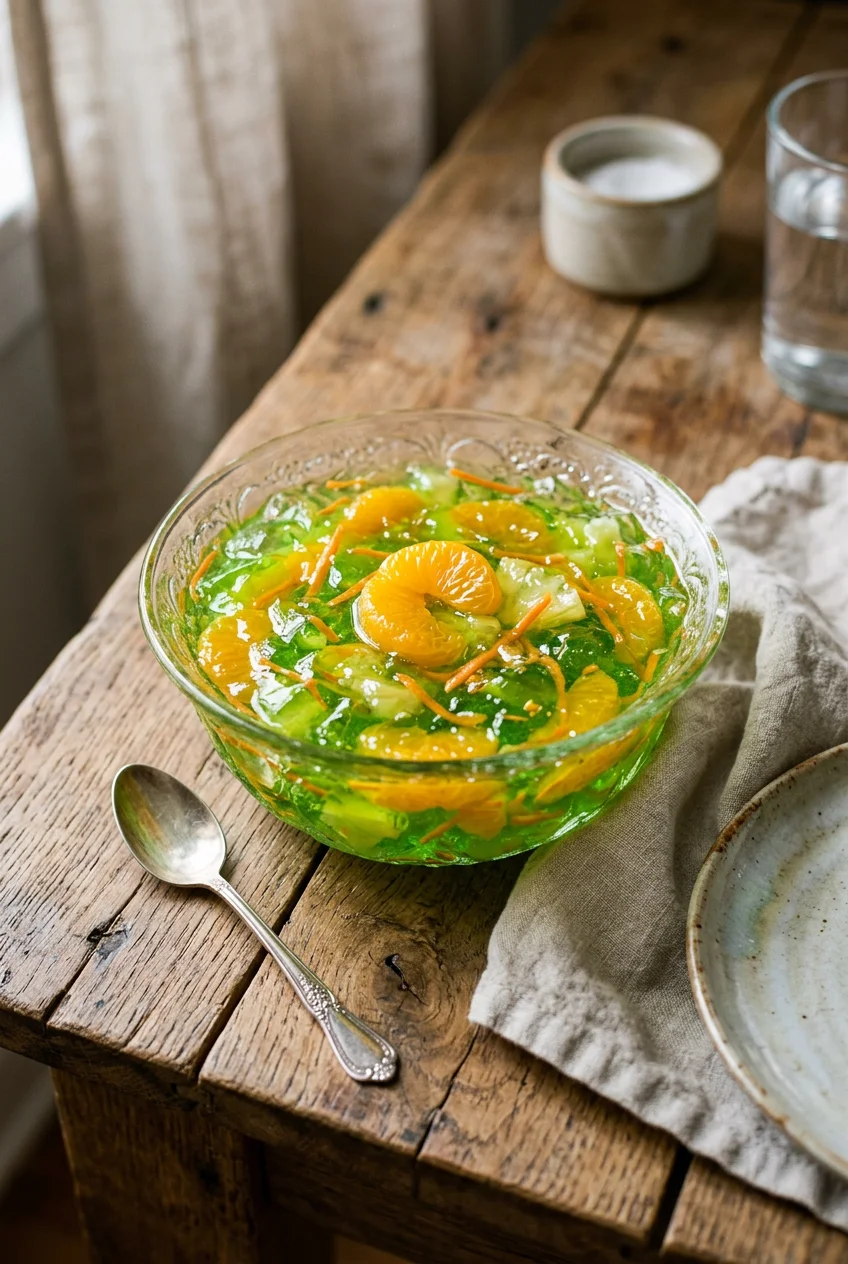
Last Thanksgiving, I stared down a glowing green ring of gelatin at my mother-in-law’s house. It smelled like floor cleaner and desperation. That neon catastrophe is exactly why I started making my own high-protein lime jello salads. The traditional version is just a sugar bomb in animal byproducts, but a cold, creamy dessert salad actually makes sense for macros. I spent three months testing versions in my kitchen, pouring watery green sludge down the sink more times than I care to admit. I did it wrong for months before I figured it out. The trick isn’t just swapping sugar for stevia. It’s about rebuilding the structure using functional ingredients that actually keep you full. I’ll walk you through how I build these. Skip the fat-free stuff; it tastes like wet cardboard. Let’s look at the mechanics of making a gelatin salad that supports your goals.
1. The Base for Healthy Lime Jello Salad Recipes

I used to buy standard mixes until I read the label at Walmart last Tuesday. Artificial dyes and maltodextrin aren’t doing your gut any favors. When building these, the foundation matters. I use GramZero LIME Sugar Free Gelatin Mix. It’s $8.99 for a 2.75 oz pouch online. That’s pricier than the $0.98 Great Value mix I used to grab, but GramZero uses stevia instead of aspartame. The cheap stuff has a metallic aftertaste that coats your throat. I learned that the hard way when I prepped a massive batch for the week and tossed it all because of that chemical tang. If you’re on a budget, Jell-O Zero Sugar Lemon Lime is $1.99 at Target and works structurally, but you’re still stuck with artificial sweeteners. Stevia-based mixes dissolve differently, too. You need water at a rolling boil, not just hot from the tap. I pour 1 cup of boiling water over the powder and whisk for two minutes straight. If you stop early, you get a gritty layer at the bottom of your dish. It’s a nasty texture surprise. Trust me.
2. Replace Empty Calories with Greek Yogurt

Classic recipes call for tubs of hydrogenated whipped topping or heavy sour cream. That’s a missed protein opportunity. I replace those fats with plain, non-fat Greek yogurt. I use Good & Gather Greek Plain Whole Milk Yogurt from Target. It’s $3.69 for a 32oz tub and packs 18g of protein per serving. I tried FAGE Total 0% ($7.69 at Whole Foods) to cut calories, but the lack of fat made the salad chalky. You need a little fat to carry the lime flavor and provide a creamy mouthfeel. When you mix yogurt into gelatin, temperature is key. If you dump cold yogurt into warm gelatin, it seizes instantly. You end up with weird, rubbery green strings in white yogurt. I ruined a batch doing exactly this last month. Let the dissolved gelatin sit for 15 minutes until it’s room temperature. Whisk 1 cup of yogurt in a separate bowl until smooth, then slowly stream the cooled gelatin into it. This creates a velvety base that sets perfectly.
3. Fortify the Matrix with Grass-Fed Gelatin

Boxed mixes don’t have enough actual gelatin to hold heavy mix-ins like fruit and cheese. They’re designed to set water, not a dense, high-protein matrix. I supplement with unflavored, grass-fed gelatin. This isn’t just for structure. Gelatin is the cooked form of collagen, rich in glycine for gut repair. I buy Further Food Premium Gelatin Powder. It’s $39.98 for a 31.74oz tub at Sprouts. I’ve used this brand for two years because it lacks that faint beefy smell cheaper versions carry. To use it, you must bloom it. I measure 1 tablespoon into 1/4 cup of cold water and let it sit for five minutes until it looks like applesauce. Then I add my boiling water and the lime powder. If you skip the blooming step and dump dry gelatin into hot water, it forms an impenetrable lump. I did this once and nearly broke my whisk. Adding this extra gelatin means your salad slices cleanly instead of slumping into a puddle. You might also like: 12 Salad Recipes Worth Trying

The Healthy Family Cookbook: 100 Fast and Easy Recipes for
A dependable everyday pick — The Healthy Family Cookbook: 100 Fast and Easy Recipes for the Whole F pulls in 967 ratings at 4.5 stars. Not flashy, just solid.
4. Integrate High-Quality Cottage Cheese for Texture

Cottage cheese in jello is polarizing. I think it’s mechanically necessary. It breaks up the uniform squishiness and adds a hit of slow-digesting casein protein. But the brand matters. Skip the fat-free stuff. It tastes like wet cardboard and weeps water into your salad, ruining the set. I use Good Culture Organic Whole Milk Cottage Cheese. It’s $7.99 for 16 ounces at Kroger. It has live cultures and a thick, dry curd. If I can’t find that, Daisy 2% ($4.99 for 24 ounces) is a solid backup. Most people make the mistake of dumping the cheese straight from the tub. Cottage cheese holds a lot of whey. If you don’t drain it, that whey thins your gelatin. I measure 1 cup of cottage cheese, put it in a fine mesh strainer, and press it gently with a spoon to extract the liquid. Only then do I fold it into the base. This keeps the salad dense and prevents that gross watery layer at the bottom of the dish. You might also like: 11 Easy Healthy Snacks for Every Budget
5. Balance the Tartness with Natural Sweeteners

Lime is aggressively tart. Adding Greek yogurt and cottage cheese dilutes the sweetness of the pre-made mix. You’re left with a sour profile that isn’t pleasant. To fix this without refined sugar, I use a combo of natural sweeteners and a savory element. I add 1/4 teaspoon of liquid stevia (SweetLeaf, $6.49 at Whole Foods) to the yogurt before mixing. Sometimes I use 1 tablespoon of maple syrup for a warmer profile. But the real secret is salt. I know, adding salt to jello sounds unhinged. A tiny pinch of fine sea salt (1/8 teaspoon) acts as a flavor enhancer. It suppresses the bitter notes of the lime and stevia, pushing the fruit forward. This is a trick I learned from a pastry chef. If you leave the salt out, the lime tastes flat and chemical. With it, the lime tastes bright. Just don’t use coarse kosher salt; the grains won’t dissolve and you’ll end up biting into salty rocks. You might also like: 15 Lovely High Protein Low Calorie Dinner Ideas for a Fresh New Look
6. The Strict Pineapple Rule for Lime Jello Salad Recipes

This is the biggest technical failure point. Fresh pineapple contains bromelain, an enzyme that digests protein. Gelatin is a protein. If you put fresh pineapple in, the enzyme eats the matrix and your salad won’t set. I learned this when I tried to be fancy for a summer barbecue with a fresh pineapple from Trader Joe’s. Disaster. You must use canned pineapple. The canning process denatures the bromelain, rendering it harmless. I use Dole Canned Crushed Pineapple in 100% Juice ($2.29 at Walmart). Don’t buy chunks; they’re too heavy and will sink. Here’s the mechanical advantage of canned pineapple: you drain the fruit, but save the juice. Instead of using 1 cup of cold water to finish your gelatin, use that reserved cold pineapple juice. It integrates a deep, natural sweetness right into the base. I measure exactly 1 cup of juice. If the can doesn’t yield a full cup, I make up the difference with cold water.

Air Fryer Cookbook: 600 Effortless Air Fryer Recipes for
If you want something that just works, Air Fryer Cookbook: 600 Effortless Air Fryer Recipes for Beginners and is a safe bet.
7. Amplify the Base with Fresh Lime Juice and Zest

Boxed lime gelatin tastes like a green popsicle. It’s one-dimensional. To make this taste like actual food, you need fresh citrus. I buy loose limes for $0.49 at Costco. Before you cut, zest it. I use a Microplane ($14.99 on Amazon) to pull off 1 teaspoon of the dark green skin. Be meticulous. If you grate too deep and hit the white pith, the salad will taste bitter. I ruined a batch last October by grating the pith in. Once you have the zest, juice the lime to get 2 tablespoons of fresh juice. Whisk the juice and zest into the liquid gelatin after the pineapple juice. The acid cuts through the heavy dairy proteins, making the dessert feel lighter. The zest provides tiny bursts of essential oils when you chew. It’s an upgrade that changes the entire sensory experience.
8. Introduce Mechanical Crunch with Celery and Pecans

A good salad needs texture. If everything is soft, palate fatigue sets in after three bites. You need a disruption. Old-school recipes relied on mini marshmallows, which are just useless corn syrup. I use raw celery and chopped nuts. I finely dice 1/2 cup of organic celery ($1.99 at Whole Foods). The pieces need to be tiny, like a match head. If they’re too large, the texture is jarring. Celery provides a clean, watery crunch that resets your palate between bites of heavy dairy. For healthy fats, I fold in 1/2 cup of Fisher Chopped Pecans ($7.49 for 10oz). I toast them in a dry skillet for four minutes before adding them. Toasting drives off moisture and hardens the nut, preventing it from getting soggy in the wet gelatin. I tried skipping this once, and the pecans turned into spongy lumps after two days. The combination of sharp celery and toasted pecan crunch is what makes the salad satisfying.
9. Fortify with Functional Fiber Using Apples and Berries

To make this a nutritional tool rather than just dessert, I increase the fiber. Gelatin and dairy have zero fiber. I fix this by folding in fresh produce. My protocol is 1 cup of peeled, grated Honeycrisp apple ($2.99/lb at Sprouts). You have to peel it; the skin separates and creates a papery texture. I grate the apple using the large holes of a box grater, then toss the shreds in lemon juice so they don’t oxidize. I also add 1 cup of Driscoll’s fresh blueberries ($4.99 at Target). Blueberries are perfect because their skin prevents the juices from bleeding into the green gelatin. I tried sliced strawberries once, but the acid broke down the gelatin, leaving little pockets of red liquid. It looked terrible. The grated apple melts into the background for bulk, and the blueberries offer a pop. This adds roughly 8 grams of fiber to the batch.

The Complete Air Fryer Cookbook For Beginners: 2000 Days of
The Complete Air Fryer Cookbook For Beginners: 2000 Days of Crispy punches above its price. I would buy it again.
10. Master the Suspension and Presentation

The final hurdle is assembly. If you mix all your heavy fruits, nuts, and celery into the liquid gelatin immediately, everything will sink to the bottom. You’ll end up with debris under an inch of clear green rubber. The timing is a precise science. I place the base mixture into the fridge for 45 minutes. Every 15 minutes, I give it a gentle stir. You’re waiting for the consistency of raw egg whites. Once it’s viscous, fold in the drained pineapple, celery, nuts, apples, and berries. The thickened matrix suspends the ingredients perfectly. I serve this in individual glass parfait dishes rather than a giant retro mold. It looks cleaner and controls portions. Avoid conventional whipped toppings like Cool Whip; they’re just hydrogenated oils. I make my own using Thai Kitchen Full Fat Coconut Milk ($2.79 at Kroger). Chill the can overnight, scoop out the solid white cream, and whip it with a hand mixer until stiff. A dollop of this on top looks elegant and provides a clean source of fat. No exaggeration.
I’ve been making this high-protein version for my weekly meal preps, and it holds up in the fridge for four days. The key is strict adherence to the temperature rules and draining your ingredients. If you rush the cooling or skip draining the cottage cheese, you’ll end up with a watery mess. Take the time to build the matrix correctly. I recommend pinning this guide so you have the ratios handy next time you’re in the grocery aisle trying to remember which canned pineapple to buy. Save the recipe, follow the steps, and you won’t ever have to eat that sad, neon green Thanksgiving sludge again.
Frequently Asked Questions
Can I use fresh pineapple in lime jello salad recipes?
No. Fresh pineapple contains bromelain, an enzyme that digests the gelatin protein and prevents it from setting. You must use canned pineapple, as the heating process during canning destroys this enzyme.
Why did my Greek yogurt clump when added to the gelatin?
If you add cold Greek yogurt directly to hot gelatin, the temperature shock causes the gelatin to seize instantly, creating rubbery strings. Always let the gelatin cool to room temperature before slowly whisking it into the yogurt.
Is cottage cheese required for a high-protein jello salad?
While not strictly required, I highly recommend it. Drained, full-fat cottage cheese adds a massive hit of slow-digesting casein protein and provides a necessary textural contrast to the soft gelatin base.
How long does homemade lime jello salad last in the fridge?
When properly assembled with drained ingredients and toasted nuts, a high-protein lime jello salad will hold its structural integrity in the refrigerator for up to four days. Keep it covered to prevent it from absorbing other fridge odors.
