What’s Inside
- Master the 1:2 Ratio for Good Smoothie Recipes
- Prioritize Fat for Satisfying Good Smoothie Recipes
- The Hidden Veggie Technique (Cauliflower Blueberry)
- The Post-Workout Tart Cherry Recovery
- The Coffee Replacement Espresso Oat Blend
- The Anti-Bloat Ginger Spinach Lemon
- The Hormone Balancer Flaxseed Maca Almond
- The Immune Support Turmeric Mango Kefir
- The Nighttime Wind Down Cherry Magnesium
- The Meal Replacement Avocado Spirulina Bowl
My kitchen ceiling was covered in green slime last Tuesday. I forgot to click the blender lid into place while testing smoothie recipes for a client, which led to a massive spinach explosion. If you’re tired of drinking chalky, separated liquids that leave you starving an hour later, realize that good smoothies need a real formula—not just random fruit tossed in a pitcher. I’ve spent six years as a clean eating nutritionist studying why most homemade drinks fail. They usually lack protein, ignore healthy fats, and use way too much liquid. A blender full of apples and water just spikes your blood sugar and causes a crash by 10 AM. You need a methodical approach to your morning routine. I stopped winging my measurements years ago. Here are ten precise, tested formulas that actually keep you full, complete with the exact measurements and brands I use to get the texture right.
1. Master the 1:2 Ratio for Good Smoothie Recipes

Getting the right texture is just basic math. The standard rule for drinkable liquids is exactly 1 cup of liquid to 2 cups of solids. Solids include frozen fruit, vegetables, yogurt, or oats. When I started making smoothies in my college dorm, I poured almond milk directly into the blender until it looked full. The result was a watery, unappealing sludge that separated into clear liquid and foam after ten minutes. I did this wrong for months before it clicked. Dietitian Jordan Spivak notes that a balanced mix of protein, fruit, greens, and a liquid base is necessary for a proper meal. For a reliable vanilla base, I use exactly 1 cup of unsweetened almond milk and 2 cups of solids. My current solid mix is 1 cup of frozen spinach, 1/2 cup of frozen zucchini, and 1/2 cup of frozen banana. I add one scoop of Orgain Organic Protein Powder Vanilla Bean, which costs $29.99 for a 2.03 lb container at Whole Foods. The plant-based formula blends without clumping. That 1:2 ratio prevents the spinach from floating at the top and keeps everything cohesive. If you’re using fresh fruit instead of frozen, you’ll need 1/2 cup of ice to keep it cold, but watch out—ice dilutes the flavor as it melts. Measure your liquid in a glass cup first. Don’t eyeball it.
2. Prioritize Fat for Satisfying Good Smoothie Recipes

A common mistake is creating fruit-only drinks. A blender full of berries and bananas spikes your blood sugar fast. You need fat and protein to stay full. I learned this the hard way during a busy clinic week in 2021. I drank a mango-pineapple blend at 7 AM and had a shaking, low-blood-sugar headache by 9:30 AM. To fix this, you must anchor the sugar with healthy fats. My standard peanut butter cacao formula uses exactly 2 tablespoons of fat. I buy Trader Joe’s Creamy Salted Peanut Butter for $2.49 (16 oz jar). The ingredients are just peanuts and salt. Skip the fat-free stuff. It tastes like wet cardboard and defeats the entire purpose of adding a binder. I combine the peanut butter with 1 cup of water, 1 scoop of chocolate whey protein, 1 tablespoon of raw cacao powder, and 1 cup of frozen cauliflower rice. The peanut butter coats your stomach, slowing the absorption of natural fruit sugars. The salt in the peanut butter also makes the bitter cacao taste better. If you’re allergic to peanuts, 2 tablespoons of sunflower seed butter gives you the same thickness. The result tastes like a melted milkshake, thick enough to coat a spoon but thin enough for a glass straw.
3. The Hidden Veggie Technique (Cauliflower Blueberry)

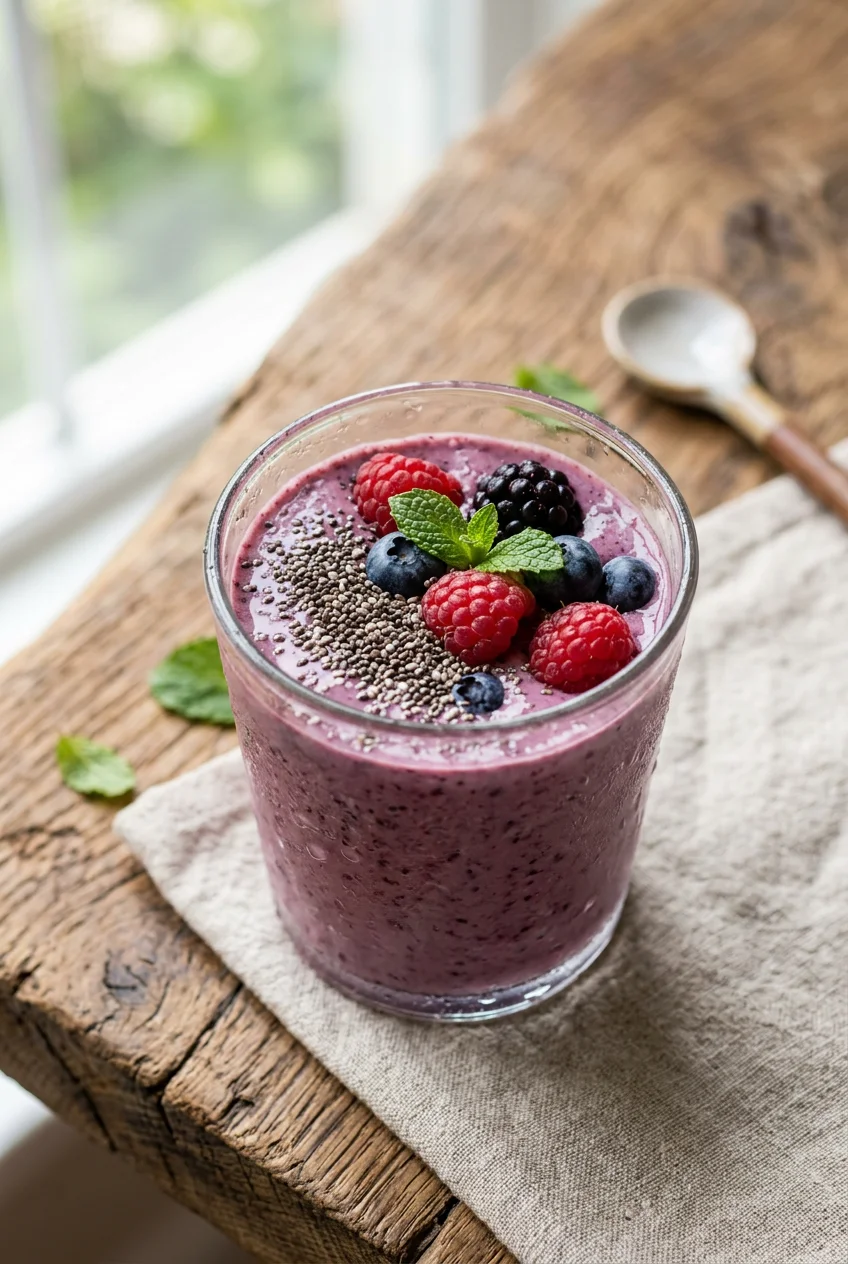
Bananas rule the blending world, but they overpower other flavors and add extra sugar if you’re already using berries. I stopped using bananas daily when I realized they were masking the taste of my expensive ingredients. Instead, I use frozen riced cauliflower. It provides the same creamy, thick texture as a frozen banana but has zero taste. I buy Good & Gather Frozen Riced Cauliflower at Target for $2.29 per 10 oz bag. I use exactly 1/2 cup of the cauliflower paired with 1/2 cup of frozen wild blueberries. Wild blueberries are smaller with tighter skin, so they hold less water and give you a denser, darker purple color. I blend this with 1 cup of unsweetened soy milk and 1/4 cup of plain Greek yogurt. A strict warning: you must use frozen cauliflower, not raw. Raw cauliflower has sulfur compounds that release a cabbage-like odor when pulverized. I made this mistake last year and my kitchen smelled like a compost bin for two days—no exaggeration. The freezing process kills the sulfur enzymes. When blended with the blueberries, the cauliflower completely disappears. The drink turns a deep, opaque purple. It’s cold, slightly tart, and dense enough to keep you full until lunch. You might also like: 20 Creative Easy Healthy Low Calorie Dinner Ideas Worth Trying This Year

Ninja Blendboss™ | Personal Blender for Smoothies & Frozen
Honestly, Ninja Blendboss™ | Personal Blender for Smoothies & Frozen Drinks | 26 surprised me — sturdier than it looks in the photos, and over 514 buyers gave it 4.5 stars.
4. The Post-Workout Tart Cherry Recovery

Muscle recovery needs specific nutrients right after a workout. Most recovery shakes are packed with artificial sweeteners that leave a metallic aftertaste. I prefer a tart cherry and Greek yogurt blend. Tart cherry juice has anthocyanins, which are proven to reduce muscle soreness. I buy Fage Total 2% Greek Yogurt at Costco for $6.99 (48 oz tub). The 2% milk fat provides a richer mouthfeel than non-fat versions, which tend to separate into chalky water when blended with acidic juices. For this, I measure exactly 1/2 cup of tart cherry juice, 1/2 cup of water, 1/2 cup of the Fage yogurt, and 1 cup of frozen dark sweet cherries. The dark cherries balance the extreme acidity of the tart juice. You’ll know the ratio is correct when the mixture turns a bright, vibrant magenta. The texture is incredibly smooth, just like a drinkable yogurt. One negative note: tart cherry juice stains everything. I ruined a white linen shirt last month because a drop splashed out of the pitcher. Always secure the lid tightly and wipe down the blender base immediately. This combination delivers roughly 25 grams of protein from the yogurt, while the cherries provide the carbs to replenish your energy after lifting. You might also like: 9 High Protein Vegetarian Meals That Actually Work
5. The Coffee Replacement Espresso Oat Blend

Combining your morning coffee and breakfast into one cup saves time and reduces the number of dishes you have to wash. However, pouring hot coffee into a blender is a disaster. The heat creates steam pressure, which can blow the lid off. I did this in 2019, and it took me an hour to clean coffee grounds off my cabinets. You must use cold brew or completely chilled espresso. I use 1/2 cup of concentrated cold brew mixed with 1/2 cup of Chobani Oatmilk Extra Creamy, which costs $4.48 for a 52 fl oz carton at Walmart. The extra creamy version uses rapeseed oil to emulsify the oats, creating a dense, velvety liquid that mimics heavy cream. To this, I add 1/4 cup of dry rolled oats, 1 frozen banana, and 1 scoop of unflavored collagen peptides. I use Vital Proteins Collagen Peptides ($27.99 for 9.33 oz at Walmart) because it dissolves invisibly. The dry oats act as a thickener as they absorb the liquid. You need to let the blender run for a full 60 seconds. If you stop at 30, the oats won’t break down, and you’ll be left with a gritty, sandy texture. The result tastes remarkably like a coffee shop frappuccino, but the complex carbs from the oats provide a slow release of energy. You might also like: 9 High Protein Crockpot Meals for Every Budget
6. The Anti-Bloat Ginger Spinach Lemon

Digestion issues often stem from heavy, processed breakfasts. When my stomach feels sluggish, I switch to a highly acidic, enzyme-rich green blend. The core ingredients are fresh ginger and lemon juice. I purchase Sprouts Organic Fresh Ginger Root for $4.99 per pound. You only need a 1-inch piece. A critical mistake most people make is leaving the skin on the ginger. The skin is fibrous and won’t break down, leaving tough, stringy hairs in your drink that catch in your throat. Always peel the ginger using the edge of a metal spoon. I combine the peeled ginger with 1 cup of cold water, the juice of half a lemon, 1 cup of packed fresh spinach, and 1/2 cup of frozen pineapple chunks. The bromelain in the pineapple helps break down proteins in your digestive tract. I’ve noticed that using a standard blender instead of a high-speed one leaves visible green flakes. You’re going to want to blend the water and spinach first for 30 seconds before adding the frozen pineapple and ginger. This two-step process ensures the greens are completely liquefied. The result is a bright, translucent green liquid. It’s thinner than a traditional shake, more like a juice. The taste is sharp, acidic, and slightly spicy from the ginger. It clears your sinuses immediately.

Greater Goods Digital Food Scale for Kitchen & Baking
Greater Goods Digital Food Scale for Kitchen & Baking has been one of the most consistently praised picks in this category. 39 reviewers averaged 4.5/5.
7. The Hormone Balancer Flaxseed Maca Almond

Seed cycling and adaptogens need consistent daily intake to show results. Hiding them in a morning drink is the most efficient method. I rely on ground flaxseed for lignans and omega-3s. I buy Simple Truth Organic Ground Flaxseed at Kroger for $4.29 (16 oz bag). You must buy it pre-ground or grind it yourself. Whole flaxseeds pass entirely undigested through your system, which makes them useless. I use 2 tablespoons of ground flaxseed, 1 teaspoon of gelatinized maca powder, 1 tablespoon of almond butter, 1 cup of unsweetened almond milk, and 1/2 cup of frozen peaches. The gelatinized maca is crucial. Raw maca powder can cause severe stomach cramping. I learned that the hard way in 2018. Gelatinized simply means it’s been boiled to remove the starch, making it digestible. Maca has a very distinct, earthy, butterscotch-like flavor. It pairs terribly with berries but goes great with the mild sweetness of peaches and the nutty almond butter. The texture is slightly grainy due to the flaxmeal. It’s not perfectly smooth, which is a tradeoff you have to accept. If you let it sit on the counter for more than ten minutes, the soluble fiber in the flaxseed will absorb the almond milk and turn the drink into a thick, unpalatable gel. Drink it immediately.
8. The Immune Support Turmeric Mango Kefir

Probiotics and curcumin are a powerful combination for inflammation. Kefir contains up to three times the probiotic strains of regular yogurt. I purchase Lifeway Organic Plain Lowfat Kefir at Whole Foods for $4.79 (32 oz bottle). It has a sharp, fermented tang that can be aggressive on its own. To balance the sourness, I use 1 cup of kefir, 1 cup of frozen mango chunks, 1/2 teaspoon of ground turmeric, and a tiny pinch of black pepper. The black pepper is mandatory. It contains piperine, which increases the absorption of the curcumin in the turmeric by 2000%. Without the pepper, you’re just coloring your drink yellow for no benefit. The mango provides enough natural sugar to mask the black pepper entirely. The resulting liquid is a brilliant, glowing orange. It’s thick, tart, and tropical. Now for the honest negative: turmeric is a dye. It will stain the plastic pitcher of your blender a cloudy, permanent yellow. It will stain your fingernails. It stained my white quartz countertops last spring when I spilled a teaspoon of the powder. I now mix the turmeric directly into the kefir inside the blender cup using a metal spoon before turning the machine on, preventing the dry powder from flying up into the lid. You can use fresh turmeric root, but it requires peeling and has a much more pungent flavor.
9. The Nighttime Wind Down Cherry Magnesium

Drinking a massive, calorie-dense shake right before bed disrupts sleep because your body is forced to digest a heavy meal. However, a small, targeted liquid can actually help you rest. I use a specific magnesium formulation designed to relax the central nervous system. I buy Natural Vitality Calm Magnesium Powder at Target for $14.99 (8 oz container). It fizzes when it hits liquid. I use exactly 1/2 teaspoon of the magnesium powder, 1/2 cup of unsweetened almond milk, 1/4 cup of frozen tart cherries, and 1 tablespoon of raw pumpkin seeds. Pumpkin seeds contain natural tryptophan. This is not a meal replacement. It’s a 6-ounce liquid sleep aid. The texture is thin and completely drinkable. I blend this at 8 PM, an hour before I want to be asleep. I tried using full-fat coconut milk for this recipe once, thinking the fats would be soothing. It was a mistake. The heavy coconut fat triggered acid reflux the moment I lay down. Stick to thin, low-fat liquids like almond or cashew milk for nighttime. Make sure you don’t exceed the 1/2 teaspoon of magnesium powder. High doses of liquid magnesium citrate act as a laxative. You don’t want to discover that side effect at 2 AM—trust me. Measure it with an actual measuring spoon, not a dinner spoon. The flavor is slightly tart from the cherries.

Ultimate Air Fryer Perfection: 185 Remarkable Recipes That
Ultimate Air Fryer Perfection: 185 Remarkable Recipes That Make the Mo has been one of the most consistently praised picks in this category.
10. The Meal Replacement Avocado Spirulina Bowl

If you prefer eating your breakfast with a spoon, you have to drastically alter the liquid-to-solid ratio. For a thick, spoonable bowl, reduce the liquid to about 1/2 cup for every 2.5 to 3 cups of solids. This requires a high-powered blender and a tamper tool to physically push the frozen ingredients down into the blades. I use 1/2 cup of coconut water, 1/2 of a fresh avocado, 1 cup of frozen spinach, 1 cup of frozen mango, and 1 teaspoon of spirulina powder. The avocado is the structural secret here. I buy Trader Joe’s Teeny Tiny Avocados for $3.99 (bag of 6). Half of one tiny avocado provides exactly enough monounsaturated fat to whip the frozen mango into a texture identical to soft-serve ice cream. The spirulina turns the entire mixture a dark, vibrant, almost unnatural shade of forest green. Spirulina smells slightly like a fish tank in its raw powder form, which can be off-putting. The mango and coconut water completely neutralize that algae smell once blended. If you don’t use the tamper tool, the blades will just spin in a hollow pocket of air, and the motor will overheat. I’ve burned out two cheap blenders trying to make thick bowls without enough liquid. You have to be patient, keep the speed low initially, and aggressively mash the ingredients into the base. Serve it in a wide, shallow bowl.
Making a proper blended meal requires measuring your ingredients and understanding how fats, proteins, and liquids interact. Once you stop eyeballing your almond milk and start measuring your solid ratios, you won’t have to deal with separated, watery drinks ever again. Save these formulas and pin them for your next grocery trip so you know exactly what to buy.
Frequently Asked Questions
What is the best liquid-to-solid ratio for good smoothie recipes?
For a standard drinkable texture, use exactly 1 cup of liquid for every 2 cups of solid ingredients (like frozen fruit, greens, or ice). If you want a thick smoothie bowl, reduce the liquid to 1/2 cup for every 2.5 to 3 cups of solids.
Why do my smoothies separate into liquid and foam?
Separation happens when you use too much water or milk without a proper binding agent. Adding healthy fats like 2 tablespoons of peanut butter, almond butter, or half an avocado stabilizes the emulsion and keeps the liquid from separating from the solids.
Can I make good smoothie recipes without using bananas?
Yes. If you dislike the taste or sugar content of bananas, substitute them with 1/2 cup of frozen riced cauliflower or frozen zucchini. These vegetables provide the exact same creamy, thick texture as a banana but have a completely neutral flavor profile.
How do I stop spinach from leaving chunks in my drink?
If you don’t have a high-speed blender, use a two-step blending process. Blend your leafy greens and your liquid base together first for 30 to 60 seconds until completely liquefied. Then, add your frozen fruits and protein powders and blend again.
