What’s Inside
Last Tuesday, I scraped a gray, sludgy liquid out of my Vitamix into the sink while my three-year-old screamed that it looked like swamp mud. Finding smoothie recipes for kids that actually get consumed is a frustrating trial-and-error process. I used to think I could just toss a handful of raw kale and some water into a blender and my kids would happily drink their vegetables. I was wrong. They took one sip, gagged at the gritty texture, and refused to touch the cup again.
It took me months of wasted groceries to realize that making a healthy drink for a toddler requires actual strategy. You can’t just hope for the best. You have to understand how temperatures affect texture, how dark berries mask the color of greens, and how to balance natural fats so the drink keeps them full for more than twenty minutes. I’ve ruined perfectly good blenders by jamming frozen blocks of fruit into the blades without enough liquid. I’ve also made the mistake of serving a drink that was essentially just fruit juice disguised as a meal, which led to a massive sugar crash an hour later. Let’s walk through the actual recipes and techniques that work in my kitchen. These aren’t complicated, but they do require specific ingredients and exact ratios to avoid the swamp mud scenario. Learned that the hard way.
1. The Classic Berry Spinach Fake-Out (Smoothie Recipes For Kids)

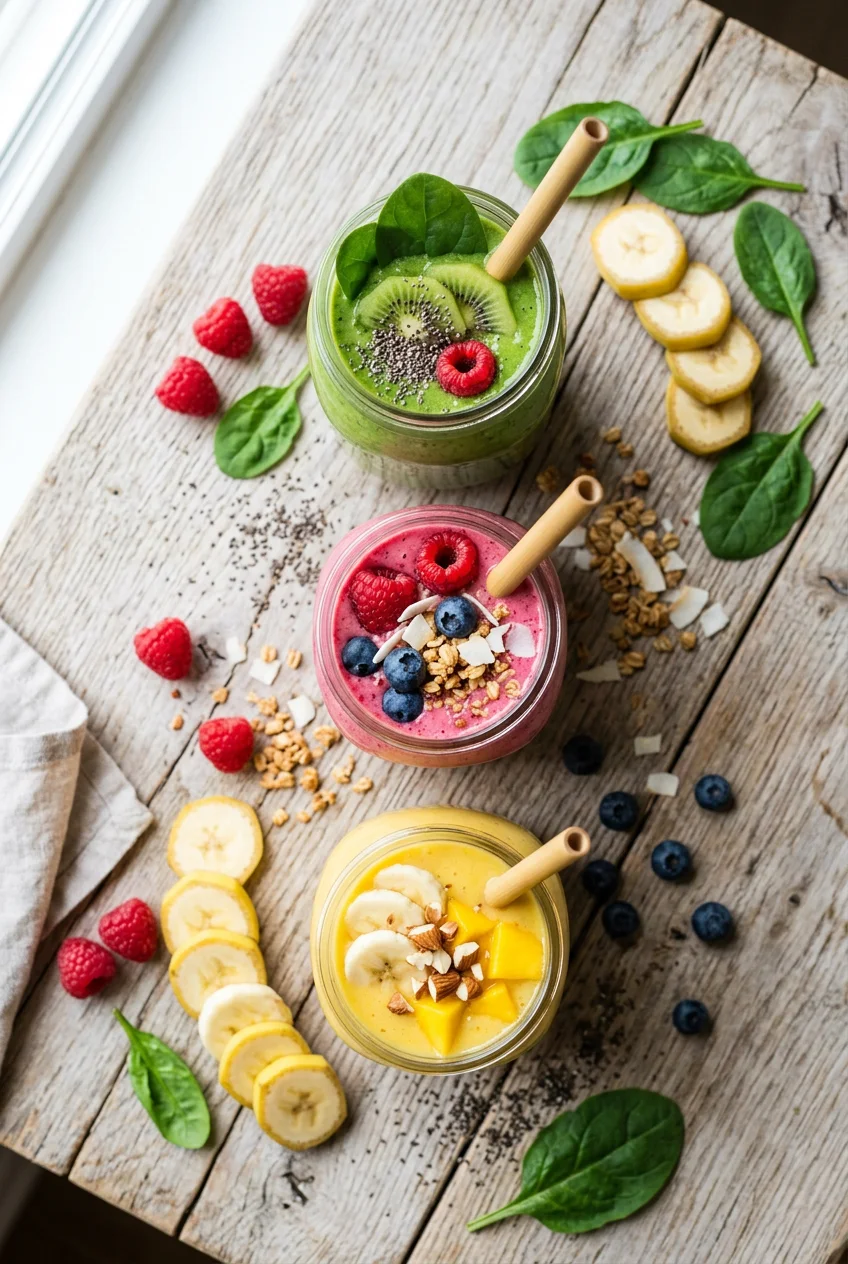
If you’re trying to get greens into a skeptical child, spinach is your only logical starting point. Kale has a bitter, earthy flavor that punches right through fruit, and it leaves fibrous little chunks unless you blend it for ten minutes. I incorporate 1 to 2 cups of fresh baby spinach into this berry blend. Its mild flavor is completely masked by the fruit, providing essential iron and vitamins A and C without detection.
I buy the Great Value Organic Triple Berry Blend from Walmart. It costs around $2.98 for a 10 oz bag. That works out to roughly $0.29 per ounce. I prefer organic frozen berries for cost-effectiveness and nutrition. They ensure a consistent supply of antioxidants while being significantly more budget-friendly than buying fresh berries out of season.
Most people get the blending process wrong. I used to dump everything in at once, which resulted in a chunky mess. To achieve the smoothest consistency, you must layer ingredients for optimal blending. Pour your liquids in first. I use 1 cup of whole milk. Follow that with the 2 cups of fresh baby spinach. Next, add 1 tablespoon of almond butter and 1/4 cup of plain yogurt. Finally, drop 1 cup of the frozen mixed berries and 1/2 of a fresh banana on top. The heavy frozen fruit pushes the spinach down into the blades, pulverizing the greens completely before the mixture gets too thick.
2. Creamy Zucchini Chocolate Shake

I tried making chocolate avocado shakes for a while, but avocados ripen on their own unpredictable schedule. Last month, I went to make a shake and cut into three different avocados that were all completely brown inside. That’s when I started using frozen zucchini instead. You can use frozen zucchini for creaminess and nutrients without adding any weird vegetable flavors to a chocolate drink.
I buy fresh zucchini at Target, peel it completely, chop it into small cubes, and freeze it in silicone bags. If you leave the dark green skin on, it leaves tiny green specks in the brown chocolate shake, which my son spots immediately. I add 1/4 to 1/2 cup of frozen, peeled zucchini chunks to the blender. It won’t alter the taste but enhances the texture, functioning exactly like frozen bananas. It adds a thick, ice-cream-like consistency while providing fiber and vitamins C and B6.
For the recipe, blend 1 cup of milk, 1/2 cup of frozen peeled zucchini, 2 tablespoons of unsweetened cocoa powder, 1/2 of a frozen banana, and 1 tablespoon of peanut butter. The zucchini acts as a neutral, creamy base. I’ve served this as dessert after dinner, and my kids genuinely think they’re drinking a standard milk shake. No exaggeration.
3. The Banana-Free Date & Avocado Blend

Bananas are the default base for almost all smoothie recipes for kids, but their flavor is overpowering. Sometimes you want a drink that actually tastes like the other ingredients you put into it. When I want a completely different flavor profile, I sweeten naturally with dates instead of bananas. I use 2 to 4 pitted Medjool dates. I buy them at Trader Joe’s for $5.99 for a 16 oz container. They provide fiber and iron while offering a rich, caramel-like sweetness. You might also like: 12 Healthy Snacks For Weight Losing Worth Trying
A common mistake here is over-sweetening. I ruined my first batch by adding a tablespoon of honey on top of the dates. The result was cloyingly sweet and completely undrinkable. Avoid adding excessive sweeteners. The dates are more than enough. If you absolutely need more sweetness, limit it to 1 teaspoon of maple syrup. You might also like: 12 Salad Recipes Worth Trying
To replace the creamy texture of the missing banana, I add avocado for healthy fats and creaminess. Include 1/4 to 1/2 of a ripe avocado. This provides healthy monounsaturated fats vital for brain development. Avocados are also rich in folate, potassium, and fiber. Blend 1 cup of coconut milk, 4 pitted dates, 1/2 an avocado, 1/2 cup of frozen strawberries, and 1/2 cup of ice. The avocado creates a dense, velvety texture that prevents the liquid and ice from separating in the cup. You might also like: 15 Clever Aesthetic Healthy Lunch Ideas to Inspire Your Next Project

Ninja Blendboss™ | Personal Blender for Smoothies & Frozen
If you want something that just works, Ninja Blendboss™ | Personal Blender for Smoothies & Frozen Drinks | 26 is a safe bet (514 reviews, 4.5 stars).
4. Pea Milk Strawberry Protein Power

My youngest went through a phase where she refused to eat meat, eggs, or beans. I started looking for ways to add protein to her drinks, but most protein powders are chalky and contain artificial sweeteners that taste like chemical vanilla. Instead of powders, I consider pea protein-based milks for allergy-friendly options and a solid protein boost.
I use Ripple Kids, which is made from pea protein. I usually grab it at Whole Foods for about $6.49 for a 48 oz bottle. It offers 8 grams of plant-based protein per serving, plus DHA omega-3, choline, and fortified vitamins D and calcium. Silk Kids is another pea and oat milk blend that works similarly well if you can’t find Ripple.
There’s a trending approach right now toward “clean label” plant milks. Brands like Malk or Elmhurst 1925 use minimal ingredients, usually just water, oats or nuts, and salt. While those are great, they lack the protein punch of the pea-based options. For this recipe, blend 1 cup of Ripple Kids milk, 1 cup of frozen strawberries, 1/4 cup of rolled oats, and 1 tablespoon of cashew butter. The oats thicken the liquid, and the pea milk provides enough protein to keep a toddler full until lunch.
5. Blueberry Flax Brain Booster

I started adding ground flaxseed to our breakfasts last winter. You can boost Omega-3s with ground flaxseed very easily, but it comes with a major textural catch. I add 1 to 2 tablespoons of ground flaxseed to this blueberry blend for a significant boost of Omega-3 fatty acids and fiber. However, you must blend it in just before serving. If you let a flaxseed smoothie sit in a sippy cup for an hour, the flax absorbs the liquid and turns the entire drink into a dense, gelatinous pudding that won’t pass through a straw. I learned this the hard way when I had to use a pipe cleaner to unclog my daughter’s favorite cup.
For the fruit base, I use Simple Truth Organic Frozen Blueberries from Kroger. They cost around $9 for a large 48 oz bag, breaking down to just $0.21 per ounce. Blueberries have tough skins, so you need a high-powered blender to break them down completely.
Blend 1 cup of almond milk, 1 cup of frozen organic blueberries, 1/2 of a fresh banana, and 1/4 cup of plain Greek yogurt. Blend it until completely smooth. Then, add the 1 to 2 tablespoons of ground flaxseed and pulse the blender just three or four times to mix it in. Serve it immediately before the gelling process begins.
6. Tropical Chia Seed Slushie

Chia seeds are another ingredient that requires careful handling. I incorporate chia seeds for fiber and calcium, adding just 1 to 2 teaspoons per serving. These seeds provide valuable plant-based protein, but like flax, they absorb liquid rapidly. If you don’t blend them well, they leave a crunchy texture that kids often reject.
I use frozen mango chunks from Costco for this recipe. They sell a massive 4 lb bag of organic frozen mango for $10.99. The mango provides a bright, tropical sweetness that pairs perfectly with the chia. Blend 1 cup of coconut water, 1 cup of frozen mango chunks, 1/2 cup of frozen pineapple, and 2 teaspoons of chia seeds. Run the blender on high for a full sixty seconds to ensure the chia seeds are broken down.
If your child doesn’t finish their drink, you can use an actionable tip: freeze smoothies into popsicles. I bought a set of silicone popsicle molds from Amazon for $9.99. I pour any leftover tropical slushie into the molds and stick them in the freezer. It reduces waste and gives me a healthy alternative to the sugary store-bought popsicles my kids constantly ask for during the summer. Trust me on this.

Ninja Nutri-Plus Personal Blender | Compact Push to Blend |
Ninja Nutri-Plus Personal Blender | Compact Push to Blend | Make Froze has been one of the most consistently praised picks in this category. 54 reviewers averaged 4.5/5.
7. Mixed Berry Skyr Protein Punch

Finding a yogurt that isn’t packed with cane sugar is incredibly frustrating. I used to buy the standard kids’ yogurt tubes, but they contain up to 10 grams of added sugar per serving. Now, I choose kid-friendly yogurts for probiotics and protein without the massive sugar spike. I buy Siggi’s Kids Low Fat Strained Mixed Berries Skyr Yogurt pouches at Sprouts. They provide higher protein with only 6 grams of sugar per pouch. Stonyfield Organic Kids Lowfat Yogurt Smoothies are another solid option if you can’t find the other.
For this recipe, I use 1 pouch of the Siggi’s mixed berry yogurt, 1/2 cup of whole milk, 1/2 cup of frozen raspberries, and 1/4 cup of frozen cauliflower rice. The cauliflower is entirely undetectable behind the tart raspberries and thick skyr.
Here’s a surprising tip that genuinely works: a pinch of salt enhances flavor. I add exactly 1/8 teaspoon of pink Himalayan salt to the blender. It sounds strange to salt a fruit drink, but it balances the tartness of the raspberries and brings out the natural sweetness of the dairy. I tried this wrong for months, adding more fruit to combat the tartness, before figuring out that a tiny bit of sodium solves the flavor balance perfectly.
8. The “Let Them Pick” Vanilla Mango Mix

The biggest hurdle in getting kids to drink anything healthy is their natural suspicion of new foods. If I hand my son a cup filled with an unknown liquid, he won’t drink it. Pediatricians and nutritionists recommend letting children choose ingredients and help with preparation. This involvement increases their excitement and willingness to try new flavors.
I set up a “smoothie station” on the kitchen counter. I put out three small bowls: one with frozen mango chunks, one with fresh spinach, and one with rolled oats. I let my kids physically dump the ingredients into the blender pitcher. I pour in 1 cup of Malk almond milk and 1/2 teaspoon of pure vanilla extract. Letting them push the button on the blender makes a massive difference in their willingness to consume the final product.
The vanilla extract is crucial here. It tricks the brain into perceiving sweetness without adding any actual sugar. Combine the 1 cup of almond milk, 1 cup of the frozen mango they selected, a small handful of spinach, 2 tablespoons of oats, and the vanilla. It turns a pale, pleasant green color. Because they watched exactly what went into it, the suspicion is gone, and they actually drink it.
It’s entirely possible to make drinks that support your child’s nutritional needs without resorting to expensive, sugar-filled powders. You just have to be methodical about your ingredients. Start with the frozen zucchini trick if you’re dealing with a picky eater who hates greens, or use the pea milk if you need to sneak in extra protein. I’d highly suggest buying a cheap set of popsicle molds to save your leftovers, because throwing away organic berries hurts the grocery budget. Pin this list of recipes to your kitchen board so you aren’t staring blankly into the freezer at 7 AM on a Tuesday.
Frequently Asked Questions
What is the best liquid base for smoothie recipes for kids?
Whole milk or pea-protein milk like Ripple Kids are excellent choices because they provide necessary fats and protein. Coconut water is great for tropical fruit blends, while simple oat or almond milks work well if you are adding healthy fats like avocado or nut butters.
How do I hide the taste of spinach in a smoothie?
Use dark frozen fruits like blueberries or mixed berries to completely mask the green color. Keep the ratio to about 1 cup of fresh baby spinach per 1 cup of strong-flavored fruit. Always blend the spinach with your liquid first to eliminate leafy chunks.
Can I save leftover smoothies for later?
Yes, but textures change in the fridge, especially if you use flax or chia seeds. The best method is to pour any leftover smoothie into silicone popsicle molds and freeze them. This creates a healthy, zero-waste frozen treat for later.
Why does my homemade smoothie separate in the cup?
Separation happens when there is not enough soluble fiber or healthy fat to bind the liquid and water from the ice. Adding 1/4 of an avocado, a tablespoon of oats, or a handful of frozen zucchini helps emulsify the blend and keeps it creamy.
