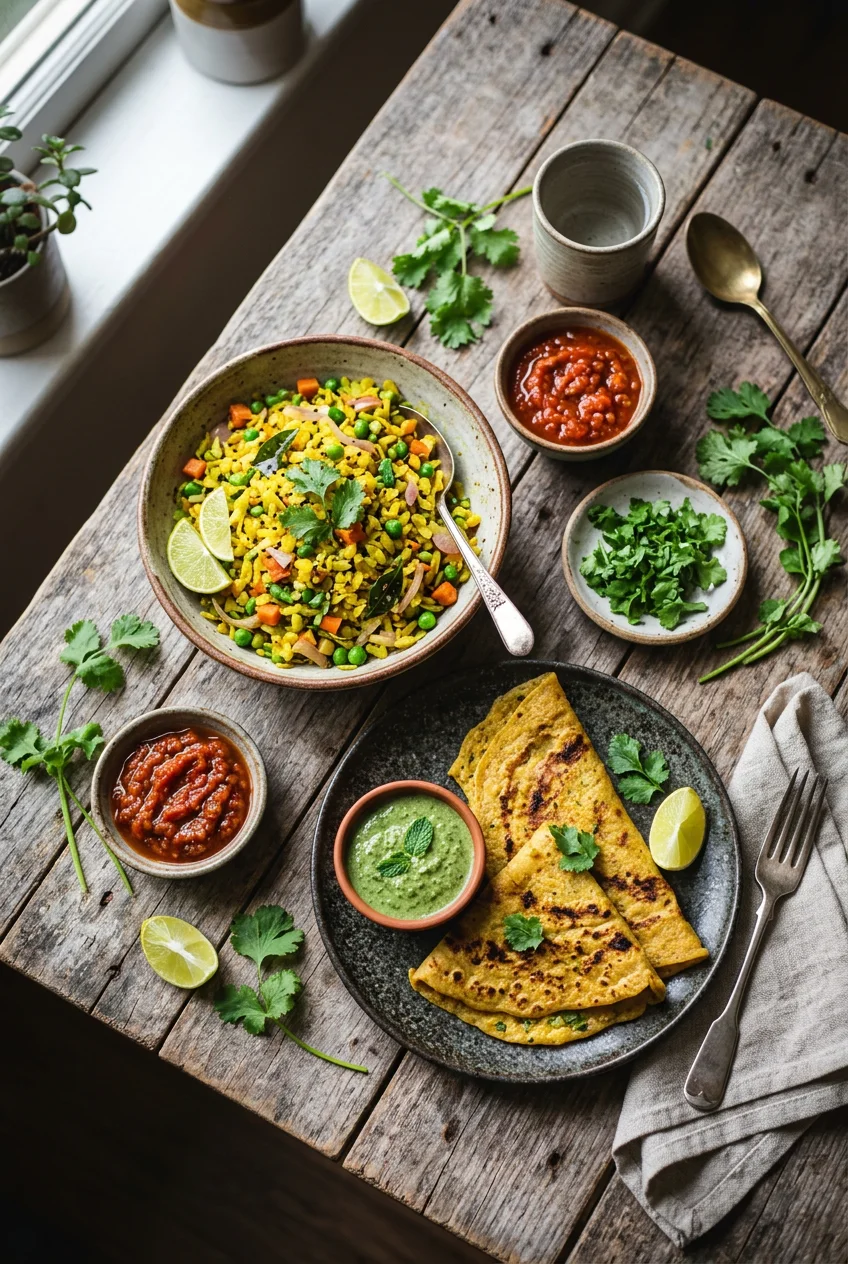
What’s Inside
- The Classic Ragi (Finger Millet) Dosa Batter Prep
- Savory Oats Upma Meal Prep Jars
- High-Protein Moong Dal Chilla Mix
- Overnight Poha (Flattened Rice) with Peanuts
- Spiced Quinoa Pongal Portions
- Batch-Steamed Kodo Millet Idlis
- Besan (Chickpea Flour) Veggie Omelet Dry Mix
- Broken Wheat (Dalia) Khichdi Packets
- Sprouted Mung Bean Salad Bowls
I stood in the prepared foods aisle at Whole Foods last Tuesday, staring at a $9.99 container of bland, watery overnight oats that smelled faintly of wet cardboard. That moment of frustration pushed me to finally master healthy breakfast recipes indian style for my own weekly meal prep. I needed savory, spiced, nutrient-dense morning meals that didn’t taste like dessert, and I refused to pay ten dollars for soggy oats again. Most people think traditional Indian food takes hours of active cooking, making it impossible for busy mornings. I tried this wrong for months before figuring it out. I used to wake up at 6 AM trying to ferment batter from scratch on a random Wednesday. The kitchen smelled like sour yeast, the batter was always cold and flat, and I usually ended up eating a protein bar in my car anyway. It was a complete disaster.
Now, I rely on a specific rotation of healthy breakfast recipes indian prep methods that take maybe an hour on Sunday afternoon. You don’t need to be a professional chef to make this work. You just need the right ingredients, precise measurements, and a basic understanding of how different grains hold up in the fridge. I’ve spent the last two years testing how long sprouted mung beans stay crunchy and which millet flours reheat without turning into rubber. I’ll walk through the exact formulas I use to stock my fridge for the week, complete with the specific brands and ratios that actually work. Took me years to figure out, but now it’s second nature.
1. The Classic Ragi (Finger Millet) Dosa Batter Prep

Swapping traditional white rice for millets changed how my body processes morning carbohydrates. I use 24 Mantra Organic Ragi Flour ($4.99 for 2 lbs at Sprouts) for my weekly batter. The standard ratio I use is 1 cup whole millets, 1 cup parboiled rice, 1/2 cup whole urad dal, and 1 tsp methi (fenugreek) seeds. You soak these for 8 hours, grind them into a smooth paste, and let the mixture ferment overnight on the counter. The fermentation process breaks down phytic acid, which makes the nutrients much easier for your gut to absorb.
I made a massive mistake when I first started prepping this. I used to skip the methi seeds because I didn’t want to buy a whole jar for just one teaspoon. Don’t do this. The methi seeds are biologically necessary to attract the wild yeast that makes the batter ferment. Without them, my batter stayed completely flat and the cooked dosas stuck to my hot cast iron pan like dried cement. Once the batter is fermented, it smells slightly sour and earthy. I store it in a large glass Pyrex bowl in the fridge, where it stays active for up to five days. Each morning, I pour a ladle onto a hot pan, drizzle 1/2 teaspoon of ghee, and have a crispy, fiber-rich breakfast in under three minutes.
2. Savory Oats Upma Meal Prep Jars

Sweet oatmeal spikes my blood sugar and leaves me hungry by 10 AM, so I switched to savory upma. The texture is completely different when you prepare it correctly. I buy Bob’s Red Mill Thick Rolled Oats ($5.49 for 32 oz at Target) because the standard quick oats turn into a slimy, unappetizing paste when you try to cook them with vegetables. For a batch of four prep jars, I dry roast 2 cups of oats in a pan until they smell nutty, which takes about four minutes.
In a separate pan, I heat 1 tablespoon of coconut oil and temper 1 teaspoon of black mustard seeds. When they start popping (you’ll hear a distinct crackling sound), I add 10 fresh curry leaves, 1/2 cup of diced carrots, and 1/2 cup of frozen green peas. I mix the roasted oats with the spiced vegetable mixture and divide it dry into four mason jars. On weekday mornings, I just add boiling water to a jar, cover it for five minutes, and stir. The thick rolled oats absorb the spiced water perfectly without getting mushy. I tried doing this with pre-cooked wet upma in plastic containers, but it reheated into a dense brick. Keeping the mixture dry until the morning you eat it is the only way it maintains a fluffy texture.
3. High-Protein Moong Dal Chilla Mix

When I need a breakfast that hits 20 grams of protein without relying on eggs, I make moong dal chillas. These are essentially savory, gluten-free crepes made from yellow lentils. I use Deep Foods Split Yellow Moong Dal ($3.99 for 2 lbs at Walmart). On Sunday, I soak 2 cups of the dal in water for four hours. Then, I drain the water and blend the softened lentils with 1 inch of fresh ginger, 2 green chilies, 1 teaspoon of cumin seeds, and 1/2 teaspoon of turmeric until it forms a smooth, pourable batter. You might also like: 8 High Protein High Fiber Meals for Every Budget
Last month, I knocked a full blender of this batter off my counter. Turmeric stains porous surfaces instantly, and I spent an hour scrubbing yellow spots out of my grout. Now I immediately transfer the blended batter into a secure, leak-proof glass pitcher. The batter keeps perfectly in the fridge for four days. The secret to a good chilla is the pan temperature. If the pan is too cold, the batter spreads too thick and tastes like raw lentil flour. I heat a non-stick skillet over medium-high heat until a drop of water sizzles instantly, pour 1/2 cup of batter, and spread it thin with the back of a ladle. The edges get incredibly crispy while the center stays soft. You might also like: 15 Lovely High Protein Low Calorie Dinner Ideas for a Fresh New Look

Gordon Ramsay’s Healthy
Honestly, Gordon Ramsay’s Healthy surprised me — sturdier than it looks in the photos.
4. Overnight Poha (Flattened Rice) with Peanuts

Poha is flattened rice that requires zero actual cooking, making it ideal for meal prep. I buy Swad Thick Poha ($2.99 for 14 oz at Kroger). You have to buy the ‘thick’ variety. The thin variety dissolves into mush the second water touches it. To prep this for the week, I make a large batch of the flavor base. I sauté 1/2 cup of raw peanuts in 1 tablespoon of avocado oil until they brown, then add 1 teaspoon of turmeric, 1 chopped onion, and 2 chopped green chilies. I store this cooked peanut and onion mixture in a container in the fridge. You might also like: 12 Quick Dinner Ideas Healthy for Every Budget
The critical mistake most people make is soaking the poha ahead of time. I tried making a fully wet batch on a Sunday, and by Tuesday, it tasted like soggy cardboard. Instead, I keep the dry poha in the pantry. Every morning, I take 1 cup of dry poha and run it under cold water in a mesh strainer for exactly 30 seconds. No longer. It absorbs just enough water to soften. I toss the softened poha into a bowl with a scoop of my pre-made peanut mixture, microwave it for 60 seconds, and squeeze half a lemon over the top. The peanuts stay crunchy, the poha is fluffy, and the lemon juice brightens the earthy turmeric.
5. Spiced Quinoa Pongal Portions

Traditional pongal uses white rice and moong dal cooked down into a rich, porridge-like consistency with black pepper and cumin. I swap the white rice for quinoa to increase the fiber content and keep my energy stable through the morning. I use Kirkland Signature Organic Quinoa ($10.99 for 4.5 lbs at Costco). The recipe requires 1 cup of quinoa, 1 cup of yellow moong dal, 4 cups of water, 1 tablespoon of black peppercorns, and 1 tablespoon of cumin seeds.
Quinoa has a naturally bitter coating called saponin. The first time I made this, I didn’t rinse the quinoa thoroughly enough, and the entire batch had a harsh, metallic aftertaste that I couldn’t mask with salt. Trust me on this. Now, I rinse the quinoa under hot water for two full minutes before adding it to my Instant Pot with the dal and spices. I cook it on high pressure for 12 minutes. Once it’s done, I stir in 2 tablespoons of melted ghee. The ghee isn’t optional. It provides the necessary fat to absorb the fat-soluble vitamins from the spices and gives the dish its signature creamy texture. I portion this out into five glass containers. It thickens in the fridge, so I add two tablespoons of water before microwaving it in the morning.
6. Batch-Steamed Kodo Millet Idlis

Idlis are steamed savory cakes, and they are one of the most efficient healthy breakfast recipes indian options because you can steam 16 of them at once. I use Parry’s Kodo Millet ($5.99 for 1.1 lbs at Whole Foods) instead of rice. I use the exact same batter ratio as the dosa batter mentioned earlier, but I keep the consistency slightly thicker. You need an idli steamer stand for this, which is a metal rack with small, curved plates. I lightly grease the plates with sesame oil, fill each mold with batter, and steam them in a pressure cooker (without the weight on) for exactly 12 minutes.
Last December, I packed a batch of these for a long road trip. Because they are steamed rather than fried, they don’t get greasy or spoil quickly at room temperature. They stayed soft for two days in a standard Tupperware container. When I prep them for the week at home, I store the steamed idlis in an airtight container in the fridge. They do get a bit dense when cold. To revive them, I wrap three idlis in a damp paper towel and microwave them for 45 seconds. The steam from the wet towel restores their original spongy, light texture perfectly. I eat them with a side of store-bought unsweetened coconut yogurt.

Downshiftology Healthy Meal Prep: 100+ Make-Ahead Recipes
Honestly, Downshiftology Healthy Meal Prep: 100+ Make-Ahead Recipes and Quick-As surprised me — sturdier than it looks in the photos.
7. Besan (Chickpea Flour) Veggie Omelet Dry Mix

If you want a plant-based alternative to eggs that actually has structural integrity, besan (chickpea flour) is the answer. I use Bob’s Red Mill Garbanzo Bean Flour ($4.29 for 16 oz at Target). Unlike liquid vegan egg substitutes that cost eight dollars a bottle and expire in a week, you can prep dry besan mix to last for months. In a large mason jar, I combine 3 cups of besan, 1 teaspoon of ajwain (carom seeds), 1 teaspoon of turmeric, 1 teaspoon of salt, and 1/2 teaspoon of black pepper. The ajwain seeds are crucial because chickpea flour can cause bloating, and ajwain aids digestion.
For my weekly vegetable prep, I finely dice 1 red bell pepper, 1 red onion, and a handful of cilantro, storing them in a container lined with a dry paper towel to absorb moisture. Each morning, I scoop 1/2 cup of the dry besan mix into a bowl, whisk in 1/2 cup of water until it forms a thin batter, and fold in a handful of the pre-chopped veggies. I pour this into a lightly oiled skillet. It takes about three minutes per side to cook through. The edges get crispy, and the high fiber content of the chickpea flour keeps me full until lunch. Skip the fat-free cooking sprays for this. It tastes like wet cardboard without a tiny bit of real olive oil or ghee in the pan.
8. Broken Wheat (Dalia) Khichdi Packets

Dalia, or broken wheat, is a fantastic whole grain that digests slowly and has a comforting, chewy texture. I buy Rani Broken Wheat ($6.99 for 32 oz on Amazon, but I also see it at my local Indian grocer). To make meal prep simple, I create dry khichdi packets. In five small containers, I measure out 1/3 cup of dalia, 2 tablespoons of pink masoor dal (split red lentils), 1/4 teaspoon of turmeric, and a pinch of salt.
The mistake I made early on was trying to cook the dalia raw straight from the bag. It turns into a sticky, gelatinous paste that coats the roof of your mouth. You have to dry roast the broken wheat first. Before I assemble my packets on Sunday, I toast the entire bag of dalia in a dry skillet over medium heat for five minutes until it smells like toasted nuts, then let it cool. During the week, I dump one of my pre-made packets into a small pot with 1.5 cups of water and simmer it for 15 minutes. While it cooks, I chop half a tomato and throw it in. The red lentils break down completely to thicken the broth, while the roasted broken wheat retains a pleasant, chewy bite. It’s warm, savory, and extremely easy on the stomach.
9. Sprouted Mung Bean Salad Bowls

Sometimes I don’t want a hot breakfast, especially in the summer. A sprouted mung bean salad is incredibly crisp, refreshing, and packed with live enzymes. I buy generic whole green mung beans from the bulk bins at Sprouts (usually around $2.49 per lb). Sprouting them takes a few days, but requires almost zero active time. On Thursday night, I soak 1 cup of beans in water. Friday morning, I drain the water, rinse them, and leave them in a mesh strainer over a bowl, covered with a damp cloth. By Sunday morning, they have small, half-inch white tails.
I assemble the salad bowls using Trader Joe’s Persian Cucumbers ($2.99 for a 6-pack). I chop the cucumbers, halve some cherry tomatoes, and mix them with the sprouted beans. I divide this mixture into glass bowls. The dressing is what makes it taste distinctly Indian: 2 tablespoons of lime juice, 1 teaspoon of chaat masala, and a pinch of black salt (kala namak). I keep the dressing in a separate tiny jar and pour it over the sprouts right before eating. If you dress the sprouts on Sunday, the salt extracts all the water from the cucumbers, and by Wednesday, you’re eating a depressing, swampy soup. Kept dry, the sprouts stay intensely crunchy all week. No exaggeration.
Meal prepping these Indian breakfasts isn’t about perfectly uniform containers or aesthetic fridge organization. It’s about front-loading the messy work so your Tuesday morning is frictionless. Start with just one of these methods, like the dry oats upma jars or the besan mix, and see how your body responds to a savory, spiced breakfast. Once you get the hang of the textures and the exact water ratios, you won’t go back to overpriced café oatmeal. Save this guide for your next Sunday prep session, and let the spices do the heavy lifting for your morning routine.

KIND Breakfast Bars, Peanut Butter, Healthy Snacks
Honestly, KIND Breakfast Bars surprised me — sturdier than it looks in the photos, and over 16 buyers gave it 4.5 stars.
Frequently Asked Questions
How long does fermented dosa batter last in the fridge?
Freshly fermented dosa or idli batter lasts up to five days in the refrigerator. Store it in an airtight glass container. The batter will become slightly more sour each day, which actually improves the flavor.
Can I freeze Indian breakfast meal prep?
Yes, cooked idlis and moong dal chillas freeze very well. Wrap them tightly in parchment paper and store in a freezer bag for up to a month. Reheat idlis with a damp paper towel in the microwave.
Why did my poha turn mushy during meal prep?
Poha turns mushy if you use the thin variety or soak it too long. Always buy thick poha and rinse it in a strainer under cold water for a maximum of 30 seconds right before you plan to eat it.
Are these Indian breakfast recipes gluten-free?
Most traditional Indian breakfasts are naturally gluten-free. Recipes using millets, rice, lentils, poha, and besan (chickpea flour) contain zero gluten. Just avoid recipes using dalia (broken wheat) or upma made from semolina.
