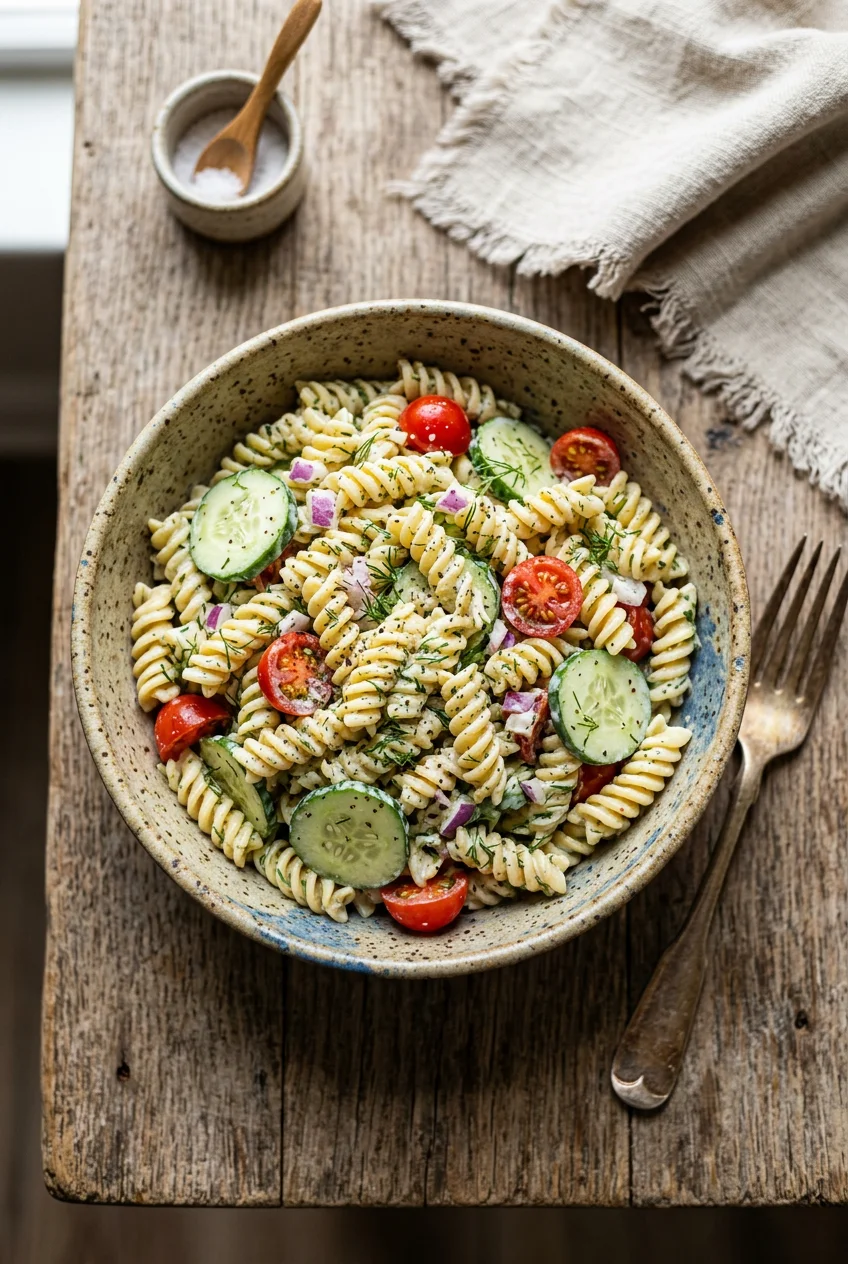
What’s Inside
- Choosing High-Fiber Chickpea and Lentil Pasta Bases
- Crafting a High-Protein Greek Yogurt Ranch Dressing
- Selecting Store-Bought Lighter Ranch Alternatives
- The Strategic “Slightly Past Al Dente” Cooking Method
- Salting the Pasta Water Like Seawater for Internal Flavor
- Dressing the Noodles While They Are Still Warm
- The Six-to-One Vegetable to Pasta Ratio Strategy
- Blanching Harder Vegetables for Better Integration
- Adding Plant-Based Proteins for Satiety
- Fibermaxxing with Marinated Artichokes and Kohlrabi
- Creating Umami Depth with Sun-Dried Tomatoes and Acidity
Last July, I brought a massive bowl of macaroni to a neighborhood potluck. I used standard white noodles and a full jar of heavy mayonnaise. After sitting on a picnic table for two hours, the oil separated. The noodles turned into a gelatinous, gray block. Nobody ate it. I dumped three pounds of soggy pasta straight into the compost bin. That failure made me overhaul how I make ranch pasta salad. I needed a real formula to keep the noodles firm, the vegetables crisp, and the dressing light. Creating healthy ranch pasta salad requires specific ratios, not just dumping a bottle of dressing over boiled noodles. I spent six months testing different pasta brands, yogurt ratios, and vegetable combinations to find what actually holds up in the fridge. Let’s break down the formulas and ingredients I use now. Trust me on this.
1. Choosing High-Fiber Chickpea and Lentil Pasta Bases

When I build ranch pasta salad, I skip refined white flour noodles. They spike your blood sugar and leave you hungry an hour later. Instead, I use chickpea or lentil pasta to boost fiber and protein. Banza chickpea pasta is my go-to. It costs $3.99 for an 8-ounce box at Target. It has a sturdy, chewy texture that holds up against heavy dressings. I tried a generic lentil pasta from Sprouts last year, and it turned into a gritty paste when I tossed it with sauce. You need a sturdy noodle. Banza provides 11 grams of protein and 5 grams of fiber per serving, which keeps your blood sugar stable. When I boil Banza, I watch the pot because the starch foam rises fast. I rinse the noodles immediately in cold water to stop the cooking and wash away excess starch. The chickpea flavor is nutty, but the garlic and dill in the ranch mask it. If you’re feeding picky eaters, Barilla Whole Grain rotini is a safer bridge. It costs $3.49 at Kroger for a 16-ounce box and looks like regular pasta once coated.
2. Crafting a High-Protein Greek Yogurt Ranch Dressing

Standard bottled ranch is mostly soybean oil, water, and buttermilk powder. It coats the mouth with a greasy film and mutes fresh vegetables. I make a lighter, protein-packed base using Fage Total 0% Milkfat plain Greek yogurt. I buy the 32-ounce tub for $5.99 at Costco for my weekly meal prep. For the dressing, I mix one cup of Fage with one teaspoon each of dried dill, chives, parsley, garlic powder, and onion powder. I thin the yogurt with one tablespoon of rice vinegar or lemon juice. The acidity cuts through the dense dairy. I used to chop fresh herbs, but dried herbs distribute better in thick yogurt and mimic that classic packet flavor. You have to let this sit in the fridge for at least thirty minutes. The dried onions need time to rehydrate and release their flavor. If you use it immediately, the dressing tastes flat and you’ll bite into dry onion flakes.
3. Selecting Store-Bought Lighter Ranch Alternatives

Sometimes you’re rushing and don’t have time to measure herbs. When I need a shortcut, I look for yogurt-based dressings in the produce section. Bolthouse Farms Classic Ranch Yogurt Dressing is my backup. It costs $3.98 for a 14-ounce bottle at Walmart. It has 50 calories per serving and uses yogurt instead of oil. It’s thinner than my homemade version, which makes it easy to toss with cold noodles. I learned to avoid certain zero-calorie options. I bought Walden Farms Ranch once because the zero fat claim caught my eye. The texture was like cloudy water and it had a strange artificial sweetness that ruined a whole batch. I threw it in the trash. Stick to options that use real dairy or plant-based fats like avocado oil. Primal Kitchen makes a decent dairy-free ranch for $6.99 at Whole Foods. The avocado oil flavor is strong, but the ingredients are clean. You might also like: 15 Clever Aesthetic Healthy Lunch Ideas to Inspire Your Next Project

Air Fryer Cookbook: 600 Effortless Air Fryer Recipes for
A dependable everyday pick — Air Fryer Cookbook: 600 Effortless Air Fryer Recipes for Beginners and. Not flashy, just solid.
4. The Strategic “Slightly Past Al Dente” Cooking Method

If you cook pasta for a cold salad the same way you cook it for hot marinara, you’re setting yourself up for failure. When pasta chills, the starches undergo retrogradation. They firm up and harden. If you pull your rotini off the stove at a perfect al dente, it’ll turn into a rubbery bullet after an hour in the fridge. For pasta salad, I always cook the noodles one minute longer than the package directions. They should feel slightly soft if you bite into one hot. This extra hydration ensures the pasta stays tender once it cools. I once undercooked a batch of whole wheat penne for a meal prep. By Tuesday, chewing it felt like eating raw twigs. I had to microwave the salad just to soften the noodles, which wilted the cucumbers and tomatoes. Cook the pasta longer than you think. Cold pasta requires different rules. You might also like: 10 Low Carb High Protein Meals That Actually Work
5. Salting the Pasta Water Like Seawater for Internal Flavor

Most people under-salt their pasta water. This is your only chance to season the inside of the noodle. If you boil pasta in plain water, the inside stays bland, and no amount of ranch on the outside will fix it. You end up tasting salty dressing followed by a flat, starchy center. I use Morton Coarse Kosher Salt, which is about $3.19 for a three-pound box at Target. I add two full tablespoons to a large pot before dropping in the noodles. The water should taste like the ocean. The salt penetrates the pasta as it expands. I noticed a massive shift when I started measuring the salt instead of shaking the box blindly. The noodles develop a savory baseline that amplifies the garlic and onion in the ranch. Use coarse kosher salt, not fine table salt. Two tablespoons of fine iodized salt would make the water inedible. I ruined a batch of lentil pasta by using table salt once, and the sodium burn was unbearable. You might also like: 20 Beautiful Low Calorie Dinner Ideas to Transform Your Space
6. Dressing the Noodles While They Are Still Warm

This step dictates how well your salad holds together. Don’t wait for the pasta to cool completely. After I drain the pasta and give it a quick rinse to remove surface starch, I put the warm noodles into a large glass bowl. I pour a half cup of my yogurt ranch over the pasta and toss it aggressively with silicone tongs. Warm noodles have open pores. They absorb the liquid directly into the starch. If you wait until the noodles are ice cold, the pores close up. The dressing just slides off and pools at the bottom. You’re left with dry pasta on top and soup on the bottom. I figured this out after reading a culinary science article, and it fixed my dry salad issue. The warm pasta soaks up that first half cup within ten minutes. You’ll add the rest of the dressing right before serving to keep it moist.

Spiralizer Vegetable Slicer (4-in-1 Rotating Blades) Heavy
A dependable everyday pick — Spiralizer Vegetable Slicer (4-in-1 Rotating Blades) Heavy Duty Veggie pulls in 23 ratings at 4.5 stars. Not flashy, just solid.
7. The Six-to-One Vegetable to Pasta Ratio Strategy

A common flaw in pasta salad is the ratio of heavy starch to vegetables. It feels heavy and spikes your blood sugar. I follow a formula: six cups of chopped, raw or blanched vegetables for every pound of dry pasta. This dilutes the calorie density and adds a massive crunch. I typically use two red bell peppers, one English cucumber, a pint of cherry tomatoes, and half a red onion. I buy Sunset brand Wild Wonders cherry tomatoes for $4.99 at Sprouts because the varied colors look great. You must chop all the vegetables to the same size as your pasta. If you leave tomatoes whole or slice cucumbers into thick wheels, you can’t get a composed bite. I spend ten minutes dicing everything into quarter-inch cubes. The vegetables release their juices into the ranch as they sit, thinning it out and creating a cohesive sauce. Uniform chopping changes the entire mouthfeel.
8. Blanching Harder Vegetables for Better Integration

Tossing raw, hard vegetables into a soft pasta salad creates a jarring texture. I used to throw raw broccoli and carrot chunks into the bowl to save time. The raw broccoli tasted bitter and felt like chewing on tree branches. Now, I blanch any hard vegetables. I drop broccoli and carrots into boiling water for ninety seconds. I scoop them out and plunge them into ice water to stop the cooking. This breaks down the tough fibers just enough to make them palatable while keeping a snap. It also turns the broccoli a vibrant green that looks beautiful against the white ranch. A bag of broccoli costs about $2.99 at Trader Joe’s, and the extra three minutes makes a huge difference. The tiny buds on the florets soak up the creamy ranch once they’re softened, whereas raw broccoli just repels the liquid.
9. Adding Plant-Based Proteins for Satiety

Traditional pasta salads often rely on salami, pepperoni, or heavy cheddar. I prefer using plant-based proteins to keep saturated fat lower while providing energy. This fits the trend of using whole-food plant proteins rather than processed meat. I drain and rinse a 15-ounce can of Kroger brand garbanzo beans, which costs $1.19. I also thaw one cup of shelled edamame. The edamame adds a firm, buttery texture that contrasts with the acidic ranch. I buy 16-ounce bags of frozen shelled edamame at Whole Foods for $3.79. Make sure you dry the chickpeas and edamame on a paper towel before adding them. If you dump wet beans into the salad, the excess water dilutes the ranch and makes the dish bland. The protein from the beans and yogurt turns this from a side dish into a filling meal. It keeps me full for hours without the sluggish feeling of deli meats.

Super Easy Air Fryer Cookbook for Beginners: Quick, Simple
A dependable everyday pick — Super Easy Air Fryer Cookbook for Beginners: Quick. Not flashy, just solid.
10. Fibermaxxing with Marinated Artichokes and Kohlrabi

I’ve started adding ingredients to boost prebiotic fiber, leaning into the “fibermaxxing” trend for gut health. Standard cucumbers and tomatoes lack dense, functional fiber. I chop up a jar of marinated artichoke hearts to fix this. I buy the 12-ounce jars at Trader Joe’s for $2.99. I drain the oil, but I don’t rinse them. The residual marinade mixes into the ranch, adding a briny flavor that cuts the dairy. I also add finely diced raw kohlrabi. Kohlrabi has a texture like broccoli stem but tastes milder, like a radish mixed with an apple. It provides a massive amount of insoluble fiber and stays crunchy for days. I peel the tough outer skin off with a sharp knife before dicing. The first time I used kohlrabi, I didn’t peel it deep enough, and the green skin was unchewable. You have to cut past the green layer to reach the crisp, white flesh inside.
11. Creating Umami Depth with Sun-Dried Tomatoes and Acidity

Ranch is inherently heavy, even with non-fat Greek yogurt. To balance that richness, you need sharp acidity and umami. I chop two tablespoons of sun-dried tomatoes packed in olive oil. I use the California Sun Dry brand, which runs $4.49 for an 8.5-ounce jar at Target. The concentrated tomato flavor provides a chewy, savory bite that breaks up the creaminess. I also pour one teaspoon of the seasoned oil from the jar into the dressing. To sharpen the profile, I add a splash of aged red wine vinegar. I use Pompeian red wine vinegar, priced at $2.98 at Walmart. The tang wakes up the dried herbs and cuts through the heavy starch. If your finished salad feels flat, it isn’t lacking salt. It’s lacking acid. A splash of red wine vinegar right before serving brightens the bowl instantly, bringing the garlic, dill, and vegetables into focus. Don’t skip the acid. It ties the bowl together.
Making cold pasta doesn’t have to result in a heavy, mayonnaise-laden mess that makes you feel sluggish. By controlling your ingredients, measuring your salt, and managing the temperature of your noodles, you can build a bowl that actually fuels you. I keep a glass container of this in my fridge all summer for quick lunches. Let me know if you try the chickpea pasta swap or the homemade yogurt dressing. Pin this guide for your next grocery run so you have the measurements and brands ready. You won’t regret taking the extra ten minutes to prep your vegetables and dressing from scratch. No exaggeration.
Frequently Asked Questions
How long do ranch pasta salad recipes last in the fridge?
Stored in an airtight container, they last up to four days. The Greek yogurt dressing will thicken over time, so you might need to stir in a splash of water or milk to loosen the cold noodles before serving.
Can I freeze pasta salad with ranch dressing?
You can’t freeze pasta salad. The cold temperatures alter the starch structure of the noodles, making them mushy upon thawing. The yogurt-based ranch dressing will also separate and become grainy. It’s best enjoyed fresh from the refrigerator.
Why does my pasta salad dry out overnight?
Pasta absorbs liquid as it sits. If you don’t dress the noodles while they’re warm, the dressing sits on the surface and eventually pools at the bottom. Tossing warm pasta with a portion of the dressing prevents drying.
What is the best pasta shape for cold salads?
Rotini, fusilli, or farfalle are ideal choices. The tight spirals and ridges trap the creamy ranch dressing and hold onto small pieces of diced vegetables, ensuring you get flavor in every single bite rather than dressing sliding off.
