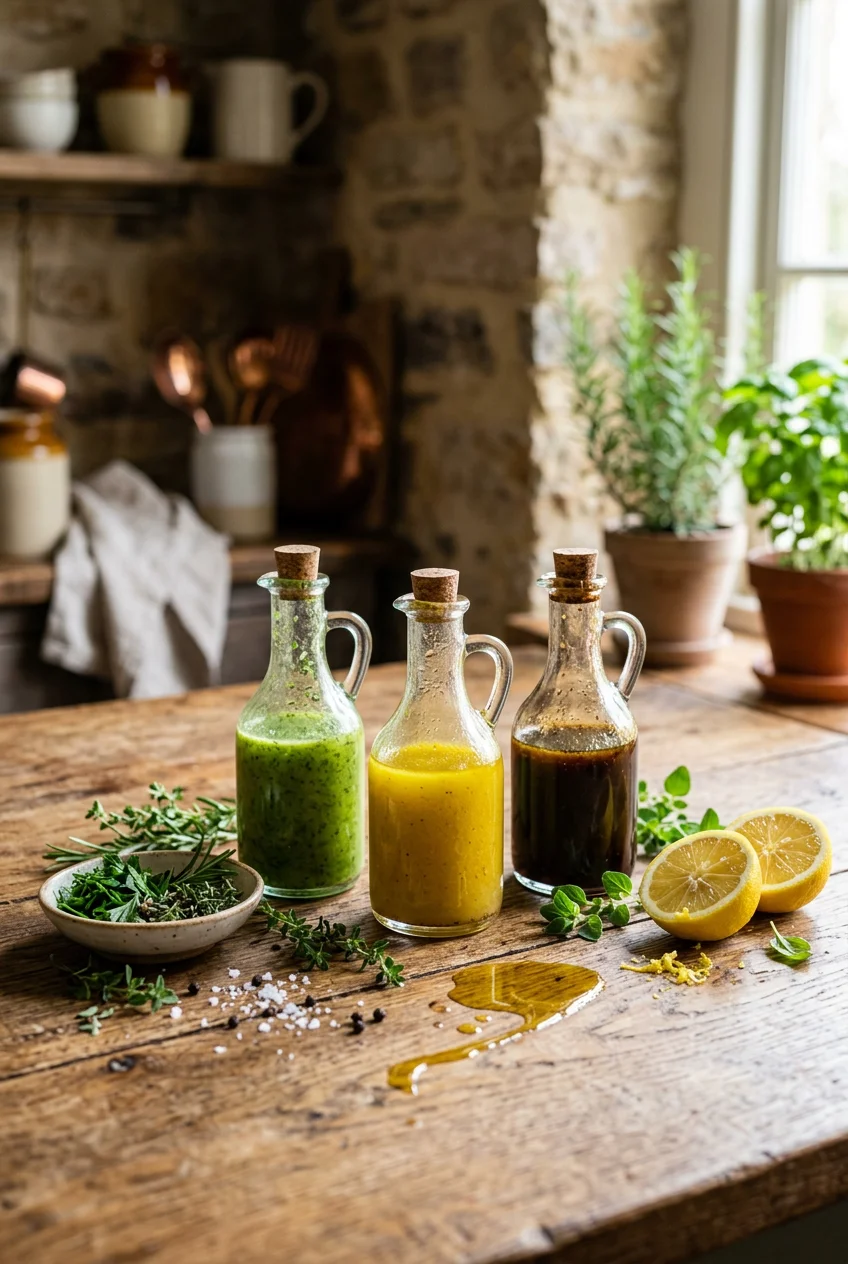
What’s Inside
- High Protein Greek Yogurt Ranch (The Ultimate Salad Dressing Recipes Healthy Swap)
- Zesty Lemon Tahini Cream
- The 3-to-1 Classic Balsamic (Mastering Salad Dressing Recipes Healthy Basics)
- Spicy Avocado Cilantro Lime
- Dijon Maple Apple Cider Vinaigrette
- Nutritional Yeast Cheesy Garlic Dressing
- Creamy Cottage Cheese Peppercorn
- Citrus Zest and Herb Vinaigrette
- Turmeric Ginger Carrot Dressing
- Almond Butter Soy Ginger Dressing
Last Tuesday night I stood in my kitchen chewing on sad, soggy spinach that tasted like wet pennies. I realized right then that finding salad dressing recipes healthy enough to eat daily but tasty enough to crave is hard. The leaves were slimy, the store-bought ranch had separated into a clear oily puddle, and the whole thing smelled like artificial garlic powder. I spent years buying those fat-free chemical cocktails from the grocery store. Skip the fat-free stuff. It tastes like wet cardboard. I finally learned that making your own is the only way to avoid emulsifiers like polysorbate 60 and flavor enhancers like MSG. Store-bought dressings are sneaky. Dietitians say to look for bottles with under 150 calories, less than 2 grams of saturated fat, under 4 grams of added sugar, and below 275 milligrams of sodium per 2-tablespoon serving. Honestly, finding that in a store is exhausting. Making them at home gives you total ingredient control. Plus, homemade versions can be packed with protein. These aren’t your typical boring salads. Let’s fix those sad greens for good.
1. High Protein Greek Yogurt Ranch (The Ultimate Salad Dressing Recipes Healthy Swap)

I used to drown my salads in bottled Hidden Valley Ranch. I’m not proud of it. The guilt always hit halfway through the bowl when I realized I’d just consumed hundreds of empty calories. I tried making a healthy version using just water and dry seasoning packets. It was a watery, depressing disaster that pooled at the bottom of my bowl. Now I rely on Greek yogurt for natural creaminess. It’s a massive upgrade from mayonnaise or sour cream. I grab a 17.6 oz tub of Fage 2% Greek Yogurt from Target for exactly $3.99. It forms the perfect rich, tangy base. You mix 1/2 cup of the yogurt with 1 tablespoon of fresh chopped dill, 1 minced garlic clove, and 1/2 teaspoon of onion powder. Thin it out with 2 tablespoons of unsweetened almond milk. Whisk it up until it looks like real, thick ranch. The texture is incredibly thick and velvety. The smell of fresh dill completely masks the slight tang of the yogurt. Most people get this wrong by using non-fat yogurt. Don’t do that. Non-fat yogurt separates into a watery mess and tastes like chalk. The 2% fat gives you the luxurious mouthfeel you actually want. This dressing packs about 10 grams of protein per serving. It keeps you full for hours. I poured this over chopped romaine and grilled chicken yesterday. It clung to every single leaf perfectly. Just remember to dry your greens first. Dressing wet lettuce is a common mistake. Excess water prevents the dressing from adhering properly and ruins the flavor. Use a salad spinner. Nobody likes a soggy, diluted salad.
2. Zesty Lemon Tahini Cream

Tahini intimidated me for years. I bought a jar, let it sit in the dark back corner of my pantry, and eventually threw it out when it turned into a rock-solid block of sesame cement. I didn’t realize you have to stir it aggressively to keep the oils mixed. Once I figured it out, tahini became my absolute favorite way to achieve creaminess naturally without relying on dairy. I highly recommend Mighty Sesame Co. Organic Tahini. You can get a 10.9 oz squeeze bottle at Whole Foods for about $8.00. The squeeze bottle is brilliant because you don’t have to deal with the messy oil separation in a glass jar. For this dressing, squeeze out 3 tablespoons of tahini into a small ceramic bowl. Add the juice of one large, juicy lemon, 1 minced garlic clove, and 1/4 cup of warm water. The warm water is crucial. If you use cold water, the tahini seizes up immediately and clumps into a weird, stiff paste. Whisk it vigorously with a tiny metal whisk. At first, it looks broken, separated, and totally gross. Keep whisking. Suddenly it turns into this pale, silky sauce. It smells deeply nutty and bright from the citrus. I usually add a pinch of flaky sea salt and 1/4 teaspoon of ground cumin for warmth. This dressing is incredibly filling because of the healthy fats and plant-based protein naturally found in the sesame seeds. I love pouring it over heavily massaged kale and warm roasted chickpeas. It’s so thick and satisfying. You won’t even miss cheese or heavy cream.
3. The 3-to-1 Classic Balsamic (Mastering Salad Dressing Recipes Healthy Basics)

If you don’t know how to make a basic vinaigrette from scratch, you’re missing out on the easiest flavor upgrade ever. I ruined countless salads in my twenties by just eyeballing oil and vinegar directly over the bowl. I ended up with acidic puddles burning my throat and wilting my greens. You have to master the classic vinaigrette ratio. It’s exactly 3 parts oil to 1 part acid. For a perfectly balanced dressing, mix 3 tablespoons of extra virgin olive oil with 1 tablespoon of aged balsamic vinegar. You need to invest in quality healthy fats for this to taste good. Avoid inflammatory refined oils like canola, soybean, or corn oil at all costs. They taste terrible and ruin your health goals. I buy the 365 by Whole Foods Market Organic Extra Virgin Olive Oil. A 16.9 fl oz bottle costs around $7.79. It has a peppery, grassy finish that makes a huge difference on the palate. To make the dressing cohesive, utilize Dijon mustard as a natural emulsifier. Add 1 teaspoon of Trader Joe’s Dijon Mustard. It’s only $1.69 for a 9 oz jar. The mustard completely stops the oil and vinegar from separating into ugly, greasy layers. Add 1 minced garlic clove and a heavy pinch of black pepper. Shake it all up violently in a small glass mason jar. The dark, glossy dressing smells rich and slightly sweet from the balsamic. I drizzle this over fresh spinach, sliced strawberries, and warm grilled steak. It’s simple, elegant, and completely foolproof if you just stick to the golden ratio. You might also like: 20 Beautiful Aesthetic Low Calorie Dinner Ideas That Changed Everything

Downshiftology Healthy Meal Prep: 100+ Make-Ahead Recipes
Downshiftology Healthy Meal Prep: 100+ Make-Ahead Recipes and Quick-As punches above its price. I would buy it again.
4. Spicy Avocado Cilantro Lime

Avocados are notoriously stubborn ingredients to work with. I tried making this dressing last month with an avocado that was slightly underripe and firm. My blender just spat hard, bitter green chunks back at me. It was completely inedible and I had to throw the whole batch in the trash. You absolutely need a soft, overripe avocado for this to work properly. It’s the best way to get a rich, buttery texture without using heavy cream or mayonnaise. Grab one large, squishy avocado and scoop the pale green flesh into a high-speed blender. Add 1/4 cup of fresh cilantro leaves, the juice of two limes, and 1/4 cup of water to get the blades moving. To give it a serious flavor boost, I use a lesser-known kitchen hack. A dash of hot sauce adds a quick, spicy kick without piling on extra calories. I personally swear by Cholula Original Hot Sauce. You can find a 5 oz bottle at Sprouts for exactly $3.48. Add about 1 teaspoon of Cholula and a heavy pinch of sea salt. Blend it on high speed until it’s vibrant neon green and completely smooth. The smell of fresh lime and crushed cilantro is intoxicating. This dressing is incredibly thick. It coats crunchy vegetables beautifully without dripping off. I use it constantly on taco salads loaded with black beans, corn, and lean ground turkey. The healthy fats from the avocado keep your blood sugar stable and keep you full for hours. Just remember to store this in an airtight container with a piece of plastic wrap pressed directly against the surface. Otherwise, it oxidizes and turns a repulsive brown color by the next day. You might also like: 20 Lovely Healthy High Protein Low Calorie Dinner Ideas Worth Trying This Year
5. Dijon Maple Apple Cider Vinaigrette

Apple cider vinegar is aggressive and sharp. I used to take straight shots of it for digestion until it practically burned a hole in my esophagus. Now I strictly use it diluted in dressings. It offers a much lighter, fruitier tang compared to heavy, dark balsamic. You need to sweeten it mindfully and minimally to balance out that harsh acidity. I mix 3 tablespoons of avocado oil with 2 tablespoons of apple cider vinegar in a small bowl. I always use Bragg Organic Raw Apple Cider Vinegar with the mother included. A 16 oz bottle is $4.99 at Kroger. To cut the sharp bite, add exactly 1 teaspoon of pure maple syrup. Add it in small increments, starting with just 1/4 teaspoon, and taste as you go. Over-sweetening ruins the whole batch and makes it taste like dessert. Drop in 1 teaspoon of Grey Poupon Dijon Mustard. An 8 oz jar costs $3.49. The mustard binds the oil and vinegar together perfectly. Shake it violently in a glass jar until it emulsifies. The dressing turns a beautiful, cloudy golden color. The sharp, pungent smell of the vinegar completely mellows out thanks to the earthy maple syrup. This is my absolute go-to dressing for autumn salads loaded with roasted butternut squash, toasted pecans, and grilled chicken breast. The protein from the chicken mixed with this sweet and tangy dressing is incredibly satisfying. I made the mistake once of using cheap pancake syrup instead of real, pure maple syrup. It tasted like artificial plastic and ruined my lunch. Always use the real stuff. You might also like: 20 Beautiful Low Calorie Dinner Ideas to Transform Your Space
6. Nutritional Yeast Cheesy Garlic Dressing

I gave up dairy for a month last year and almost cried because I missed the taste of sharp cheese so much. Then I finally discovered nutritional yeast. It sounds like fish food, but it tastes exactly like aged cheddar. Expect a huge trend in 2026 toward nutrient-enhanced blends just like this one. Nutritional yeast adds a deeply cheesy, savory umami flavor and is packed with essential B vitamins. It’s the absolute perfect ingredient for creamy vegan dressings. I buy Bragg Nutritional Yeast Seasoning. A 4.5 oz shaker is $5.99 at Walmart. To make this high-protein dressing, you need to blend 1/2 cup of soaked raw cashews with 1/4 cup of water, 3 tablespoons of nutritional yeast, 2 minced garlic cloves, and 1 tablespoon of fresh lemon juice. The cashews provide heart-healthy fats and plant protein, while the yeast brings that intense cheese flavor. The blender turns this mixture into a thick, pale yellow sauce that smells exactly like a warm garlic breadstick. I pour this heavily over sturdy greens like romaine hearts or curly kale. It’s so thick you almost have to massage it into the leaves with your hands. A major mistake people make here is not soaking the cashews long enough. If you don’t soak them in boiling water for at least 30 minutes, your dressing will be gritty, sandy, and completely gross. When done right, it’s smoother and richer than any store-bought Caesar dressing I’ve ever tasted.

The Well Plated Cookbook: Fast
If you want something that just works, The Well Plated Cookbook: Fast is a safe bet.
7. Creamy Cottage Cheese Peppercorn

Cottage cheese is having a massive, viral comeback right now, and I’m entirely here for it. I used to hate the lumpy, wet texture. I wouldn’t even touch the stuff as a kid. But blending it completely changes the texture and turns it into a secret weapon. It becomes a velvety, smooth liquid that mimics heavy cream but packs an insane amount of protein. I buy the Good Culture Organic Cottage Cheese from Costco. You get a massive 2-pack of 24 oz tubs for $12.99. It’s honestly the best-tasting brand out there. Scoop 1/2 cup of the cottage cheese into a small food processor. Add 2 tablespoons of unsweetened almond milk, 1 teaspoon of freshly cracked black pepper, and 1/2 teaspoon of garlic powder. Blend it on high until every single curd completely disappears. It usually takes about two full minutes. The result is a stark white, ultra-creamy dressing heavily speckled with black pepper. It smells sharp, spicy, and rich. This dressing easily adds 12 grams of pure protein to your meal without any extra effort. I use it as a healthy, high-protein substitute for heavy blue cheese dressing on crispy wedge salads. It’s thick, decadent, and incredibly filling. Just don’t try to whisk this by hand to save time. I tried mashing it with a fork once when my blender was dirty. I ended up with a lumpy, unappetizing mess that looked like watery cottage cheese soup. You absolutely need a blender or food processor to get that silky texture.
8. Citrus Zest and Herb Vinaigrette

Don’t ever overlook the incredible power of fresh citrus zest. I used to just squeeze a lemon for the juice and throw the rind straight into the trash. That’s a massive waste of flavor. The finely grated zest of half a lemon or orange infuses your vinaigrettes with a vibrant, aromatic brightness. And it does this without adding extra acidic liquid or unnecessary calories. I make a fantastic, bright herb vinaigrette using 3 tablespoons of Pompeian Smooth Extra Virgin Olive Oil. A 16 oz bottle is $8.98 at Walmart. Mix the olive oil with 1 tablespoon of fresh lemon juice and the finely grated zest of one whole lemon. Amplify the flavor profile with fresh aromatics. I chop up 1 tablespoon of fresh parsley and 1 tablespoon of fresh basil leaves. Add 1 minced garlic clove and a pinch of salt. Shake it vigorously in a small glass jar. The smell of the lemon oils releasing from the zest is absolutely incredible. It smells exactly like a warm, sunny summer garden. This dressing is extremely light and refreshing. It won’t weigh down delicate, leafy greens like spicy arugula or soft butter lettuce. I tried making this exact recipe with dried herbs once when I was out of fresh groceries. It was dusty, bland, and completely disappointing. You really need fresh, vibrant herbs for this dressing to pop. I drizzle this heavily over a simple, elegant salad of baby arugula, shaved parmesan cheese, and toasted sliced almonds.
9. Turmeric Ginger Carrot Dressing

You know that bright, glowing orange dressing they serve on those tiny side salads at Japanese steakhouses? I’m completely obsessed with it. I tried buying a bottled version at the grocery store once, but it was loaded with cheap soybean oil and high fructose corn syrup. It made me feel bloated and sluggish all afternoon. I started making my own version at home to get those nutrient-enhanced benefits without the processed junk. I add a heavy pinch of ground turmeric for its powerful anti-inflammatory properties. You need 1 large peeled carrot, 1 inch of fresh peeled ginger root, 2 tablespoons of rice vinegar, and 2 tablespoons of avocado oil. I use Chosen Foods 100% Pure Avocado Oil. An 8.4 oz bottle is $7.99 at Whole Foods. Toss everything into a high-speed blender with 1 tablespoon of water and 1 teaspoon of raw organic honey. Blend it on high until it’s completely smooth and frothy. The color is a blinding, beautiful neon orange. It smells incredibly pungent, spicy, and earthy from the fresh ginger and turmeric. This dressing is absolutely fantastic on a crunchy shredded cabbage and edamame salad. The plant protein from the edamame pairs perfectly with the spicy ginger flavor. Be extremely careful with the turmeric, though. I accidentally spilled a single drop of this dressing on my favorite white linen shirt last month. The bright yellow stain is totally permanent. Turmeric dyes everything it touches, including your fingers and your plastic blender pitcher.

Taste of Home Light & Easy Weeknight Cooking: 307 Healthy
Taste of Home Light & Easy Weeknight Cooking: 307 Healthy Recipes for has been one of the most consistently praised picks in this category.
10. Almond Butter Soy Ginger Dressing

Peanut dressing is great, but almond butter dressing is entirely next level. I used to buy those pre-made Thai peanut salads from the deli section for lunch. They were always soggy by noon and absolutely drowning in hidden sugar. Making a savory almond butter dressing at home gives you a massive dose of healthy fats and protein without the sugar crash. I use Trader Joe’s Creamy Almond Butter. A 16 oz jar is only $5.99. In a small glass bowl, whisk together 3 tablespoons of the sticky almond butter, 1 tablespoon of low-sodium soy sauce, 1 tablespoon of plain rice vinegar, 1 teaspoon of toasted sesame oil, and 1 minced garlic clove. You have to whisk this vigorously. At first, the almond butter clumps up, separates, and looks awful. Keep whisking and add 2 tablespoons of very hot water. The hot water melts the almond butter, instantly turning it into a glossy, thick, pourable sauce. It smells deeply nutty and rich. I pour this over shredded carrots, crisp red bell peppers, and warm shredded chicken breast. It’s a high-protein powerhouse that tastes exactly like expensive takeout. Maximize versatility beyond salads with this one recipe. I use it constantly as a rich marinade for grilled chicken skewers or as a thick dip for fresh cucumber slices. It’s so thick and satisfying. Just make sure you add your dressing right before serving to prevent premature wilting. Nobody wants to eat sad, limp vegetables.
I honestly can’t imagine going back to store-bought dressings after making these. They take less than five minutes to whisk together, and your body will thank you for ditching the preservatives. My absolute favorite right now is the creamy cottage cheese peppercorn. I make a batch every Sunday to keep in the fridge for quick lunches. Try picking just one of these to make this week. Pin this article to your healthy eating boards so you don’t lose these recipes. Your salads will never be boring again.
Frequently Asked Questions
How long do homemade healthy salad dressings last in the fridge?
Most vinaigrettes last up to two weeks in an airtight container. Creamy dressings made with Greek yogurt, avocado, or cottage cheese should be consumed within 4 to 5 days for the best flavor and texture.
What is the best oil for healthy salad dressing recipes?
Extra virgin olive oil and avocado oil are the best choices. They are packed with heart-healthy monounsaturated fats. You should always avoid highly refined, inflammatory oils like canola, soybean, or corn oil.
How can I thicken a homemade salad dressing without adding calories?
Use a small amount of Dijon mustard as a natural emulsifier to bind and thicken vinaigrettes. For creamy dressings, blending in a spoonful of high-protein cottage cheese or Greek yogurt adds thickness without excess fat.
Why does my homemade vinaigrette separate in the fridge?
It is completely normal for oil and vinegar to separate, and olive oil naturally solidifies when cold. Just let the jar sit at room temperature for five minutes and shake it vigorously before serving.
