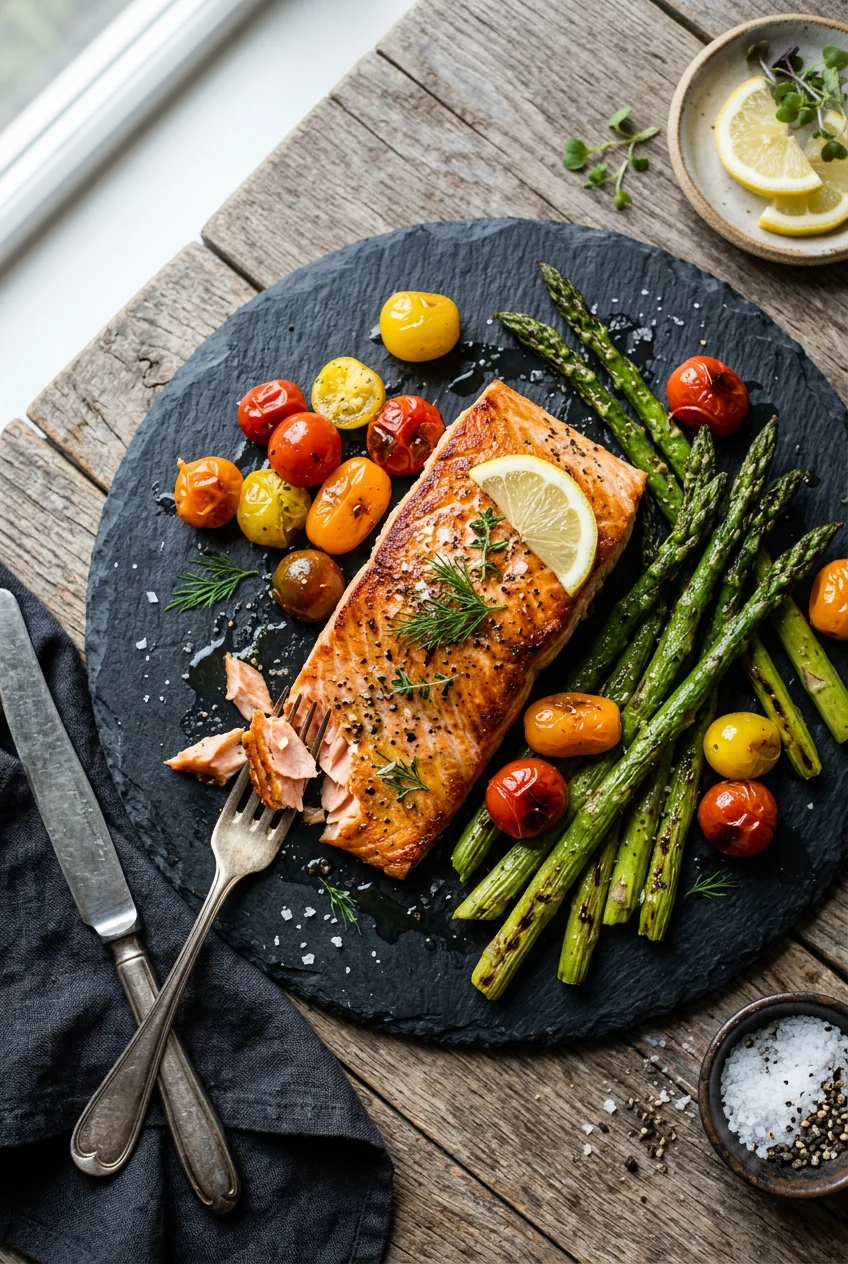
What’s Inside
- The Sheet Pan Fibermaxxing Method
- Crispy Skin Pan-Searing for Quick Salmon Dinner Ideas Healthy
- Gentle Poaching with Vegetable Broth
- The Foolproof Oven Bake Method
- Timing Your Salt and Pepper Perfectly
- Sourcing Wild-Caught for Better Salmon Dinner Ideas Healthy
- Relying on a Meat Thermometer
- Leaving the Skin On and Removing Pin Bones
- Finishing with Simple Olive Oil
Last Tuesday, I filled my kitchen with thick gray smoke and set off the fire alarm while trying to sear a $25 piece of King salmon. Finding reliable salmon dinner ideas healthy enough for your weekly meal prep shouldn’t mean opening every window in your house during a freezing January. I learned the hard way that preparing fish at home is mostly about technique, exact temperature control, and knowing when to leave the fillet alone. I used to buy expensive cuts only to turn them into dry, rubbery blocks that tasted like canned cat food. I’ve ruined dinner parties, destroyed expensive non-stick pans, and spent hours scrubbing burnt skin off baking sheets. You don’t need a culinary degree to make incredible seafood at home. You just need a few specific tools, the right fat, and an understanding of how protein reacts to heat. I’m sharing the methods that finally fixed my Sunday meal prep routine.
1. The Sheet Pan Fibermaxxing Method

The 2026 nutrition trend of ‘fibermaxxing’ is just a clinical term for eating a massive volume of vegetables, but it works perfectly for meal prep. I buy a 3-pound bag of frozen wild Alaskan sockeye salmon at Costco for $34.99. The bag contains vacuum-sealed portions that last me two weeks. I roast a single 6-ounce fillet alongside 1 cup of organic broccoli florets and 1 cup of pre-cut butternut squash. The squash gets caramelized, sweet edges while the broccoli turns crispy at exactly 375 degrees Fahrenheit. I tried crowding all these ingredients onto a tiny, warped baking sheet last month. The vegetables just steamed in their own juices and turned to mush. You need a large 18×13 inch aluminum half-sheet pan to give the ingredients room to roast. I thaw the frozen Costco fillets overnight in the fridge inside a bowl of cold water. This method requires almost zero hands-on time. You just chop the vegetables, toss them with one tablespoon of oil, and set your oven timer for 20 minutes. It’s the most reliable way I’ve found to hit my daily protein and fiber goals without dirtying four different pots. I pack the portions into Pyrex 3-cup glass containers, which cost $22.99 for a set at Target, and they hold up perfectly until Thursday.
2. Crispy Skin Pan-Searing for Quick Salmon Dinner Ideas Healthy

Most home cooks ruin pan-seared fish before the fillet touches the skillet. You have to pat the raw salmon completely dry with heavy-duty paper towels. Any residual moisture creates steam, which prevents the skin from crisping and glues the fish to the pan. I use Chosen Foods 100% Pure Avocado Oil for all my high-heat cooking. I buy the 16.9-ounce glass bottle at Target for $12.99. Avocado oil has a smoke point of 500 degrees Fahrenheit. I used to use standard extra virgin olive oil for searing. My kitchen smelled like burnt tires for three days, and the oil degraded into a smoky mess. You heat one tablespoon of the avocado oil in a 10-inch skillet over medium-high heat until the surface shimmers. Place the dry, 6-ounce fillet skin-side down into the hot oil. It’ll hiss and spit. Leave it alone for 4 to 5 minutes. Don’t poke it. Don’t try to lift the edges to peek. When the fat under the skin renders and crisps, the fish naturally releases from the metal. Flip it carefully with a thin metal fish spatula and cook for another 3 to 4 minutes. The crispy, salty skin provides a crunchy contrast to the soft, buttery flesh. It’s a texture you can’t replicate in an oven. Trust me.
3. Gentle Poaching with Vegetable Broth

Poaching sounds like a technique reserved for expensive French restaurants. It’s actually the most forgiving, foolproof way to cook fish. You simmer the raw fillets in a flavorful liquid, which makes it nearly impossible to dry out the muscle fibers. I use Pacific Foods Organic Low Sodium Vegetable Broth as my base. The 32-ounce carton costs $4.29 at Sprouts. I pour two cups of broth into a wide, shallow 12-inch skillet and add my aromatics. I toss in half a sliced yellow onion, three smashed garlic cloves, two dried bay leaves, and four thin lemon slices. Bring the liquid to a bare, gentle simmer over medium-low heat. No rolling boil. The aggressive bubbles will tear the fragile fish into a mess. Gently lower the 6-ounce fillets into the warm broth and cook undisturbed for about 10 minutes until the center turns a pale, opaque pink. This method requires no added fats. The salmon absorbs the garlic and lemon flavors directly from the broth. I make a large batch on Sunday afternoons. The cold, flaky fish holds its moisture beautifully when tossed into mixed green salads for my office lunches over the next three days. You might also like: 12 Healthy Snacks For Work for Every Budget

KIND Healthy Grains Energy Bars, Pineapple Mango
KIND Healthy Grains Energy Bars has been one of the most consistently praised picks in this category. 287 reviewers averaged 4.5/5.
4. The Foolproof Oven Bake Method

Baking is the standard approach for simple salmon dinner ideas healthy enough for daily rotation. You need high-quality parchment paper to make this work. I use Reynolds Kitchens Parchment Paper. A 50-square-foot roll is $4.49 at Walmart. I tried baking marinated fish directly on aluminum foil once. Half the fillet fused to the foil, and I spent twenty minutes scrubbing the sheet with steel wool. Line your baking pan with parchment. Place your 6-ounce fillets skin-side down. Bake at 400 degrees Fahrenheit for 12 to 14 minutes. If you’re cooking a 2-pound side of salmon for a family dinner, drop the oven to 375 degrees Fahrenheit and bake for 15 to 20 minutes. You know the fish is cooking properly when you see tiny, thin lines of white protein, called albumin, pushing out from the sides. If you see thick pools of white albumin covering the top, your oven is too hot and the fish is squeezing out its moisture. The parchment paper catches all the rendered fat. You just crumple the paper and throw it away for a ten-second cleanup. You might also like: 9 Spinach Salad Recipes That Actually Work
5. Timing Your Salt and Pepper Perfectly

I used to season my meal prep proteins hours before cooking. This is a massive mistake with delicate seafood. Salt draws internal moisture out of the raw flesh through osmosis. If you heavily salt fillets and let them sit for thirty minutes, you’ll see a puddle of cloudy water form on the cutting board. When you cook that dehydrated fish, the texture turns dense, dry, and rubbery. I keep a grinder of McCormick Sea Salt and Black Peppercorns next to my stove. The 2.39-ounce glass grinder is $5.99 at Kroger. I grind the salt and pepper onto the raw flesh exactly three seconds before the fish hits the oven or pan. This timing preserves the internal moisture while seasoning the exterior. You only need a quarter teaspoon of coarse sea salt for a 6-ounce fillet. The large grains provide bursts of salinity without overwhelming the buttery flavor. Skip the sugary spice rubs when you’re just starting. Master the basic salt and pepper application first. You might also like: 9 Shrimp Salad Recipes You Need to See
6. Sourcing Wild-Caught for Better Salmon Dinner Ideas Healthy

The glass seafood counter at a grocery store can be intimidating. I usually stand there staring at the ice, trying to decode the labels. You want to prioritize sustainable, wild-caught salmon for the best nutritional profile and cleanest flavor. Wild Alaskan varieties like Sockeye or Coho have richer omega-3 content because of their natural diet. I shop at the Whole Foods seafood counter for my fresh weekend cuts. Fresh wild Sockeye typically runs about $9.99 per pound, while the massive, fatty King salmon can cost over $25.99 per pound. Look for the blue Marine Stewardship Council (MSC) or the green Aquaculture Stewardship Council (ASC) certification logos. These mean the fish was sourced responsibly. Cheap, farm-raised Atlantic salmon is widely available, but it often looks pale, artificially dyed, and feels mushy. True wild Sockeye has a deep, vibrant ruby-red color and a firmer muscle texture. The visual difference is obvious once you see them side by side. Wild-caught fillets have less fat marbling, so they cook faster. Watch them closely in the pan to prevent drying out.

Floura Raspberry Rose Fruit-Forward Fiber Bars– High Fiber
Floura Raspberry Rose Fruit-Forward Fiber Bars– High Fiber has been one of the most consistently praised picks in this category. 14 reviewers averaged 4.5/5.
7. Relying on a Meat Thermometer

Guessing when fish is done by poking it with your finger is a terrible strategy. I ruined a summer dinner party last year by serving thick salmon fillets that were cold in the center but burnt black on the edges. You need a fast, accurate digital meat thermometer. The FDA states that salmon is safe at 145 degrees Fahrenheit. If you cook a wild-caught fillet to 145 degrees, it flakes like dry sawdust. Most professional chefs recommend removing the fish from the heat when the thickest part reaches 125 to 130 degrees Fahrenheit for a medium-rare center. I pull my fillets from the oven at 128 degrees. Place the hot fish on a ceramic plate and let it rest for 5 minutes. The residual heat continues to cook the center, bringing the temperature up a few degrees. This resting period allows the juices to redistribute instead of leaking out onto your cutting board. A basic Taylor waterproof digital thermometer costs about $14.99 at Target. It’s the cheapest insurance policy against ruined dinners.
8. Leaving the Skin On and Removing Pin Bones

Many home cooks ask the fishmonger to slice the skin off. Leave the skin on. It acts as a protective barrier between the delicate flesh and the intense heat of your pan or sheet. It prevents the bottom half of the fillet from turning into a hard crust. You don’t have to eat the skin if you don’t want to, but you should use it as a tool. Before you apply heat, check the raw flesh for pin bones. These are tiny, sharp white bones left behind during the filleting process. Run your index finger down the raised center line of the fillet. You’ll feel the sharp tips. I keep a pair of stainless steel kitchen tweezers in my drawer just for this. I bought them in the Target kitchen aisle for $8.99. Grip the exposed tip and pull it out slowly at a 45-degree angle, following the direction of the bone. If you yank it straight up, you’ll tear a hole in the flesh. Finding a bone in your first bite ruins the meal. It takes thirty seconds to check.
9. Finishing with Simple Olive Oil

You don’t need heavy cream sauces or sugary teriyaki glazes to make fish taste incredible. I finish my plated salmon with a light drizzle of high-quality extra virgin olive oil. I use California Olive Ranch for finishing. I buy the 16.9-ounce bottle at Trader Joe’s for $14.49. This oil has grassy and peppery notes that cut through the richness of the fish. I pour one teaspoon of oil over the cooked fillet right before I carry the plate to the table. Squeeze half a fresh, seedless lemon over the top. The acid instantly brightens the flavor profile and balances the fat. I tried making a maple-mustard glaze last month. The sugar burned to the bottom of my baking sheet, filling the kitchen with smoke, and the mustard masked the delicate taste of the wild-caught fish. Simple finishing ingredients let the natural, ocean flavor stand out. The combination of warm, flaky fish, peppery olive oil, and sharp lemon juice creates a perfect balance. No exaggeration. I eat salmon at least twice a week using these methods. The sheet pan and high-heat searing techniques fixed my chaotic Sunday meal prep. You don’t need fancy knife skills or copper pans to make these healthy ideas work. Just buy a digital thermometer, dry your fish properly with paper towels, and stop overcooking it. Save this guide to your Pinterest board for the next time you’re staring at a raw fillet, wondering what to do.

Gordon Ramsay’s Healthy
Gordon Ramsay’s Healthy has been one of the most consistently praised picks in this category.
Frequently Asked Questions
How long does cooked salmon last in the fridge for meal prep?
Store cooked salmon in airtight glass containers for up to three days. I rely on Pyrex glass bowls to keep the fish fresh. Reheat it gently in the microwave at 50 percent power to prevent the flesh from drying out and smelling up your office.
Why is my baked salmon always dry and rubbery?
You’re likely overcooking it or salting it too early. Use a digital thermometer and pull the fish from the oven at 128 degrees Fahrenheit. Let it rest for five minutes. Always apply your sea salt right before cooking so it doesn’t draw out the internal moisture.
Do I have to eat the salmon skin?
You don’t have to eat the skin, but you definitely need to cook with it. The skin acts as a natural heat barrier, protecting the delicate flesh from the hot pan. If you pan-sear it properly in avocado oil, the crispy texture is actually delicious.
What is the healthiest way to cook salmon fillets?
Poaching in vegetable broth or baking on parchment paper are the healthiest methods because they require zero added fats. Pan-searing is also excellent if you use a high-quality, high-smoke-point fat like pure avocado oil. Avoid deep frying or using heavy cream-based glazes.
