What’s Inside
- Eat the Whole Egg for Actual Nutrients
- Boost Your Omega-3s Without Trying Hard
- Cook With Avocado Oil for High Heat
- Extra Virgin Olive Oil for Low and Slow Healthy Breakfast Eggs
- Skip the Coconut Oil Hype for Daily Eggs
- Master the Low-to-Medium Heat Technique
- Never Salt Your Scramble Before Cooking
- Add Fermented Foods for Gut Health
- Pair With High-Fiber Sprouted Grains
- Fold in One Cup of Fresh Vegetables
- The Secret to Perfect Fried Healthy Breakfast Eggs
Last Tuesday at Whole Foods, I watched a woman grab three cartons of liquid egg whites and a tub of fat-free cheese. I wanted to tap her shoulder and tell her she’s missing out on the best parts of healthy breakfast eggs. I didn’t say anything, but it reminded me of my own miserable diet phase in 2016. I ate rubbery egg whites every single morning for six months. They tasted like wet cardboard. I choked them down thinking I was making the smart choice for my body. I was completely wrong.
Creating healthy breakfast eggs isn’t about stripping away the fat or using non-stick sprays that smell like aerosol chemicals. It’s about using the right ingredients, controlling your pan temperature, and understanding how fat and protein actually work together. I ruined a lot of non-stick pans and ate a lot of watery scrambles before I figured out the mechanics of a proper morning meal. Learned that the hard way. Today, I’m sharing the exact methods, temperatures, and specific grocery store brands I use to make eggs that actually taste good and keep you full past 10 AM. Let’s fix your morning routine.
1. Eat the Whole Egg for Actual Nutrients

For years, I threw the yolks down the garbage disposal. I thought I was saving calories. Instead, I was throwing away 90% of the egg’s nutritional value. The yolk contains almost all the essential vitamins, including D, A, E, K, and B12. It also holds about 169mg of choline, which your brain needs to function properly. Egg whites give you about 3.6g of protein per white, but they lack the fat-soluble vitamins required to actually absorb those nutrients.
I switched to whole eggs after reading a clinical nutrition study in 2018, and my mid-morning energy crashes stopped entirely within a week. I buy Vital Farms Pasture-Raised Eggs. They cost $6.99 for a dozen at Whole Foods. The yolks are a deep, vibrant orange, not the pale yellow you see in standard conventional eggs. The shells are thick and require a solid crack against the counter. When you cook them, the rich fat from the yolk creates a creamy texture that egg whites simply can’t replicate. Stop fearing the yolk. The healthy fats keep your blood sugar stable, meaning you won’t be digging through your pantry for a snack two hours after breakfast. Trust me on this.
2. Boost Your Omega-3s Without Trying Hard

If you aren’t eating wild-caught salmon twice a week, you’re likely falling short on your omega-3 fatty acids. I certainly was. I hate the smell of cooking fish in my house, so I had to find another way to hit my recommended daily intake of 500-900 mg of EPA and DHA. That’s when I started looking at enriched eggs. Hens fed a diet rich in flaxseed produce eggs with significantly higher omega-3 profiles.
I buy Eggland’s Best Omega-3 eggs. They run $4.49 for a dozen at Kroger. I’ve also used Naturegg Break-Free Omega 3 liquid eggs when I’m in a rush. A standard 50-ml serving of the liquid version delivers 250 mg of EPA and DHA. That covers half your daily requirement before you’ve even poured your coffee. I usually scramble three of the Eggland’s Best eggs in a small bowl with a fork until the mixture is uniform. The texture is identical to standard eggs, and there is absolutely no fishy aftertaste. It’s a pragmatic way to support heart health without adding another supplement pill to your morning routine. I’ve relied on this specific brand for three years because the quality remains consistent carton after carton.
3. Cook With Avocado Oil for High Heat

Most people ruin their healthy breakfast eggs before the liquid even hits the pan. If you’re frying an egg with standard vegetable oil or cheap canola oil, you’re introducing highly refined, inflammatory fats into your meal. Worse, if you use a low-smoke point oil and crank the stove to high, you burn the oil. Burnt oil tastes bitter and fills your kitchen with acrid smoke. I learned this the hard way when I set off my apartment fire alarm in 2019 trying to fry an egg in unrefined flax oil.
Now, I strictly use avocado oil for frying. It has a massive smoke point of 500°F for the refined versions, meaning it stays stable even when you need a hot pan for crispy edges. I purchase Chosen Foods 100% Pure Avocado Oil. It costs $12.99 for a 16.9 oz bottle at Costco. I pour exactly 1 tablespoon into my hot cast iron skillet. The oil is a pale green color and has a completely neutral scent. When I drop the egg in, the edges immediately sizzle and crisp up, but the oil doesn’t smoke or degrade. It provides a clean, neutral base that lets the flavor of the egg stand out, while adding a dose of heart-healthy monounsaturated fats to my plate. You might also like: 15 Inspiring Aesthetic Healthy Snack Ideas to Steal Right Now
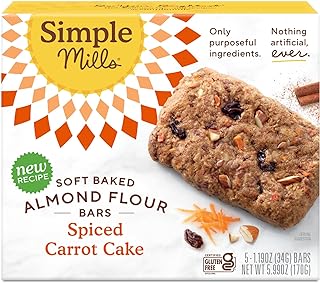
Simple Mills Almond Flour Snack Bars, Spiced Carrot Cake
If you want something that just works, Simple Mills Almond Flour Snack Bars is a safe bet (546 reviews, 4.5 stars).
4. Extra Virgin Olive Oil for Low and Slow Healthy Breakfast Eggs

While avocado oil is my choice for high-heat frying, extra virgin olive oil is my default for a low-and-slow scramble. Extra virgin olive oil is packed with antioxidants, but its smoke point sits lower, usually between 375-410°F. If you try to hard-fry an egg in it, the oil turns bitter. But if you keep the heat low, the oil imparts a rich, slightly grassy flavor that pairs perfectly with eggs. You might also like: 12 Healthy Snacks For Weight Losing Worth Trying
I keep a bottle of California Olive Ranch Extra Virgin Olive Oil on my counter. It’s $11.49 for a 16.9 oz bottle at Target. For a soft scramble, I heat 1 tablespoon of the olive oil in a non-stick skillet over medium-low heat. I pour in three beaten eggs and immediately turn the heat down to low. I use a silicone spatula to gently push the curds from the outside edge toward the center. The olive oil coats the curds, making them incredibly soft and rich. I’ve noticed my digestion is significantly better on mornings I use olive oil compared to heavy cream or massive amounts of butter. The subtle peppery finish of the California Olive Ranch oil cuts through the richness of the yolks beautifully. You might also like: 20 Beautiful Aesthetic Low Calorie Dinner Ideas That Changed Everything
5. Skip the Coconut Oil Hype for Daily Eggs

Around 2017, the wellness industry decided we should cook absolutely everything in coconut oil. I bought a massive tub and started frying my morning eggs in it. It was a terrible culinary decision. Not only did my savory breakfast taste like a tropical sunscreen, but I was also ignoring the actual nutritional profile of the oil. While virgin coconut oil contains some beneficial MCTs, it is incredibly high in lauric acid and saturated fat, which can raise LDL cholesterol if consumed in massive quantities daily.
I still keep Nutiva Virgin Coconut Oil in my pantry. I buy the 14 oz jar for $9.99 at Sprouts, but I restrict it to baking muffins or making stovetop popcorn. I don’t use it for eggs anymore. The sweet, heavy flavor profile clashes violently with savory ingredients like black pepper and hot sauce. Furthermore, coconut oil solidifies at room temperature. If you eat your eggs slowly, the residual oil on the plate turns into a waxy, unappetizing white film. Stick to avocado or olive oil for your morning scramble. Save the coconut oil for your baked goods.
6. Master the Low-to-Medium Heat Technique

The most common mistake home cooks make with eggs is impatience. Cranking the burner to high heat forces the proteins in the egg to tighten rapidly. This squeezes out all the internal moisture, leaving you with a tough, rubbery sponge sitting on your plate. I used to do this every morning before work, rushing to get out the door. My eggs were always dry and slightly brown on the bottom.
The correct technique requires a bit of patience. You must preheat your pan properly. I place my skillet on medium heat for two minutes. I add 1/2 teaspoon of Kerrygold Pure Irish Butter, which costs $4.29 for an 8 oz block at Walmart. Once the butter melts and the foaming subsides, I pour in the eggs and immediately drop the heat to low. Adding eggs to a cold pan causes them to stick aggressively, even on non-stick surfaces. Adding them to a pan that’s too hot instantly sears them into leather. By preheating on medium and cooking on low, you maintain total control. The curds form slowly, retaining their moisture, resulting in a tender texture that doesn’t require a liter of water to wash down.

Gordon Ramsay’s Healthy
If you want something that just works, Gordon Ramsay’s Healthy is a safe bet.
7. Never Salt Your Scramble Before Cooking

If you’ve ever plated your scrambled eggs only to find a puddle of yellow water forming underneath them two minutes later, you salted them too early. I did this for years. I’d crack my eggs into a bowl, dump in a heavy pinch of salt, whisk them aggressively, and let them sit on the counter while I toasted bread. The salt chemically breaks down the eggs and draws the moisture out of the proteins before they even hit the heat.
Now, I strictly season post-cooking. I use Redmond Real Salt, which I pick up for $8.49 (10 oz pouch) at Whole Foods. I cook my scramble completely, remove the pan from the burner, and sprinkle 1/8 teaspoon of the coarse salt over the eggs right before sliding them onto my plate. The residual heat slightly melts the salt crystals, giving you a perfect savory bite without compromising the physical structure of the curds. Your eggs stay fluffy and the plate stays completely dry. It’s a minor mechanical adjustment in your prep routine, but it completely fixes the watery egg problem.
8. Add Fermented Foods for Gut Health

Eating plain eggs every day gets monotonous. Last year, I started incorporating fermented foods into my morning routine to support my gut microbiome. Raw, live fermented foods contain probiotics that help digestion. I initially tried eating a side of plain yogurt, but the flavor combination with hot eggs was jarring. Then I tried sauerkraut.
I buy Wildbrine Raw Green Kraut. It’s $7.99 for a large 18 oz jar at Costco. After my eggs are cooked and plated, I take 2 tablespoons of the cold kraut straight from the fridge and pile it next to the warm scramble. I don’t cook the kraut, because applying high heat kills the beneficial live bacteria. The sharp, vinegary crunch of the cold cabbage perfectly balances the soft, warm richness of the eggs. It adds texture, acidity, and a massive dose of probiotics to a meal that otherwise lacks complex carbohydrates. If you find standard eggs too heavy or rich in the morning, the acidity of a good raw kraut acts as the perfect palate cleanser between bites.
9. Pair With High-Fiber Sprouted Grains

Eggs alone won’t keep you full if you have an active morning. You need complex carbohydrates and fiber to provide sustained energy. For a long time, I ate my eggs completely bare, trying to avoid carbs. I’d be starving by 9:30 AM and usually ended up eating a stale office donut. You need a high-quality vehicle for your eggs.
I rely on Dave’s Killer Bread Organic Thin-Sliced Powerseed. A 20.5 oz loaf is $6.29 at Trader Joe’s. Each slice is only 70 calories but delivers 3g of protein and 2g of dietary fiber. Sometimes I just toast two slices and serve my scramble on top. Other days, I make an “Egg-in-a-Hole.” I take a small biscuit cutter, punch a 2-inch hole in the center of the bread, place the slice in a buttered skillet, and crack a whole egg directly into the center. I cook it on medium heat for three minutes, flip it once, and let the yolk set slightly. It creates a compact, balanced meal with crunchy edges and a soft center. The dense seeds in the bread provide a necessary textural contrast to the soft egg.

Veratify Healthy Mixed Snack Box (66 Count) Snacks Gift
If you want something that just works, Veratify Healthy Mixed Snack Box (66 Count) Snacks Gift Basket Granola is a safe bet (72 reviews, 4.5 stars).
10. Fold in One Cup of Fresh Vegetables

Omelets are the easiest way to consume a massive volume of vegetables before noon. However, if you throw raw vegetables directly into raw eggs, you’ll ruin the dish. Vegetables like mushrooms and zucchini are packed with water. As they cook inside the omelet, they steam and release that water, turning your breakfast into a soggy mess. I ruined countless omelets in my early twenties by stuffing them with raw bell peppers. No exaggeration.
You must cook the water out of your vegetables first. I buy Organic Girl Baby Spinach, which is $4.99 for a 5 oz tub at Sprouts. I take 1 packed cup of spinach and a handful of sliced cremini mushrooms. I sauté them in my skillet with a tiny drop of olive oil for about four minutes until the mushrooms brown and the spinach wilts down to almost nothing. Only then do I pour my beaten eggs over the top. The eggs bind the dry, cooked vegetables together perfectly. This method adds significant volume, fiber, and micronutrients to your plate without adding more than 20 calories. It turns a light snack into a structurally sound meal.
11. The Secret to Perfect Fried Healthy Breakfast Eggs

Frying an egg straight out of a 36°F refrigerator is a recipe for uneven cooking. The bottom of the white sears and turns tough while the yolk remains ice cold and raw. I learned a trick from watching Chef Robert Irvine: let your eggs sit on the counter for 15 minutes to reach room temperature before they hit the pan. This simple step ensures the white and the yolk cook at a much more even rate, preventing the edges from burning before the center sets.
Once my room-temperature egg is perfectly fried with crispy edges and a runny yolk, I finish it with acidity. Rich yolks demand a sharp contrast. I keep a bottle of Cholula Original Hot Sauce on my table. It costs $3.89 for a 5 oz bottle at Walmart. I add exactly 3 to 4 dashes over the yolk. Because Cholula is vinegar-based, it cuts through the heavy fat of the yolk and the avocado oil I used for frying. It provides a tangy, peppery heat that doesn’t overpower the natural flavor of the egg. It’s the final, necessary step for creating healthy breakfast eggs that you’ll actually look forward to eating every single morning.
Stop settling for dry, flavorless morning meals. By upgrading your ingredients and respecting the temperature of your pan, you can entirely change your morning routine. Try the avocado oil method tomorrow morning, and see how much better your skillet performs. Pin this guide so you have the specific grocery list handy next time you’re navigating the egg aisle.
Frequently Asked Questions
Are healthy breakfast eggs better cooked with butter or oil?
It depends on your heat level. I use avocado oil for high-heat frying because it has a 500F smoke point. For a low-heat scramble, a small amount of butter or extra virgin olive oil works perfectly.
Should I eat the yolk for healthy breakfast eggs?
Yes. The yolk contains 90% of the egg’s vitamins, including D, A, E, K, and B12, plus 169mg of essential choline. Skipping the yolk means you miss out on the most nutrient-dense part of the meal.
Why are my scrambled eggs always watery?
You’re probably salting them too early. Salt draws moisture out of the curds while they cook. Cook your eggs completely, remove them from the heat, and add a pinch of salt right before eating.
What is the best pan temperature for healthy breakfast eggs?
Low to medium heat is best for a tender texture. High heat causes the proteins to tighten too quickly, resulting in tough, rubbery eggs. Always preheat your pan before adding the liquid.
