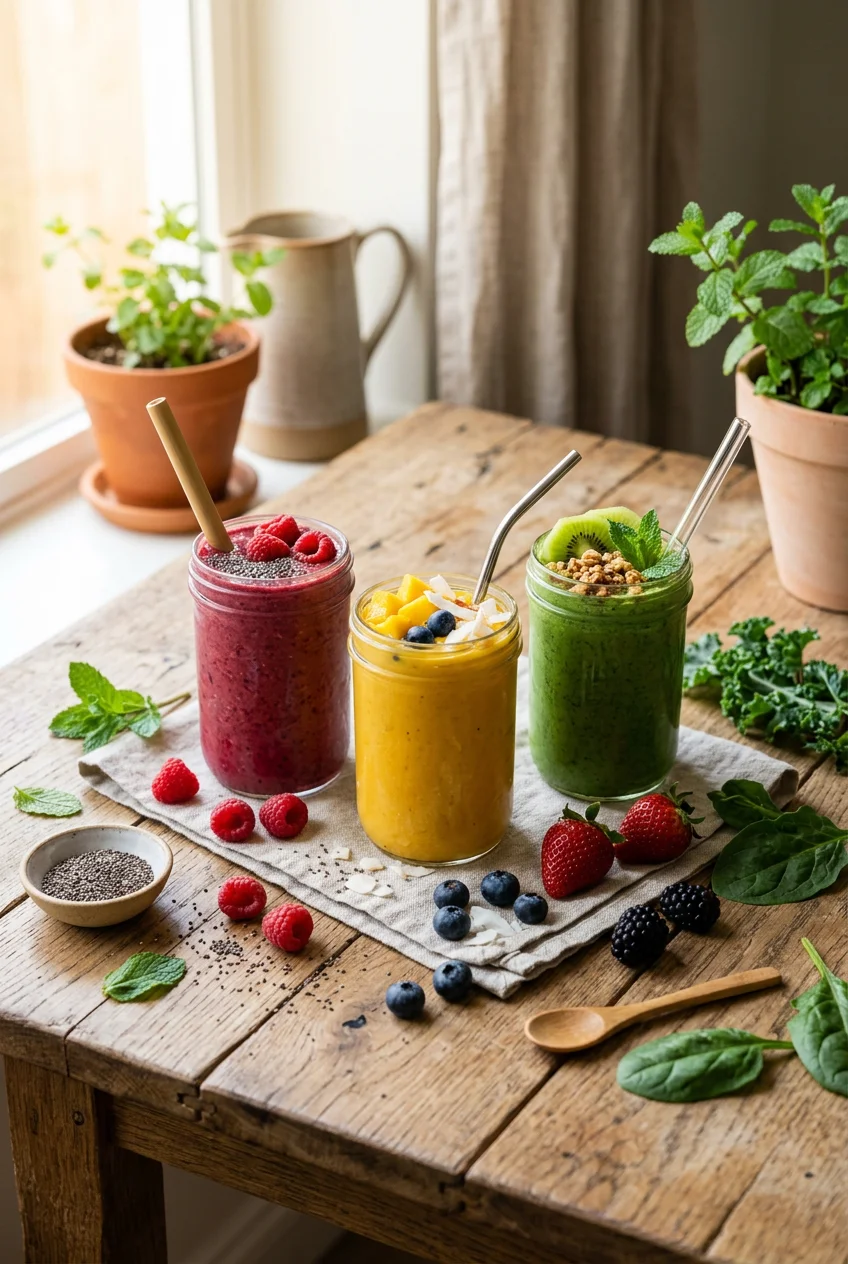
What’s Inside
- The Macro-Balanced Foundation
- Low-Glycemic Berry Blend
- The Spinach and Baby Kale Stealth Tactic
- Unsweetened Liquid Bases for Healthy Breakfast Smoothies
- Clean Protein Powders That Blend Smoothly
- Healthy Fats from Avocado and Nut Butters
- Thickening with Chia and Ground Flaxseed
- Frozen Cauliflower for Creaminess
- Pre-Portioned Freezer Packs for Quick Mornings
- High-Performance Blending for Healthy Breakfast Smoothies
- Avoiding the Over-Sweetening Trap
Last Tuesday at Sprouts, I watched a woman buy a pre-made green drink that cost $9 and contained 45 grams of sugar. It reminded me of my own early attempts at making healthy breakfast smoothies. Back in 2018, I drank a daily blend of orange juice, two bananas, and sweetened vanilla yogurt. I thought I was doing my body a huge favor. Instead, my blood sugar spiked so hard I had the physical shakes by 10 a.m. and felt absolutely starving by 11. Most people get this wrong. We treat blended drinks like milkshakes disguised as health food. True healthy breakfast smoothies require a very specific formula of fat, fiber, and protein to keep you full without causing an energy crash. I’ve spent the last four years as a clinical nutritionist testing exact ratios to figure out what actually works, without making your morning drink taste like wet grass or chalk. If you’re tired of feeling hungry two hours after you eat, it’s time to fix your formula. Let’s break down the exact ingredients, measurements, and methods you need to build a proper morning meal.
1. The Macro-Balanced Foundation

Crafting a proper morning meal starts with a strict macronutrient profile. You can’t just throw random fruit into a pitcher and expect sustained energy. Every single time I build a recipe, I ensure it contains a specific balance of protein, healthy fats, and fiber. This triad is what promotes satiety and keeps your blood sugar completely stable. Registered dietitians look for this exact balance because it slows down gastric emptying, meaning the food stays in your stomach longer. This keeps you full for three to four hours and prevents that mid-morning energy crash. I learned this the hard way after a client showed me her food log. She was blending pure pineapple and coconut water, then wondering why she felt dizzy before her morning meetings. For a clean, reliable protein source that hits these macros, I use Garden of Life Sport Plant-Based Protein. A 20oz tub costs $41 at Whole Foods. The vanilla flavor blends smoothly without that gritty, dirt-like texture you get from cheaper pea proteins. I use exactly one level scoop. If you skip the protein and fat, you’re just drinking a glass of fast-digesting carbohydrates. Trust me on this.
2. Low-Glycemic Berry Blend

While fruit provides essential vitamins, too much of it will completely ruin your blood sugar curve. You have to mind your fruit intake carefully. Limit your total fruit to exactly 1/2 to 1 cup per serving. I completely avoid high-sugar tropical fruits like mango and pineapple for daily meals. Instead, prioritize low-glycemic options like berries. The tartness of raspberries and blackberries balances out the sweetness of your protein powder perfectly. I buy the 4 lb bag of Kirkland Signature frozen mixed berries for $10.99 at Costco. Using exactly 1/2 cup of these frozen berries gives you the antioxidant benefits and a deep purple color without a massive fructose load. I tried making a tropical blend last year with a whole banana, a cup of mango, and orange juice. It tasted like a vacation, but I was ravenously hungry exactly ninety minutes later. Stick to berries. The tiny seeds in raspberries also add a slight crunch that makes the texture much more interesting than a flat, purely liquid drink.
3. The Spinach and Baby Kale Stealth Tactic

You need to sneak in leafy greens, but you have to do it correctly so you don’t end up chewing your drink. Incorporate 1 to 2 cups of mild-flavored greens like fresh spinach or baby kale. They are rich in vitamins and minerals, and their earthy taste is easily masked by your other ingredients. I buy Trader Joe’s organic baby spinach. It costs $2.99 for a 6 oz bag. Here is the critical mistake most people make: they throw everything in the pitcher at once. If you do this, you get tiny, chewy green flakes stuck in your teeth. I tried this wrong for months before figuring it out. You must blend your greens with your liquid base first. Run the machine on high for thirty seconds until the liquid turns completely bright green with zero visible leaf fragments. Only then should you add your protein, ice, and fruit. Baby spinach is much better for beginners than mature kale, which has a very bitter, peppery bite that requires a lot of sweetness to cover up. You might also like: 9 Shrimp Salad Recipes You Need to See
Simple Mills Almond Flour Snack Bars, Spiced Carrot Cake
Honestly, Simple Mills Almond Flour Snack Bars surprised me — sturdier than it looks in the photos, and over 546 buyers gave it 4.5 stars.
4. Unsweetened Liquid Bases for Healthy Breakfast Smoothies

Your choice of liquid dictates the entire nutritional profile of your meal. You must avoid fruit juices entirely. Apple juice and orange juice are essentially just flavored sugar water with the fiber stripped out. Instead, choose exactly 1 cup of an unsweetened base. I use Califia Farms Unsweetened Almond Milk, which costs $4.29 per half-gallon at Target. It has a slightly nutty flavor and a creamy texture that tap water just doesn’t provide. If you use plain water, your drink will separate after ten minutes, leaving a frothy foam on top and a weird, clear liquid at the bottom. I’ve also tried oat milk, but you have to read the labels carefully because many commercial oat milks are packed with added oils and natural sugars that spike your glucose levels. Stick to unsweetened almond or coconut milk. The almond milk provides a neutral canvas that lets the flavor of your berries and protein powder stand out, rather than competing with a sugary juice base. You might also like: 12 Quick Dinner Ideas Healthy for Every Budget
5. Clean Protein Powders That Blend Smoothly

Adding 1 to 2 scoops of a high-quality protein powder is non-negotiable for muscle repair and satiety. You want a powder that provides 20 to 25 grams of protein per serving. The market is flooded with garbage powders full of artificial sweeteners that leave a terrible, metallic chemical aftertaste in your mouth. For a clean whey option, Naked Whey is excellent. It costs $27 for a 1lb container at Walmart. It has exactly one ingredient: grass-fed whey protein. It doesn’t foam up excessively when blended, which is a huge problem I’ve had with cheaper whey isolates that turn your drink into a giant cup of air. When you drink a foam-heavy blend, it causes severe bloating and trapped gas. Naked Whey dissolves completely, leaving a smooth, milky consistency. If you’re dairy-free, stick to the Garden of Life option I mentioned earlier. Just remember to measure your powder precisely. Eyeballing a scoop often leads to using too much, which makes the final result thick, chalky, and impossible to drink through a standard straw. You might also like: 15 Clever Aesthetic Healthy Lunch Ideas to Inspire Your Next Project
6. Healthy Fats from Avocado and Nut Butters

Skip the fat-free stuff. It tastes like wet cardboard. You must integrate healthy fats to aid in nutrient absorption, especially for fat-soluble vitamins like A and K found in your spinach. Include 1/4 to 1/2 of a fresh avocado, or exactly 1 tablespoon of a natural nut butter. I use Smucker’s Natural Peanut Butter, which runs $3.49 for a 16 oz jar at Kroger. The only ingredients should be peanuts and salt. If you see palm oil or added sugar on the label, put it back on the shelf. Adding avocado creates a dense, pudding-like creaminess that mimics ice cream. I was highly skeptical of putting avocado in a sweet drink until I tried it. The flavor is completely neutral, but the texture shift is incredible. Be careful with portion sizes, though. I once scooped a massive dollop of peanut butter into my morning cup without measuring. While it tasted amazing, the fat content was so high it made me feel sluggish and heavy for the rest of the morning. Measure your fats.

Veratify Healthy Mixed Snack Box (66 Count) Snacks Gift
A dependable everyday pick — Veratify Healthy Mixed Snack Box (66 Count) Snacks Gift Basket Granola pulls in 72 ratings at 4.5 stars. Not flashy, just solid.
7. Thickening with Chia and Ground Flaxseed

To hit your daily fiber goals, you need to add seeds. Add exactly 1 to 2 tablespoons of chia seeds or ground flaxseed. These tiny powerhouses provide about 5 grams of fiber per tablespoon, along with crucial omega-3 fatty acids. They also act as a natural thickening agent. I buy Bob’s Red Mill Ground Flaxseed for $4.69 for a 16 oz bag at Sprouts. You must buy it ground, or grind it yourself. Whole flaxseeds will pass straight through your digestive tract completely intact, meaning you absorb zero nutrients from them. Chia seeds, on the other hand, form a gel-like matrix when they absorb liquid. Pro tip: if you use whole chia seeds, let the finished drink sit on the counter for exactly five minutes before drinking it. I used to chug mine immediately, and the dry chia seeds would get stuck in my throat and teeth. Giving them a few minutes to hydrate makes the texture much smoother and easier to swallow.
8. Frozen Cauliflower for Creaminess

This sounds absolutely terrible until you try it, but you need to use frozen produce for texture. Using frozen fruits and vegetables helps you achieve a thick, cold consistency without diluting the flavor with plain ice cubes. Ice just waters everything down as it melts. Instead, use exactly 1/2 cup of frozen cauliflower florets. I buy the 365 Everyday Value frozen cauliflower florets for $2.49 for a 16 oz bag at Whole Foods. Frozen cauliflower is a brilliant addition that adds serious creaminess and bulk without altering the taste or adding any sugar. You won’t taste it at all, I promise. I refused to do this for a year because I hate the smell of cooked cauliflower. But when it’s frozen raw and blended with vanilla protein and peanut butter, the cabbage flavor is completely undetectable. It just makes the drink icy and thick, almost like a fast-food milkshake. No exaggeration. Just make sure you are buying plain frozen cauliflower, not the kind seasoned with garlic or butter.
9. Pre-Portioned Freezer Packs for Quick Mornings

If your morning routine requires opening six different bags and jars at 6:30 a.m., you won’t do it. You have to remove the friction. I spend ten minutes every Sunday building pre-portioned freezer packs. I use Ziploc quart freezer bags, which cost $5.49 for a 38-count box at Walmart. I line up five bags and drop in the spinach, the frozen berries, the cauliflower, and the chia seeds. I seal them tight and stack them in the freezer door. In the morning, I just dump one bag into the pitcher, add my almond milk and protein powder, and blend. I started doing this after a disastrous morning where I tried to measure chia seeds while holding my phone. I spilled the entire bag across the kitchen counter and spent twenty minutes sweeping up tiny seeds from the grout lines. Pre-packing saves you from measuring errors when you’re half asleep and ensures you actually stick to the habit instead of grabbing a stale pastry at the coffee shop.

Floura Raspberry Rose Fruit-Forward Fiber Bars– High Fiber
A dependable everyday pick — Floura Raspberry Rose Fruit-Forward Fiber Bars– High Fiber pulls in 14 ratings at 4.5 stars. Not flashy, just solid.
10. High-Performance Blending for Healthy Breakfast Smoothies

You can have the best ingredients in the world, but if your equipment is terrible, your meal will be terrible. A quality machine is crucial for a truly smooth, chunk-free result. I used a cheap $20 generic blender from a drugstore for two years. It sounded like a screeching lawnmower, left massive chunks of unblended ice, and the motor would literally emit a burning plastic smell if I ran it for more than twenty seconds. I’d have to chew my morning drinks. I finally upgraded to the Vitamix E310, which is $349 at Target. The difference in texture is staggering. A high-performance motor pulverizes raspberry seeds and tough kale stems into a completely smooth, velvety liquid. If you’re going to drink these daily, the investment is worth it. If you’re stuck with a low-power machine for now, you must blend your ingredients in stages. Blend the liquid and greens first, then add the powders, and finally add the frozen items one by one. It takes longer, but it prevents the blade from jamming.
11. Avoiding the Over-Sweetening Trap

The final hurdle in making healthy breakfast smoothies is fixing your palate. Most beginners think their clean recipes taste bland, so they panic and dump in two tablespoons of honey or maple syrup. You’ve just ruined the macro profile and added 30 grams of pure sugar. Don’t do this. If you absolutely need more sweetness while you adjust to lower-sugar meals, use a natural, zero-calorie sweetener. I use Lakanto Monkfruit Liquid Drops. A 1.76 oz bottle costs $16.99 at Sprouts. You only need exactly three drops. I prefer monk fruit over stevia because cheap stevia extracts leave a harsh, bitter metallic aftertaste that lingers on the back of your tongue for hours. When I first cut out bananas and honey, my morning drinks tasted a bit earthy to me. But after two weeks of sticking to berries and a few drops of monk fruit, my tastebuds completely reset. Now, if I try a commercial smoothie from a juice bar, it tastes sickeningly sweet to me. Trust the process and let your palate adjust.
Building a morning routine around these exact ratios completely changed my energy levels. I don’t experience that mid-morning brain fog anymore, and I’m actually saving money by not buying overpriced, sugar-loaded drinks at the grocery store. I’d highly recommend starting with the berry, spinach, and peanut butter combination—it’s foolproof and tastes incredible. If you found these specific measurements helpful, pin this article or save it to your bookmarks so you can reference the grocery list before your next shopping trip.
Frequently Asked Questions
What is the best liquid base for healthy breakfast smoothies?
Unsweetened almond milk or coconut milk are the best options. They provide a creamy texture without the massive sugar spikes associated with fruit juices or sweetened oat milks.
How can I make my smoothie thicker without adding bananas?
Use exactly 1/2 cup of frozen cauliflower florets or 1/4 of a fresh avocado. Both add incredible creaminess and density without adding sugar or altering the flavor profile.
Why does my green smoothie have a chewy texture?
You’re likely blending everything at once. To fix this, blend your leafy greens and liquid base on high for thirty seconds first, then add your frozen fruit and protein powder.
Are chia seeds or flaxseeds better for smoothies?
Both are excellent for adding fiber and omega-3s. Chia seeds help thicken the liquid into a gel, while ground flaxseed adds a slightly nutty flavor. Always ensure flaxseed is ground, not whole.
